
Posts

The Brand That Started It All: A Look Back at Allymac

Every agency has a “day one” story. It’s the moment things stop being theoretical and start carrying real weight. For us, that moment came with a logo: Allymac. And, because it was project one, there was no safety net, no polished process, no portfolio to point to. Just instinct, a foundation in strategy, and a willingness to make decisions without overthinking them. Looking back now, it’s more than a nostalgic milestone. It’s a blueprint. Because whether you realize it at the time or not, your first real project exposes exactly what it takes to be a successful brand strategist. What Brand Strategy Actually Requires There’s a misconception that brand strategy is about clever ideas or visual flair. It’s not. At its core, it’s about making clear, defensible decisions that hold up over time. When we built the brand for Allymac we didn’t have a formalized process yet. But, we instinctively leaned into the fundamentals that still guide our work today: Get to know the industry Uncover what actually sets the brand apart Design for trust, not attention Choose restraint over decoration Build for scale from day one That’s the job. Everything else is just execution. The Allymac Case Study: Strategy in Action First Impressions: Designed to Be Trusted At a glance, the Allymac logo feels established, and that’s by design. The deep navy color palette does exactly what it’s supposed to do: signal trust, stability, and professionalism. In financial services, perception is everything. You don’t get the benefit of the doubt, you earn it visually before a single conversation happens. No gradients. No trends. No trying to be clever. Just a clear message: this is a company you can trust. That’s strategy doing its job. Typography: Where Identity Gets Built If color earns trust, typography builds personality. The “allymac” word-mark balances something most brands get wrong: Lowercase letters → approachable, human Bold weight and spacing → grounded, authoritative That tension is intentional. You want to feel accessible without losing credibility. The sweet spot: distinct, but not distracting. A good strategist knows where to push, and where to stop. Layout: Quietly Doing the Heavy Lifting This is where most early brands fall apart. Not here. The logo organizes three elements: The wordmark The descriptor The establishment date But instead of stacking them in a rigid, predictable way, the layout creates balance. It feels intentional. Composed. Considered. That’s not accidental, that’s thinking beyond aesthetics and into how information should be experienced. Why This Brand Still Holds Up Here’s the truth most people won’t say: the first project usually isn’t great. This one wasn’t perfect either, but it got the important things right. And that’s why it worked. Allymac is no longer in business, not because the brand failed, but because of a separate decision by the owner. That distinction matters. A brand can do its job exceptionally well and still not be the deciding factor in a company’s outcome. What gave Allymac its strength? Clarity over creativity – It was immediately understood Industry alignment – It looked like it belonged, which built trust fast Subtle distinction – Unique enough to remember, restrained enough to last Timelessness – No trends to age it out That combination is rare, and it’s exactly what brand strategy is supposed to deliver. How We Approach Brand Strategy Today The difference now isn’t that we’ve abandoned those instincts, it’s that we’ve refined them into a repeatable process. A strong brand strategist doesn’t start with visuals. They start with questions: What does this brand need to be known for? What does the audience need to feel instantly? What signals credibility in this space? Where can we introduce distinction without breaking trust? From there, everything ladders up: Positioning Messaging Visual identity Systems Execution matters, but alignment matters more. The Real Skill: Knowing What Not to Do If there’s one thing Allymac taught us early, it’s this: Restraint is a competitive advantage. Anyone can add more; more color, more effects, more ideas. The harder move is knowing when something is already doing its job. Strong brand strategists don’t chase originality for its own sake. They build brands that make sense immediately, feel right in their category and hold up five, ten, fifteen years down the line. That’s the bar. Why This Still Matters Allymac wasn’t just our first logo. It set the standard for how we think. Start with strategy. Design for trust. Keep it clean, not generic. Build for longevity, not applause. Every brand we’ve built since traces back to those principles. And if we’re being honest? That’s a pretty solid foundation for “day one.”
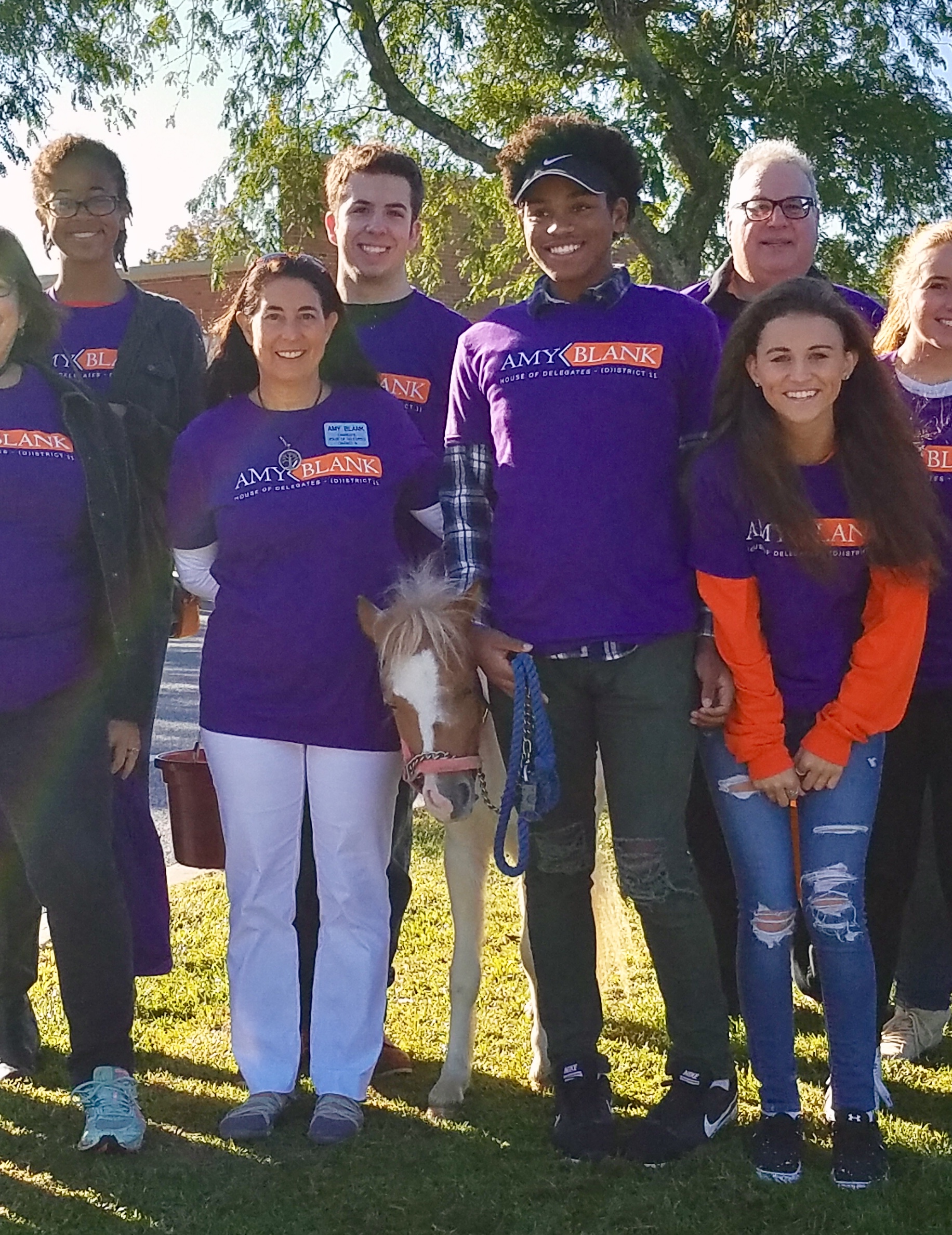
Breaking the Red, White & Blue Mold

How our first political campaign proved branding can win attention before a single word is spoken. When we took on our first political campaign at Silesky Marketing, we knew one thing immediately: if we played by the usual rules, we’d disappear. Politics is a sea of sameness. Red. White. Blue. Stars. Stripes. Serif fonts that all blur together. And somewhere in that noise, every candidate is trying to convince voters they’re different. That contradiction is exactly where we saw the opportunity. The Problem: Everyone Looks the Same Walk past a row of campaign signs, and you’ll notice something: they’re practically interchangeable. The colors signal “patriotism,” but they don’t signal identity. That’s a branding failure. Because in a crowded field, recognition is everything. If voters can’t instantly pick you out—visually—you’re already losing attention before your message even lands. The Strategy: Be Bold Enough to Be Remembered Instead of leaning into tradition, we made a deliberate choice: Ditch the expected. Own something distinctive. For Amy Blank’s campaign, we built a visual identity around purple and orange—a combination you rarely see in political branding. Why it worked: Purple subtly bridges red and blue; unity without cliché Orange injects energy, urgency, and action Together, they pop in a landscape of sameness This wasn’t just about looking different. It was about feeling different. The Execution: Cohesion Over Chaos We didn’t stop at a logo. We built a full, consistent brand system: Campaign signage that couldn’t be ignored Branded apparel that supporters were excited to wear Print collateral that looked more like a modern brand than a traditional campaign Messaging anchored in a clear, repeatable idea: “Less Politics. More Action.” “Less Politics. More Action.” doesn’t just read like a tagline, it lands like a release valve! It captures a frustration people already carry and flips it into something hopeful and forward-moving. Candidates tend to over-explain, overpromise, and overcomplicate. This line does the opposite: it strips everything down to what actually matters—results. It quietly challenges the status quo without sounding combative, and that’s the magic. You don’t have to agree with every policy to feel the pull of it—you just have to be tired of the noise. And when a message is that instantly understood, that emotionally resonant, and that easy to repeat, it stops being copy… and starts becoming a rallying cry.   The Moment It Clicked When you see a group of supporters wearing the same bold, nontraditional color palette—standing together, smiling, energized, you realize something: This doesn’t feel like a typical campaign. It feels like a movement. And that’s the shift great branding creates. It turns passive recognition into an emotional connection. What This Taught Us (And Why It Matters) This campaign reinforced a principle we now apply across industries: 1. Safe is invisible If you look like everyone else, you’ll be treated like everyone else. 2. Branding is strategy, not decoration Colors, typography, and design choices aren’t aesthetic decisions—they’re positioning decisions. 3. Differentiation buys attention And attention is the gateway to influence. 4. Consistency builds credibility Every touchpoint should reinforce the same identity. No exceptions. The Bigger Takeaway Political campaigns are just one of the most obvious examples of a crowded market—but the lesson applies everywhere. If your brand blends in, it’s not competing. It’s coasting. And coasting doesn’t win. Our First Campaign—But Not Our Last This project wasn’t just a milestone because it was our first political campaign. It was a turning point in how we approach branding: We don’t aim to fit in. We design to stand out and stay remembered. If you’re building something in a crowded space, here’s the question worth asking: Are you recognizable from across the street… or just another sign in the yard? That answer changes everything.

Marketing Lessons from 30 Years of Building Brands

The marketing lessons Silesky has accumulated over 30 years do not live in the early wins. They do not live in the awards, the referrals, or the campaigns sharp enough that competitors copied them without permission. The lessons live in the distance between how this agency started and how it operates today. Part 3 of this series traced the closure in 2006, the decade of rebuilding, and the relaunch in 2016. This piece covers what three decades of building, losing, and building again leave behind. “I started my business completely winging the whole thing,” Susi says. “Exactly what I tell my clients not to do.” H2: The Standard That Kept Brands Alive for Decades Most agencies measure experience in years listed on a website. Silesky measures it in what held and what did not. Logos and brand systems built in the late 1990s are still in active use today, more than 25 years after Susi and her first hire, Kim Morehead, produced them. Not because the clients are sentimental. Because the work was built to outlast the decade it was made in. H3: One Question Before Any Logo Ships The standard Susi applies to every logo starts with one question. Does the mark work in one solid color, and does it read clearly at pen size? If the answer is no, the logo is not finished. Gradients fail this test. Layered effects fail it. Typography readable only at a specific scale fails it too. Brand systems built without this standard tend to need revisiting within five to seven years, while those built with it age without requiring a rebuild. Clients rarely notice the difference during the project. A decade later, when the file still works exactly as intended, the principle proves itself. H3: Why Clients Push for More and Why That Direction Fails Every first creative review produces the same instinct on the client side. Add. More information on the card. A second color in the logo. Another line in the headline. Susi’s job, as she has practiced it across 30 years, is to move in the opposite direction. The brands with the longest shelf life contain less than the client originally requested. Restraint made them durable. Across hundreds of projects and multiple decades, three principles have not shifted: Simplicity wins. Less is always more. Longevity matters more than trends. The discipline to stop before the work gets crowded is harder to practice than adding one more element. Experience is the only thing teaching you when to stop, and that discipline is what separates brand work with a ten-year shelf life from work feeling dated in three. The same pattern plays out when Silesky steps into a new client relationship. H2: What an Outside Set of Eyes Sees on Day One After three decades of coming into businesses from the outside, Susi describes a consistent pattern. Founders lose the ability to read their own operation the way a stranger reads it. Day-to-day demands replace the outside perspective entirely, and the gaps forming go unnoticed because everyone inside has stopped looking for them. H3: The Gap Between the Pitch and the Page The most common gap Silesky finds at the start of a new client relationship sits between how the founder describes the business in conversation and what the website says. In person, the founder is specific, clear, and confident about what sets them apart. The landing page says something generic and indistinguishable from every competitor in the category. Nobody inside the organization catches this because nobody inside reads the website as a stranger would. Closing this gap, making the written language carry the same specificity and energy as the in-person pitch, is frequently the most valuable work of the first 60 days of a new engagement. H3: When the Brand Has Outgrown the Business Behind It A second pattern shows up in businesses whose marketing has stayed the same while the business moved forward. Expertise grows, clients shift to a different tier, and the work produced looks nothing like it did three years ago. The website, the logo, and the messaging still describe an earlier version of the business, and nobody inside has flagged the distance. Left unaddressed, the misalignment costs real money. Prospects form an impression before they ever make contact, and when the website’s version of the business does not match the conversation, trust erodes before the relationship begins. Two signals Silesky watches for in new engagements: Messaging on the homepage reads like a first-year pitch, not a seasoned operation. Outdated positioning describes work the team stopped doing years ago. H2: What Starting Without a Strategy Teaches You The founding story of Silesky is also its most instructive cautionary tale. The business launched without a plan, without clients, and without revenue, running on instinct, relationships, and a willingness to solve problems in motion. For a time, that approach worked. Then the limits of building without a foundation became clear, and the cost of that clarity was significant. H3: Silesky’s Own Origin as the Cautionary Tale In 2006, the agency closed with five employees. The freelance years following were not comfortable. They were clarifying. Susi spent that period examining what had held and what had given way, then arrived at conclusions the hard way. The relaunch in 2016 was not the old agency reopened. It was a different one, built on a foundation the original never had. Susi now leads every client engagement with strategy before execution. The Silesky process follows a clear sequence. Audit the current marketing first. Identify where the gaps are costing money. Build the plan. From there, the team either hands the plan off or executes it directly, then maintains and adjusts it over time. H3: How to Identify a Client Who Skipped the Strategy Step Clients who arrive without a strategy are easy to identify after 30 years of watching the pattern. Materials exist. Spending is happening. A social feed is running. What none of it has is a legible connection between the

What a Marketing Agency Rebuild Looks Like

From the outside, a five-person agency with a decade of client wins looks like solid ground. The roster was real. Logos built in the late 1990s were still in active use. Campaigns that won local awards were still being referenced by the organizations that commissioned them. Relationships that started with a handshake had turned into multi-year engagements. Silesky Marketing had built something that looked, from every angle, like momentum. Then, in 2006, the agency closed. What followed does not fit neatly into an origin narrative. No pivot announcement came. No press release dressed the closure up as a choice. Instead, the marketing agency rebuild that came next was quiet, unglamorous, and long. Part 2 of this series traced how a single hire and a referral network grew into that five-person operation. This piece covers what happened after the ground gave way, and what Susi Silesky chose to build on top of it. When a Business You Built Stops Five employees is not a number that sounds large. For a boutique agency that launched with no clients, no revenue, and no strategy in April 1996, it represented something significant. Each of those five people had attached their livelihood to work that Susi was generating. By the mid-2000s, the pressure of sustaining that had accumulated in ways that a referral-based, relationship-driven agency without outside funding is not always equipped to absorb. In 2006, the agency closed. No Announcement, No Pivot There was no public statement. No reframe dressed up to make the closure sound like a choice. The business that had grown from a set of letterhead on a front stoop, through a sold piano and eight weeks in Costa Rica, through Jewish nonprofits and bulldog photo shoots and award-winning catering campaigns, stopped. For Susi, the emotional weight of that moment was not abstract. She had built the agency by hand, hired people, sustained relationships, and delivered work that outlasted the clients who commissioned it. Closing was not a strategic reset. It was a loss. The Decision to Keep Working Anyway What she did not do was stop. Between 2009 and 2016, Susi continued working as a freelancer under the name A&M Marketing, a reference to her children, Alex and Mya. The scale was smaller, the budget tighter, and the weight of sustaining the work fell entirely on her while she was also raising her family. She has described this period plainly: “I never really stopped working. I just scaled back and rebuilt smarter.” Scaling back is not the same as giving up. Rebuilding smarter is not the same as starting over. The freelance years were not a gap in the story of Silesky Marketing. They were part of the story where the foundation of what came next was being quietly re-examined, one project and one decision at a time. The Freelance Years Going from a five-person operation to working solo strips away every layer of infrastructure a small agency builds over time. No creative partner to divide the problem with. No team to absorb a difficult client or a chaotic deadline. Just the work, the client relationships, and the discipline to show up for both without anything external holding the structure in place. In the early years, Susi had described her own approach as winging it, building the structure while the work was already in motion. That approach got the agency off the ground, and it also showed its limits when the pressure intensified. The solo years made those limits specific. Strategy first, always, collaboratively with a team she trusted — those three commitments did not come from a curriculum or a consulting engagement. They came from watching what held and what gave way under pressure, then arriving at conclusions the hard way. The freelance period was not comfortable. It was clarifying. What a Rebuild Looks Like From the Inside A rebuild does not look like a relaunch event or a new logo. It looks like a long, quiet period of deciding what to keep and what to leave behind. Susi kept the relationships. The standard for work built to last stayed. So did the instinct for creative decisions that other people had not thought to make yet. What changed was the architecture of how she worked. Less reactive. More deliberate. Grounded in strategy before execution, every time. By the time she was ready to relaunch, she was not trying to return to the agency she had closed. She was building a different one, shaped by everything the first version had cost her. When Silesky Came Back, It Came Back Different In 2016, Susi relaunched the agency. The second iteration shared a name and a founder with the original, but the intention behind every decision had shifted. The first version had grown organically, shaped by whatever the work required in the moment. The second was built from a position of earned understanding, with a clearer sense of the clients she wanted to serve and the kind of work she wanted to do for them. The team that formed around the relaunched agency reflected that shift. Every person brought in was chosen with intention, not assembled out of necessity. The agency that operates today grew directly from those decisions. Silesky Marketing now runs as a fully integrated boutique agency with a small, deliberate team covering strategy, content, social media, design, and web. The structure did not arrive all at once. It was assembled the same way the original agency had been, one relationship and one project at a time, but this time with a clearer blueprint at the center. The Philosophy That Came Out of the Hard Years Susi positions the current agency as the extra seats at the table, close enough to understand a client’s business from the inside, independent enough to see what the people inside it cannot. “Most founders are too close to the fire to see where the smoke is coming from.” That observation did not come from a marketing textbook. A founder who has been in

The Growth Years of Silesky Marketing

The agency that launched without a plan, without clients, and without a single dollar of revenue in April 1996 looked very different by the early 2000s. Part 1 of this series traced how Silesky marketing growth began not with a pitch deck or a launch event but with a set of letterhead on a front stoop, a sold piano, eight weeks in Costa Rica, and a community of clients who already knew and trusted the person behind the work. By the time Susi Silesky replanted herself inside the Baltimore Jewish nonprofit community, something had shifted. The work was coming in. The relationships were holding. The question was no longer whether the business would survive. It was whether it could grow into something real. The answer came in the form of a hire. The Hire That Made It Real Susi describes the moment she brought on Kim Morehead as the moment the business stopped feeling like a freelance operation and started feeling like an agency. Not the first invoice. Not the first client retainer. The hire. That distinction matters because it reflects something true about how small businesses cross a threshold. Revenue is one signal. Bringing another person into the work, staking your livelihood on your ability to sustain them too, is a different kind of commitment entirely. The Partnership That Transformed the Agency When Susi brought on Kim, it wasn’t to fill a rigid graphic design role or a pre-defined job description. Kim joined an agency in the middle of an identity shift. What followed was a creative partnership built in the trenches—solving problems in real-time for a growing roster of Maryland clients. Rather than dividing labor into silos, they built the agency’s foundation side-by-side. They didn’t just share tasks; they shared the risk of expanding into uncharted territory. Navigating the Digital Shift: From Print to Web In the late 90s, web design was the great unknown, a technological disruption much like Artificial Intelligence (AI) is today. Most small agencies were hesitant, but Susi and Kim recognized that the internet was fundamentally changing client needs. Much like today’s pivot toward AI-driven solutions, they accepted projects that required them to build tools they had never used before. This “learn-as-you-go” grit resulted in the agency’s first official website for Sheldon and Sons, marking Silesky’s transition from a boutique print shop to a modern, multi-channel marketing agency. That kind of longevity does not come from following trends. Susi’s design philosophy, as she states it directly, is built on a short set of principles she has carried through every decade of the agency’s work: If a logo does not work in one solid color and fit on the tip of a pen where it reads clearly, it is not a good logo. Simplicity wins. Less is always more! Longevity matters more than trends. These are not abstract values. They are conclusions drawn from watching what holds and what does not, across hundreds of projects and three decades of work. Building a Roster the Hard Way Silesky did not grow by buying ads or chasing new markets. The agency grew through referrals, almost entirely, in the early years. The client relationships that formed during the Associated Jewish Community Federation period became the foundation. Those clients talked. Their networks talked. The roster expanded one name at a time. The Names That Built the Network The story of Silesky’s early expansion wasn’t written in data points or broad market categories; it was written through the trust of individual advocates. In the beginning, growth didn’t come from a sales team, it came from one mortgage lender who saw the value in professional branding, from community leaders in the non-profit sector who spoke highly and loudly of the work Silesky was doing on their behalf, and from local entrepreneurs who opened doors to their own professional circles. These early adopters acted as a bridge, allowing the agency to translate its design expertise across vastly different business landscapes. What began as a niche presence soon scaled into a diverse portfolio: Real Estate & Finance: High-stakes branding for mortgage providers and real estate agents established a reputation for professionalism and market authority. Healthcare & Specialized Services: The agency’s ability to humanize brands led to successful partnerships with dental offices and medical private practices. Trade & Construction: By creating high-impact visual identities for construction companies, Silesky proved that “high design” was just as vital for the trades as it was for the boardroom. The Non-Profit Sector: From the first teenage-focused campaign for a Jewish educational center to complex community initiatives, these projects served as a constant proof of concept. Reputation as a Growth Engine This era of the agency was defined by a pipeline that lacked automation but excelled in human capital. Referral-based growth operates on a simple, rigorous logic: the work must be clear and effective enough that a client feels comfortable staking their own reputation on a recommendation. By consistently delivering results for a local dental office or a regional construction firm, the agency proved its versatility. At Silesky, the work didn’t just speak; it echoed—turning individual projects into a multi-decade network of regional influence. From Nonprofit Work to a Broader Roster The Jewish nonprofit community gave Silesky its footing, but the agency did not stay narrowly defined. As the late 1990s moved into the early 2000s, the roster expanded into private sector work. Printing companies, local businesses, and organizations outside the nonprofit sector began appearing on the client list. Each one came through the same mechanism: a relationship, a referral, a piece of work that someone had seen and remembered. The shift from print and branding into web work marked a real transition. Era 1, the Print Dominance period, gave way to Era 2 as websites became something every client needed, and very few Baltimore agencies were equipped to deliver well. Silesky was already at work before the demand fully arrived. The learning happened alongside the client projects, which meant the agency was building capability and delivering at the

The Baltimore Marketing Agency Built from a Front Stoop

In April 1996, Susi Silesky became the owner of a marketing agency she did not name, did not plan, and did not ask for. A set of letterhead and business cards appeared on the front stoop of her home. Someone else had designed the logo, chosen the name, and made the decision for her. Most agencies trace their beginnings to a business plan, a financial projection, and a launch date circled on a calendar. This Baltimore marketing agency has a different story—one built on a firing, a trip to Jazz Fest, and a package left on a doorstep. Paris, PR, and the Power of the Unexpected Susi moved to Paris the day after her college graduation as an au pair. She had no clear career direction and no goal beyond perfecting her French. A French relationship changed the timeline. She fell in love. What was meant to be one year abroad soon became four. By spring 1988, she was hired as the American assistant to the CEO of S3C Groupe de Communication Souham, a PR firm in Paris working with major international brands. The client roster included Sara Lee, Gillette, WR Grace, Tiffany & Co., and others. At first, she sat on the sidelines, observing account executives while handling administrative work. Then Sara Lee Corporation asked her to work on their cheesecake campaign. Once she gained direct experience with one client, the rest followed. She spent the next several years working with U.S. brands as the American liaison, building firsthand marketing knowledge at an international level. She returned home in the fall of 1991 with four years of experience nobody had mapped out. From Family Legacy to Community Leadership Back in Baltimore, Susi went straight to work at her father’s company, Quickee Offset, the first short-run printing company in Maryland. From 1991 to 1994, she organized and implemented a rebrand campaign for the 35-year-old printing company, which included a noteworthy billboard touting their work with the Baltimore Orioles. The billboard read: “Our Printing is for the Birds.” In 1994, the family business was sold, and Susi moved into the nonprofit world at the Associated Jewish Community Federation. For two years, she served as the account executive for nearly every agency in the Associated system—overseeing branding, strategy, and collateral. Every organization under the umbrella ran its marketing through the Associated’s internal department, and Susi managed the process. She loved the work. As she puts it, “It may have been my favorite work to date. I truly loved the work, the people, and the mission.” Finding Your Footing When the Ground Shifts The Associated let her go, unexpectedly. In a single moment, the stability she had disappeared. She was devastated. She had loved the job, the organizations, and the work she was doing for every agency in the system. In one moment, all of the stability she had built around the role disappeared. Ink, Paper, and a Prayer: The Surprise That Started it All On the advice of friends, she joined them for a trip to the New Orleans Jazz Fest, returning home with no clearer sense of what came next. Waiting on the front stoop was something unexpected: a complete brand identity. Business letterhead, cards, even a logo—someone had designed it all and named the company without her input. It was April 1996, and the business was called Silesky Marketing. In Susi’s words: “I started my business completely winging the whole thing—exactly what I tell my clients not to do.” She had no revenue, no clients, and no strategy. Just a name, a brand, and a decision she hadn’t made—but chose to run with anyway. The Front Porch That Launched a Legacy Trading Keys for Coastlines: The Pivot That Funded the Future With a company name and no income, Susi needed more than a brand, she needed a market. Her first instinct was bold: help American companies reach the Hispanic community. It made sense on paper. But in practice, there was a problem. After four years of speaking French in Paris, her Spanish had all but disappeared. She had studied it once, yes, but now it sat just out of reach, like a song she almost remembered. If the business was going to work, the language had to come back. So she did what she had already proven she was willing to do: she leapt. It wasn’t a small decision. In fact, it was a big one. It meant leaving the country again, paying her mortgage a month ahead, arranging for someone to care for her two cats, and sitting with the quiet, thrilling fear of stepping away from everything stable. It meant letting go of something she loved: the baby grand Steinway piano she had inherited from her Nana. She sold it, turned memory into motion, and used the money to buy herself eight weeks in Costa Rica. There, life narrowed and deepened all at once. She lived with a local family in Heredia, studied Spanish in the mornings, and spent her days listening, speaking, stumbling, learning. On weekends, she traveled through lush hills and unfamiliar roads, the kind of beauty that reminds you how far you’ve gone from home. It was exhilarating. It was exactly the kind of risk that changes a person. When she returned, she didn’t hesitate. She dove headfirst into Baltimore’s Hispanic community, volunteering, showing up, introducing herself again and again. She placed ads, attended every event she could find, and slowly, connections began to form. A few early clients came through, just enough to suggest she might be onto something. But even then, she could feel it: without deeper roots in Hispanic culture, without time and trust, growth would have its limits. The door had opened, but she was still standing on the outside. The Believers: Carrying the Torch from Old Chapters to New When her initial idea around Hispanic marketing proved harder to sustain, she pivoted, returning to the community she knew best. Gradually, relationships she had built years earlier began to reawaken.

Website Optimization Services That Turn Visits Into Leads

Someone visited your website this week. They landed on your homepage, scrolled for about twenty seconds, and left without filling out a form, clicking a phone number, or reading past the third paragraph. You might have paid for that visit through ad spend, or earned it through years of consistent content work. Either way, the visit produced nothing. Businesses that invest in website optimization services often find that the problem was never traffic. The gap between visits and leads almost always comes down to what the site does once someone arrives. What Your Traffic Numbers Are Not Telling You Traffic reports are easy to read in ways that feel encouraging. Sessions are up, impressions are growing, and pages per visit look steady. None of that tells you whether a single person who landed on your site left with any intention of calling you. The Difference Between a Visit and an Intent Signal A visit is a count. An intent signal is behavior. A visitor who spends time on a specific service page, scrolls past the halfway point on your about page, or returns within 48 hours is showing something a raw session number does not. Most analytics dashboards default to the count, and most teams stop there. Unbounce’s 2025 conversion benchmark report found a median landing page conversion rate of 6.6 percent across industries. Landing page benchmarks offer a useful frame of reference, even though service pages and homepages often convert differently depending on traffic source and page purpose. When your highest-traffic pages are consistently underperforming that range, the issue is almost always in how the page communicates value, not in the volume of people arriving. Where Visitors Drop Off and Why The pages that lose leads most often are the ones you assume are working: Homepage exits happen when the headline does not match what someone expected based on the link they clicked. Service pages lose visitors when the copy describes the process instead of the outcome. Contact forms get the least forgiveness, especially when the value exchange is unclear or the ask feels premature. Exit rate data on those three page types gives you a map of where visitor confidence breaks down. Once you know where they leave, you know where to start. What Website Optimization Services Actually Address The word optimization gets used loosely enough that it has started to lose meaning. Some agencies apply it to any round of site updates. For lead generation, optimization addresses two things. The first is how fast and stable a site performs in real conditions. The second is whether the copy and structure guide a visitor toward a decision. Speed, Structure, and the Five-Second Window Google’s Core Web Vitals measure loading performance, visual stability, and interactivity in real-world conditions. Google frames these signals as part of page experience and notes that they can affect performance in Search when competing pages offer similarly relevant content. Slow pages and unstable layouts create friction in those first few seconds, and friction is what makes visitors leave before they see your offer. Page structure amplifies or reduces that friction. Where your primary call to action appears, how your value statement reads above the fold, and whether your heading hierarchy signals clear navigation all shape what a visitor decides in those first seconds. Most business websites create friction before a visitor reaches your offer: The headline describes the company rather than the problem it solves Navigation presents six or more unlabeled options at once The hero image takes three or more seconds to load on mobile. No visible next step appears until the footer. Each of those points costs you part of the audience you already brought in. Messaging Gaps That Cost You the Form Fill Page speed gets the most attention in optimization conversations, but messaging gaps are often where qualified leads are lost. A site loading in under two seconds still converts nothing when the copy does not address what a prospect needs to hear before making a decision. The most common failure on services pages is language that describes the work rather than the result. “We offer strategic brand development and content marketing” tells a visitor what the agency does. “Your brand should be what a client says when someone asks who they trust,” tells a visitor what changes. The second version moves someone toward a decision. The first gives them no particular reason to stay. Form fill rates drop for a related reason. “Contact us,” says someone to start a conversation without explaining what they get from it. Naming the next step specifically, such as “Get a Website Review” or “Talk to Our Team About Your Site,” changes the perceived cost of clicking. Does Your Website Actually Qualify Your Visitors? A site optimized for lead generation does more than attract clicks. It screens for the right kind of prospect before anyone picks up the phone. The Pages That Create or Lose Lead Confidence Three pages make or break credibility faster than any other. Each one carries a specific job: The about page is where visitors decide whether they trust the people behind the site. The services page is where they decide whether you solve their specific problem. Portfolio work, case studies, or documented client outcomes answer the question running in the background throughout a visit: has this company done this for someone like me? Social proof placed only in the footer functions differently than proof placed where doubt typically enters a buyer’s mind. On a services page, that doubt tends to arrive about halfway down, after a visitor has understood the offer but has not yet decided to act. Placing a testimonial or outcome example at that point does more work than any closing statement. The CTA Architecture Most Sites Get Wrong Most sites offer one CTA repeated in the same form across every page. That approach treats every visitor as being at the same decision stage, and they are not. A first-time visitor who found you through a blog

Email Marketing Services That Recover Lost Leads

A lead who clicked your email three times, visited your pricing page twice, and never booked is not a cold lead. Most businesses treat the silence as rejection, move on, and spend more money chasing someone new. The gap lives in what happened after the click. Businesses working with focused email marketing services to recover lost leads build their pipeline from contacts they already have, and most are sitting on more opportunities than their current send schedule acknowledges. Why Do Warm Leads Disappear Before They Convert? The short answer is structure. Most email programs are built for outbound volume, not recovery. Messages go out, open rates get reviewed, and contacts who stopped responding get quietly left behind. The problem is architectural, not effort-based, which is why sending more emails to a disengaged list rarely changes the outcome. The Gap Between Sending Emails and Running a Lead Recovery System Sending a newsletter and running a lead recovery system are two different disciplines. A newsletter broadcasts to a full list on a schedule. A recovery system monitors what each contact does, identifies the moment engagement drops, and triggers a response tied to a specific behavior. This difference matters commercially. A newsletter tells everyone the same thing at the same time. A recovery system speaks to where a specific lead stopped, not where the campaign started. One functions as a publishing channel. The other functions as a sales tool. Most businesses have only ever built the first one, and the leads sitting quietly in the list are the visible result. What Happens to Warm Leads When There Is No Follow-Up Sequence Three scenarios repeat across almost every email list. A lead clicked a pricing page twice in January and went quiet in February. A lead read two case studies, started filling out a contact form, and closed the browser before submitting. A lead opened four consecutive emails, then stopped engaging the week after a product announcement. Each contact showed enough interest to act. Without a follow-up sequence tied to those specific behaviors, each one ages out without a second conversation. Follow-up timing ranks among the biggest variables in whether a warm lead converts, and when no sequence exists, the timing decision defaults to never. According to research from Invesp, the probability of selling to an existing engaged contact is substantially higher than converting a new one, and the cost of re-engagement is consistently lower than acquisition. What Do Email Marketing Services Actually Do to Recover Leads? Recovery-focused email work follows three phases. Audit identifies where the existing program broke down. Optimize rebuilds sequences around behavior rather than a calendar. Track measures whether re-engagement is producing pipeline outcomes. Each phase changes what a list produces, and skipping any one of them turns re-engagement from a revenue move into a guessing game. Auditing the List Before Rebuilding the Flow The first step is not writing new emails. A list audit identifies where the existing program broke down before anything new gets built on top of it. A proper audit surfaces these gaps. Which segments went cold and when Which subject lines drove real engagement before the drop-off Where leads stopped responding, and whether send timing played a role Whether the same message types have been repeatedly sent to contacts who stopped engaging with them months earlier Businesses frequently discover they have been re-sending versions of the same email to contacts who stopped responding to the original. Rebuilding without auditing first means the new sequence lands on the same structural fault. Rebuilding Sequences Around Behavior, Not the Calendar Calendar-based programs send the same message to every contact on the same day. A behavior-based recovery sequence treats each contact based on what they did and when they went quiet. Someone who abandoned a contact form receives a different message than someone who visited a service page three times without converting. Research from Campaign Monitor found that behavior-based email segments produce re-engagement rates substantially higher than broadcast sends, because the message arrives in relation to something the contact already did rather than in relation to a fixed date on a marketing schedule. For most lists, this phase is where the largest share of recovery happens. Setting the Metrics That Tell You Recovery Is Working Open rate functions as an early directional signal. When a re-engagement sequence is sent to a cold segment, and the open rate rises, the subject line and timing are reaching the right contacts. The decision metrics sit deeper. Three numbers matter in recovery work. Re-engagement rate measures how many dormant contacts took a meaningful action after receiving the sequence. Reply rate on re-engagement sends shows which contacts in the recovered segment are ready to have a conversation. Conversion rate tracks how many recovered contacts moved from the sequence to a booked call or purchase. Businesses measuring those three outcomes connect email activity to pipeline results rather than inbox behavior, and the difference in how decisions get made is significant. Why Small Fixes in an Existing List Outperform New Campaigns The instinct at the start of Q2 planning is to launch something new. A new campaign, a new offer, a new audience. Before any of those get built, the list from the last 90 days deserves a second look. Businesses entering Q2 with real momentum are generally the ones who fixed what was leaking in Q1, not the ones who added volume to a broken structure. The Math Behind Re-Engaging a Warm List vs. Building a Cold One Acquiring a new lead requires an ad, a landing page, a form submission, and at least one confirmation email before the conversation starts. A dormant contact in an existing list has already completed those steps. Prior awareness shortens the path back to action. The trust-building work already started, even if engagement dropped. The lead is familiar with the brand and the offer being presented. The sales cycle runs shorter because the contact is not starting from zero. Recovery costs less than acquisition in most cases, because

SEO Services That End Reactive Marketing

Most businesses seek SEO help only after something breaks. A competitor climbs higher in search, traffic drops without warning, or a page stops converting before the team notices. Reactive marketing costs more than a proactive plan would, and businesses operating this way spend their budgets catching up instead of pulling ahead. The SEO services that end reactive marketing cycles treat search as a planning function, not a repair order. Why Reactive Marketing Always Costs More Than a Strategy Would Have The Pattern Most Marketing Leaders Do Not Recognize in Themselves Running SEO reactively looks like this in practice: rankings slip in Q3, so the team commissions content in Q4. A competitor launches a new service page, and suddenly the agency audits keyword gaps. Traffic from a core blog post drops, and the first question is what changed in the algorithm—not why the content aged poorly. Each response makes sense in isolation. Strung together, they form a pattern of chasing problems rather than preventing them. By the time the fix is implemented, the market has already moved. Competitors who planned earlier capture the searches this business would have owned, and recapturing those positions costs more than maintaining them would have. BrightEdge research found organic search drives 53% of all website traffic, making search the largest single source of trackable visits for most businesses. Organizations treating this channel reactively surrender control of their biggest traffic driver to whatever the market decides next. What SEO Exposes That Other Channels Hide Paid search and social media produce results when money goes in. Pull the budget and traffic stops. SEO works differently because search data surfaces demand patterns before anyone contacts a business. People search for services weeks or months before speaking with a vendor. The queries they run reveal what problems need solving, what language describes those problems, and which competitors a prospect is weighing. A business running proactive SEO reads this data continuously and builds content to meet demand before competitors do. Reactive programs discover the same data after a competitor has already published the ranking page. What SEO Services Look Like When Built to Lead, Not React Keyword Research as a Business Roadmap A structured keyword strategy maps to buyer stages and service lines, not to a list of phrases a competitor ranks for today. Done well, keyword research shows where demand already exists, which services need visibility first, and what content supports revenue rather than traffic alone. For a professional service firm, this means understanding which searches occur before a prospect decides to seek outside help, which occur during vendor comparison, and which occur when a buyer is ready to contact someone. Content built around this sequence works at every stage of the decision process, not only at the buying moment. Content as a Prospecting System, Not a Publishing Habit Businesses publishing content reactively tend to write about what feels relevant that week. A proactive content program, however, builds around demand timing. Content published to meet a search query ranks and generates inquiries weeks or months after the publish date. A single well-structured service article targeting the right query generates qualified leads long after the team has moved on. Search Engine Journal analysis shows top-ranking content for competitive queries often takes three to six months to reach full ranking potential. A reactive business rushing content in response to a traffic drop starts this clock late and competes against pages published months earlier. Technical SEO as Infrastructure, Not an Emergency Repair Site performance, page structure, and crawlability are not problems to address only after a penalty notice. Together, they form the foundation under every other tactic. A page with strong content on a slow-loading site loses positions to a technically cleaner competitor. Search engines struggling to crawl a service page provide no ranking benefit from strong copy, regardless of quality. Businesses addressing technical issues reactively discover these gaps after rankings have already suffered. A proactive approach audits the technical foundation on a regular cadence, addresses issues before they compound, and treats page performance the same way a business treats any operational system. Gaps addressed early cost far less than problems left to grow. How to Tell If Your SEO Is Reactive Three Signals Your SEO Is Running Behind the Market Most businesses do not know their SEO is reactive until the evidence is obvious. A few earlier signals are worth watching. Content production follows competitor moves. When the primary trigger for publishing is “they ranked for this last month,” the strategy is a reaction to someone else’s plan. Traffic patterns respond only to external events. When organic traffic grows after a competitor stumbles or shrinks after an algorithm update, the program has no buffer against market shifts. Keyword targets come from last quarter’s gaps. Proactive SEO identifies where demand is heading, not only where the business failed to appear previously. The Metrics Proactive SEO Tracks Reactive SEO reports focus on total traffic and keyword rankings without connecting either number to business outcomes. Proactive SEO programs track a different set of indicators. Qualified organic leads show whether the traffic arriving through search includes the right buyers, not browsers. Service-page conversions tell whether the content driving traffic is positioned to convert the audience reaching the page. Local inquiry growth tracks whether nearby, high-intent searches reach the business before prospects contact a competitor. Branded search growth signals whether the content program builds recognition, not only transient clicks. These numbers do not replace traffic data. Sitting above traffic data, they tell a clearer story about what SEO produces for the business. Turning SEO Into a Lead Generation Engine Mapping Content to How Prospects Make Decisions Prospects do not move in a straight line from awareness to contact. A business owner searching “how much does marketing cost” is in a different place than one searching “marketing agency near me.” Content built to appear at both moments serves the full decision arc instead of one narrow window. Top-of-funnel content builds familiarity before a prospect knows they need

Aizaz UI Hassan

Web Developer & Graphic Designer

Aizaz has been the driving force behind Silesky’s web development for over five years. As both a graphic designer and UI/UX developer, he brings a rare mix of technical precision and creative clarity to every project.

What sets Aizaz apart is his ability to understand and interpret the assignment—no extra hand-holding, just sharp instincts and calm professionalism. When timelines are tight and expectations are high, Aizaz is the teammate you want in your corner.

Creative and detail-oriented, Aizaz builds clean, modern websites that marry style with substance. From intuitive flows to scalable layouts, his work consistently delivers digital experiences that perform as well as they look.

With every project, Aizaz ensures the design feels effortless for users and does the heavy lifting for the brand.

Sue Hilger, MBA

Chief Growth Strategist

As Chief Growth Strategist at Silesky Marketing, Sue plays a key role in expanding the agency’s client base while cultivating long-term partnerships grounded in trust, collaboration, and measurable success. She works closely with organizations to help them meet their business goals—and then go beyond them—through smart, scalable marketing strategies.

With an MBA and deep expertise in both B2B and B2C environments, Sue bridges the gap between strategic planning and hands-on execution. She guides clients through Silesky’s end-to-end process, beginning with in-depth discovery and needs assessments and continuing through branding, messaging, digital advertising, and campaign rollout.

Sue is focused on long-term impact. Many of Silesky’s client relationships span decades, which speaks to her ability to integrate seamlessly, think strategically, and consistently deliver results. For Sue, every engagement is more than a project—it’s a partnership.

Mya Stengel

Content Developer & Video Editor

Mya brings the heart of a storyteller and the precision of a screenwriter to every project. With a background in Hollywood scriptwriting—particularly in the horror genre—she understands how to build intrigue, capture attention, and deliver a message that lands with impact.

A lifelong book lover turned brand storyteller, Mya has a gift for finding each client’s voice and shaping it into something authentic and memorable. Whether she’s writing SEO-driven blog content, editing silent video loops, or cutting together a punchy hero reel, she focuses on what makes a brand distinct and brings it to life with clarity and emotion.

From blog posts to behind-the-scenes edits, plot twists to punchlines, Mya’s work helps brands connect more deeply and tell stories that resonate.

Ashelin Walker

Digital Marketing Strategist

Ashelin is a digital marketing strategist who blends technical know-how with creative insight. At Silesky Marketing, she turns strategy into results—helping clients attract the right leads, connect with their audience, and strengthen their online presence.

She designs high-converting landing pages, launches targeted email campaigns, manages CRM platforms, and creates on-brand video content that performs. From big-picture planning to the freckles of a campaign, Ashelin brings cohesion to the chaos and keeps every piece pulling in the right direction.

What sets Ashelin apart is how seamlessly she connects the tactical to the strategic. She doesn’t just check boxes—she makes sure every effort ladders up to a larger goal. Her work helps clients show up in the right places, with the right message, at the right time.

Susi Silesky

Founder & Brand Architect

As the founder of Silesky Marketing, Susi brings more than 30 years of brand strategy and marketing expertise to the table. Her experience spans ambitious startups, global enterprises, nonprofits, and household-name retailers.

Susi is most energized when she’s helping business owners find their voice, shape their story, and build a brand that reflects their vision and gets the results they deserve.

What sets her apart is her deep understanding of entrepreneurs. She’s built a career not just on strong campaigns, but on building genuine relationships. That blend of empathy and expertise is what makes her work both effective and meaningful.

Susi has led successful marketing initiatives across industries—from healthcare and legal to real estate, B2B tech, and pharma. She’s fluent in French, conversational in Spanish, and skilled at translating complex ideas into clear, compelling brand stories.