
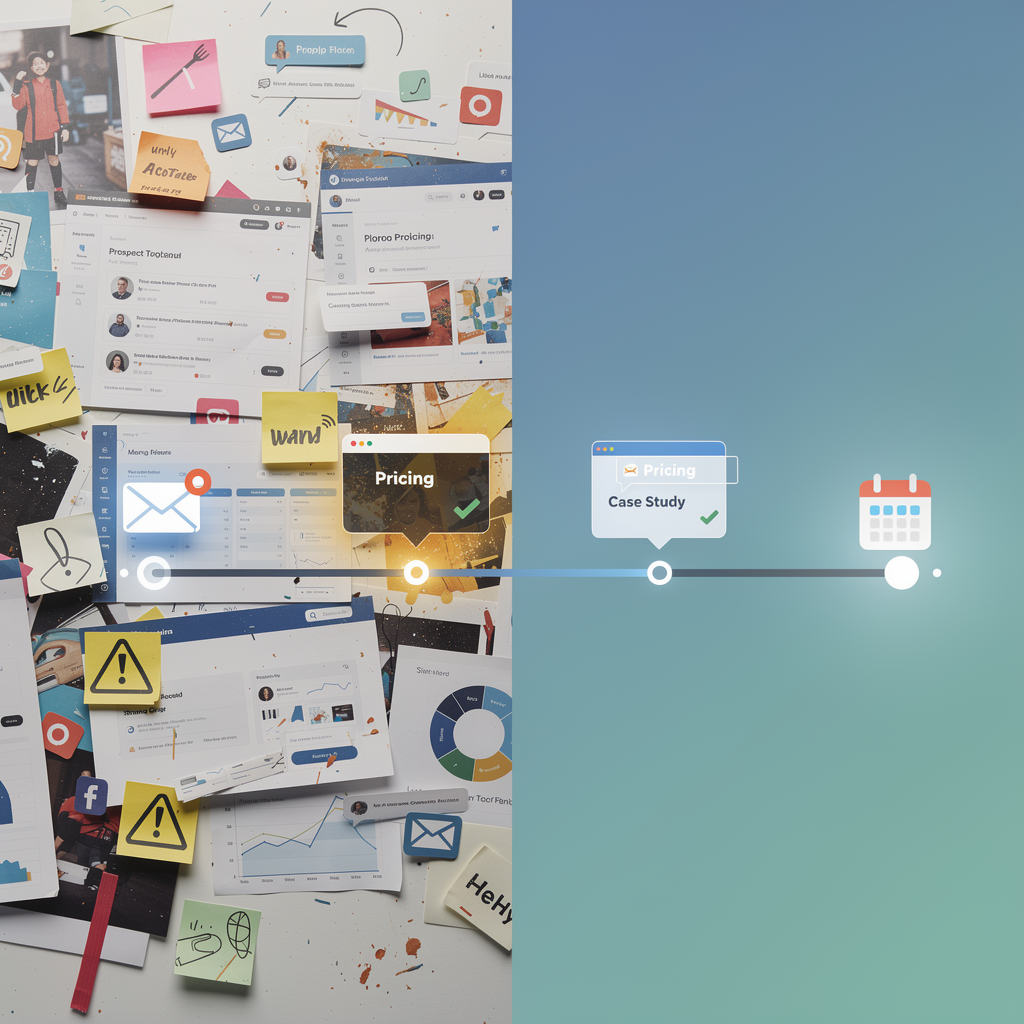
A lead who clicked your email three times, visited your pricing page twice, and never booked is not a cold lead. Most businesses treat the silence as rejection, move on, and spend more money chasing someone new. The gap lives in what happened after the click. Businesses working with focused email marketing services to recover lost leads build their pipeline from contacts they already have, and most are sitting on more opportunities than their current send schedule acknowledges.
Why Do Warm Leads Disappear Before They Convert?
The short answer is structure. Most email programs are built for outbound volume, not recovery. Messages go out, open rates get reviewed, and contacts who stopped responding get quietly left behind. The problem is architectural, not effort-based, which is why sending more emails to a disengaged list rarely changes the outcome.
The Gap Between Sending Emails and Running a Lead Recovery System
Sending a newsletter and running a lead recovery system are two different disciplines. A newsletter broadcasts to a full list on a schedule. A recovery system monitors what each contact does, identifies the moment engagement drops, and triggers a response tied to a specific behavior.
This difference matters commercially.
- A newsletter tells everyone the same thing at the same time.
- A recovery system speaks to where a specific lead stopped, not where the campaign started.
- One functions as a publishing channel. The other functions as a sales tool.
Most businesses have only ever built the first one, and the leads sitting quietly in the list are the visible result.
What Happens to Warm Leads When There Is No Follow-Up Sequence
Three scenarios repeat across almost every email list.
- A lead clicked a pricing page twice in January and went quiet in February.
- A lead read two case studies, started filling out a contact form, and closed the browser before submitting.
- A lead opened four consecutive emails, then stopped engaging the week after a product announcement.
Each contact showed enough interest to act. Without a follow-up sequence tied to those specific behaviors, each one ages out without a second conversation. Follow-up timing ranks among the biggest variables in whether a warm lead converts, and when no sequence exists, the timing decision defaults to never. According to research from Invesp, the probability of selling to an existing engaged contact is substantially higher than converting a new one, and the cost of re-engagement is consistently lower than acquisition.
What Do Email Marketing Services Actually Do to Recover Leads?
Recovery-focused email work follows three phases. Audit identifies where the existing program broke down. Optimize rebuilds sequences around behavior rather than a calendar. Track measures whether re-engagement is producing pipeline outcomes. Each phase changes what a list produces, and skipping any one of them turns re-engagement from a revenue move into a guessing game.
Auditing the List Before Rebuilding the Flow
The first step is not writing new emails. A list audit identifies where the existing program broke down before anything new gets built on top of it.
A proper audit surfaces these gaps.
- Which segments went cold and when
- Which subject lines drove real engagement before the drop-off
- Where leads stopped responding, and whether send timing played a role
- Whether the same message types have been repeatedly sent to contacts who stopped engaging with them months earlier
Businesses frequently discover they have been re-sending versions of the same email to contacts who stopped responding to the original. Rebuilding without auditing first means the new sequence lands on the same structural fault.
Rebuilding Sequences Around Behavior, Not the Calendar
Calendar-based programs send the same message to every contact on the same day. A behavior-based recovery sequence treats each contact based on what they did and when they went quiet. Someone who abandoned a contact form receives a different message than someone who visited a service page three times without converting.
Research from Campaign Monitor found that behavior-based email segments produce re-engagement rates substantially higher than broadcast sends, because the message arrives in relation to something the contact already did rather than in relation to a fixed date on a marketing schedule. For most lists, this phase is where the largest share of recovery happens.
Setting the Metrics That Tell You Recovery Is Working
Open rate functions as an early directional signal. When a re-engagement sequence is sent to a cold segment, and the open rate rises, the subject line and timing are reaching the right contacts. The decision metrics sit deeper.
Three numbers matter in recovery work.
- Re-engagement rate measures how many dormant contacts took a meaningful action after receiving the sequence.
- Reply rate on re-engagement sends shows which contacts in the recovered segment are ready to have a conversation.
- Conversion rate tracks how many recovered contacts moved from the sequence to a booked call or purchase.
Businesses measuring those three outcomes connect email activity to pipeline results rather than inbox behavior, and the difference in how decisions get made is significant.
Why Small Fixes in an Existing List Outperform New Campaigns
The instinct at the start of Q2 planning is to launch something new. A new campaign, a new offer, a new audience. Before any of those get built, the list from the last 90 days deserves a second look. Businesses entering Q2 with real momentum are generally the ones who fixed what was leaking in Q1, not the ones who added volume to a broken structure.
The Math Behind Re-Engaging a Warm List vs. Building a Cold One
Acquiring a new lead requires an ad, a landing page, a form submission, and at least one confirmation email before the conversation starts. A dormant contact in an existing list has already completed those steps. Prior awareness shortens the path back to action.
- The trust-building work already started, even if engagement dropped.
- The lead is familiar with the brand and the offer being presented.
- The sales cycle runs shorter because the contact is not starting from zero.
- Recovery costs less than acquisition in most cases, because the groundwork for conversion is already in place.
What March Reveals About Q2 Readiness
March sits at a useful inflection point. Q1 is close enough to review, and Q2 is close enough to shape. The email list from the last 90 days holds leads who visited, read, and engaged at some level before going quiet. A focused re-engagement effort before Q2 starts puts those contacts back into the pipeline at a moment when buying decisions are forming. This is a bridge move, not a new campaign, and the businesses entering Q2 with the most traction are often the ones that stopped reacting to what was in front of them and started fixing what was already behind them.
How to Choose an Email Marketing Service Built for Lead Recovery
Not every email marketing service is built for recovery work. Some specialize in template design and broadcast scheduling. Others bring the infrastructure for behavioral triggers, segmentation, and conversion tracking. Knowing the difference before signing on saves both time and budget.
The Questions to Ask Before You Sign On
Four questions separate a broadcast service from a recovery-focused one.
- Does the service include behavioral trigger setup, or does the engagement begin and end with template delivery and a send calendar?
- Will the team audit the existing list before proposing new sequences, or will they start fresh without reviewing what already exists?
- Do they track re-engagement metrics separately from broadcast performance?
- Does the strategy align with the sales cycle or with a generic content calendar with fixed send dates?
A service worth working with has direct answers to all four.
What a Recovery-Focused Service Looks Like in Practice
A well-structured engagement follows a recognizable method. The first phase reviews the list and existing flows, identifying drop-off points and dormant segments. The second phase maps new sequences around those behaviors and builds the trigger logic behind each one. The third phase sets the re-engagement sends live and begins measuring the decision metrics. The fourth phase reviews the data and adjusts based on what the recovered segment does.
The point is not the number of phases but the presence of a method. Businesses working with email marketing services built around recovery are always able to describe where a lead dropped off and what the next step was designed to do.
Conclusion
The leads businesses stopped following up on are not gone. They are sitting in a list, waiting for a message that arrives at the right moment with a real reason to respond. Adding more campaigns before fixing what is already leaking puts new leads into the same broken structure. If the list from the last 90 days holds contacts worth revisiting, the structure for recovery is worth building before Q2 starts. Schedule a lead recovery consultation with the Silesky team and find out what your list has been telling you.