Brand Identity

What Makes Good Branding and How to Build It for Your Business

15 Mins

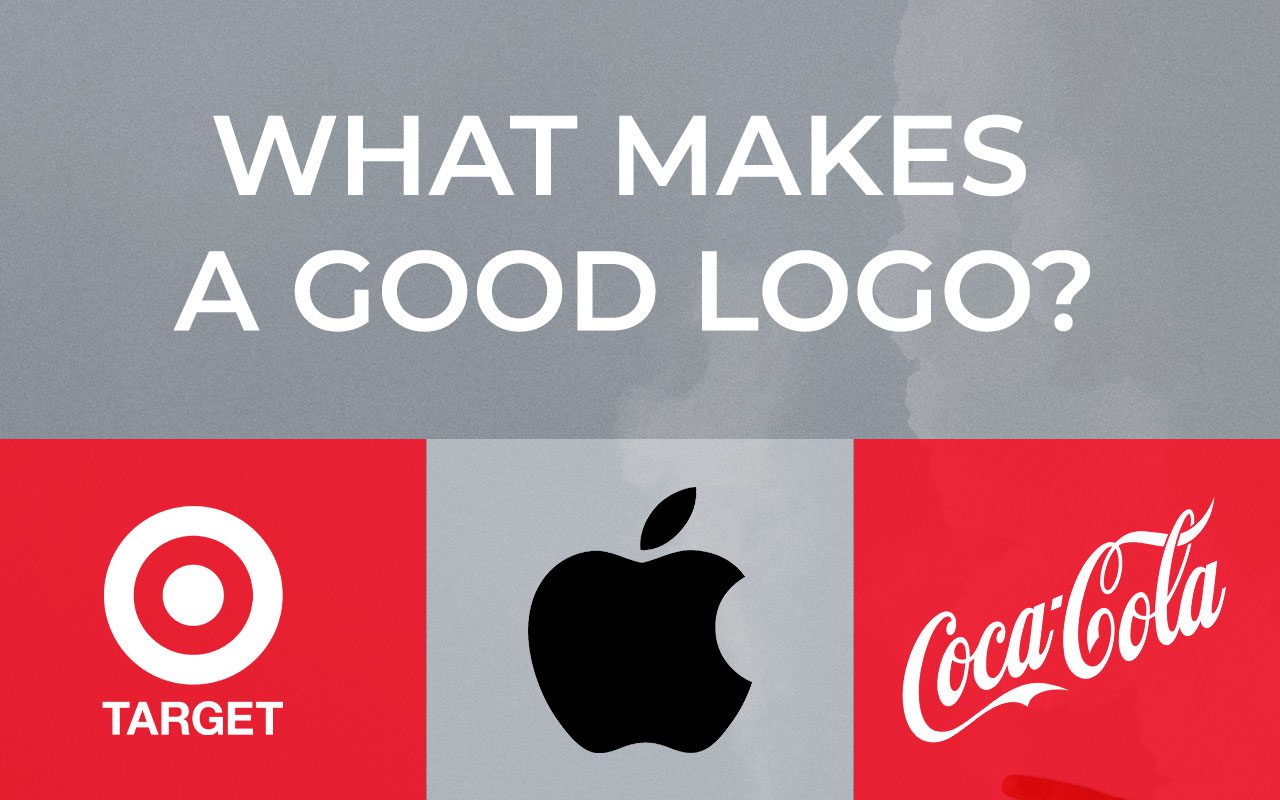
Apple. Coca-Cola. Target.

When you read each of these brand names, there is a good chance that the corresponding logo will also come to mind. That’s good branding! If we were to ask you what they all had in common, perhaps you’d say, “they are big, successful corporations.” You’d be correct. However, we’re looking for the answer: “they all have distinct and memorable branding.” Each of these iconic brands has stood the test of time. You might argue for different reasons why this success happened. But, again, we’d say that their company foundation started with a strong logo symbol that represented whom they wanted to be in the public domain. After all, a strong brand is the nucleus of a company’s success.

Why is a logo so important?

Well, when you meet a new person, the first thing they see is usually your face. If they cannot see your face, they might hear your voice. If they can’t see or listen to you, they may get an idea of who you are from your smell or interactions with them. These are all identifiers that represent the brand of the individual.

A logo for a business is no different. A corporation has a specific look, voice, and projected image. Unique imagery, such as the apple for the Apple Corporation, leaves an impact; it’s memorable and remains front of mind with their customers and on the radar of their target audience.

You don’t have to be Apple, Coca-Cola, or Target to be successful. The money would be nice, but even smaller businesses can impress with solid branding. Take Lemonade for an example. In insurance branding, it’s hard to differentiate yourself and create trust. Lemonade sticks out because it heavily uses the color pink, and its Instagram account is over-the-top creative!

The past two examples clearly show that a logo’s primary purpose is to identify with your company. To Paul Rand,  one of the world’s most excellent graphic designers, “a logo is a flag, a signature, an escutcheon, a street sign. A logo does not sell (directly); it identifies. A logo is rarely a description of a business. A logo derives meaning from the quality of the thing it symbolizes, not the other way around. A logo is less important than the product it signifies; what it represents is more important than what it looks like. The subject matter of a logo can be almost anything.”

Does your brand make an impact?

Your brand should follow these basic criteria:

Simple

We’re talking uncomplicated, like the Nike swoosh. Even without words, Nike’s brand is unmistakably Nike. Nike is the Winged Goddess of Victory. The logo is derived from goddess’ wing, ‘swoosh,’ which symbolizes the sound of speed, movement, power, and motivation. This is great because the Nike logo is so strong that you can see it from your car as you drive 80mph past a billboard on the highway!

Communicates Core Values

Going back to Lemonade, their core values are right up front. There is no guessing. They state it on their website, on their social and in everything they do. They are “transparent,” and they make sure to tell us.

Appropriate

A simple way to understand these criteria is to consider the Toys“R” Us logo. This logo was designed to attract children. The youthful colors and the backward “R” remind us of how a young person might write a letter when first learning to write. Yet, this look would not work for a law firm because attention to detail is essential in law.

Memorable

This principle goes hand-in-hand with both of the previous two. Keeping your design simple yet appropriate makes it unique. A brand is exceptional when it elicits an emotion in you that you want to move toward. It could be funny, intense, or weird. For example, the gecko for Geico out in 2000, and it was strange and different but undeniably memorable. Also, maintaining consistency across all marketing channels keeps your brand consistent and impressive.

Timeless

Ultimately, the goal is longevity. Before brainstorming your logo, do some research. Reference past and present aesthetic trends and look at what your competition is doing with their brand. Branding should not be trendy; it should be able to stand the test of time and still be effective in 10, 20, or 50 years. After all, if you invest your time or money into your visual branding, you want something with staying power.

Branding and logo design can be tricky. So, give us a call; we would love to help.
Aizaz Ul Hassan

Sr. Graphic Designer & Web Developer

Aizaz has been the driving force behind Silesky’s web development for over 5 years. As both a graphic designer and UI/UX developer, he brings a rare mix of technical precision and creative clarity to every project. What sets Aizaz apart is his ability to understand and interpret the assignment—no extra hand-holding, just sharp instincts and calm professionalism. When timelines are tight and expectations are high, Aizaz is the teammate you want in your corner.

Creative and detail-oriented, Aizaz builds clean, modern websites that marry style with substance. From intuitive flows to scalable layouts, his work consistently delivers digital experiences that perform as well as they look. With every project, Aizaz ensures the design feels effortless for users and does the heavy lifting for the brand.

Off the clock: It's an ongoing mystery.

John Sindorf

Director of Strategic Alliances

John believes most businesses don’t need more vendors, they need the right strategic partners.

With decades of experience helping small and mid-sized organizations grow, John specializes in connecting business leaders with the expertise they need to overcome challenges, strengthen operations, and scale with confidence. Whether the conversation centers on sales strategy, marketing, AI, or operational efficiency, his focus is always the same: identifying the right solution for the business, not simply adding another service provider.

Known for his relationship-first approach, John builds partnerships rooted in trust, practical guidance, and measurable outcomes. He helps business owners simplify complex decisions, align the right resources, and spend less time managing vendors and more time leading the businesses they’ve worked so hard to build

Off the clock: You’ll likely find John networking over coffee, strengthening relationships, and proving that the best business opportunities still begin with genuine conversations.

Kiki DeVane

Marketing Operations Manager

From Capitol Hill to the Content Calendar. The Filibuster Didn't Make the Cut.

Kiki started her career trying to change the world through legislation. She pivoted to marketing after realizing a well-built website could do it faster. What followed was a stretch across event marketing, federal communications, and sponsored content for some of the world's most recognizable brands, enough range to make her what the industry calls a utility player, which mostly means she can do the thing no one else wants to do and make it look intentional.

At Silesky Marketing, her job is to make sure the right work gets to the right person at the right time. When something tries to fall through the cracks, she's already caught it.

Off the clock: Somewhere between a passport stamp and a paintbrush.

Meital Abraham

Market Expansion & Social Media Strategist

Compulsive Jazz Hands

Meital studied fine art, advertising, and philosophy before adding stand-up comedy to the mix, which is either a very strange combination or the exact right training for social media strategy. Comedy teaches you to read a room, adapt to shifting audience energy, and deliver a punchline precisely when it matters. Misread a crowd on stage, and you get silence. Misread it in an algorithm, and it shows in the metrics. Her first corporate accounts were a cemetery, a law firm, and an IT company. She figured them all out.

Off the clock: Currently finding new ways to bedazzle herself and dazzle the audience.

Mya Stengel

Content Developer

Organizing Her Bookshelf = Organizing Her Life

Mya spent years working on her written prose only to pivot into writing for film in Hollywood. She went as far as to work in the film development department at Blumhouse before transitioning to content marketing. What she brought from the development room is the Hollywood standard. Never negotiate. Every draft has a skeleton before it gets a voice. To Mya, every client is a new protagonist to study. Her job is to entirely disappear into a brand's architecture, making the final copy sound authentically like them.

Off the clock: She's in the movie theatre, patiently waiting for Nicole Kidman to remind her that heartbreak feels good in a place like this.

Ashelin Walker

Digital Growth Strategist

The Human Embodiment of a Zen Garden

Before Ashelin was in Google Analytics, she was managing a fast-paced cafe. When the POS system crashed 20 minutes before doors opened, she rebooted it, rerouted the payment terminal, and had the register running before the first customer arrived. That same instinct drives every digital campaign she manages at Silesky Marketing today. She tracks algorithmic shifts, adjusts budgets in real time, and ensures clients see the concrete numbers behind every strategic decision.

Off the clock: She’s likely baking… What? it is a mystery she refuses to solve for us.

Susi Silesky

Founder & Brand Architect

Thinks in two languages. Solves problems in one.

Susi has spent more than 30 years helping clients see what's possible, and clearing the path to get there. She founded Silesky Marketing in 1996 after her early career in Paris, where she worked as the American liaison at S3C Groupe de Communication Souham, working on large-scale marketing campaigns for Sara Lee, Gillette, and Tiffany and Co.

Helping American brands navigate language and cultural differences taught her something that's shaped every engagement since: businesses often struggle to see themselves the way customers do. When she's not in client strategy, she's watching French films, which after thirty years of brand voice reviews pulls her out of English completely.

Off the clock: Scouting for strangers…or as she calls them, her new best friends.