
Ask a general contractor and a family therapist how long marketing should take to show results. The honest answers sound nothing alike. One is watching a bid move through proposal, permitting, and payment before the phone starts ringing on its own. The other is watching a compliance officer decide whether a new referral campaign is even allowed to run. Swap in an accounting firm’s managing partner, and a third answer shows up. That proposal has to clear one person’s crowded calendar instead of a formal approval chain.
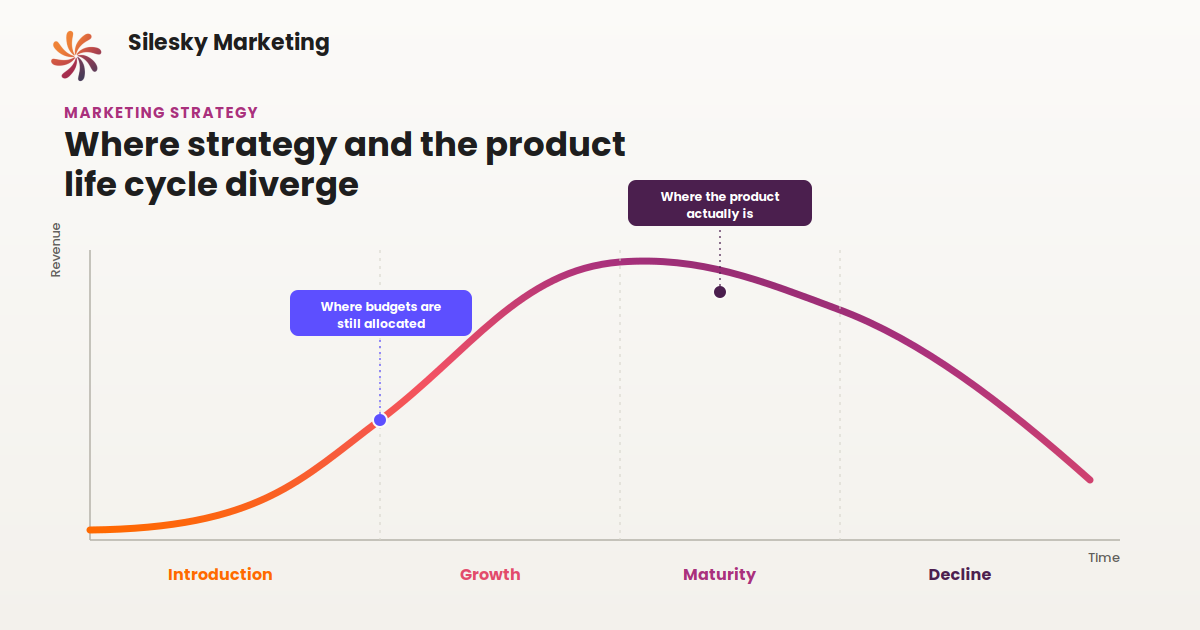
Marketing timelines by industry look nothing alike. All three businesses still receive the same generic advice, usually some version of ninety days and a little patience. Frustration sets in when the calendar runs out, and the results haven’t caught up. Patience was never the missing ingredient; a borrowed calendar was standing in for the buyer’s real decision process.
Marketing Timelines Follow Your Buying Process, Not a Universal Calendar
A marketing timeline is set by how your buyer moves through their own decision process, not by a fixed number of days on someone else’s calendar.
Most timeline advice comes from a generic playbook built for whichever industry produces the most content online, usually retail or SaaS. There, a buyer can click and pay in the same sitting. Construction, healthcare, and professional-services buyers don’t work that way. That friction shows up differently depending on the business:
- A contractor’s next client often can’t move until a loan or permit clears.
- Inside a hospital, the compliance officer decides whether the campaign runs at all.
- Waiting behind a managing partner’s six other decisions, a law firm’s next referral can sit for weeks.
None of those buyers move faster because an agency publishes more often.
What Sets a Marketing Timeline
Three factors set a realistic marketing timeline for any business:
- The length of the buyer’s internal approval process.
- How many people have to sign off before money moves.
- Whether an outside requirement (a permit, a regulation, a partner vote) sits between interest and purchase.
A retail impulse buyer has none of these. Construction, healthcare, and professional-services buyers all carry at least one, and most carry two.
Why Borrowing Someone Else’s Timeline Backfires
Applying a borrowed timeline to a business with real internal friction sets an expectation the buying process was never built to meet. The owner judges the campaign against a ninety-day benchmark instead of the mechanism controlling when the buyer says yes. That owner then walks away believing marketing failed, when the real problem is a timeline that never gave marketing enough runway to reach the moment the buyer was able to act.
Construction Timelines Follow Bid Cycles and Project Cash Flow
Construction marketing timelines are set by the bid-to-cash cycle, not by how many months a campaign has been running.
Three mechanics control when a contractor actually has cash on hand, and none of them run on a marketing calendar:
- Progress billing pays out in draws tied to a schedule of values, each one submitted, reviewed, and approved before the next check moves.
- Common in subcontracts, pay-when-paid clauses mean a general contractor often can’t release funds downstream until the owner has released funds to them.
- Set in the contract, retainage holds back a percentage of every draw until the project reaches substantial completion, so a contractor working a full draw schedule still isn’t holding all the cash a job generated until the punch list closes out.
That cash rhythm, not the calendar, is what a marketing plan is competing against. A plan measured against a flat monthly retainer assumes a revenue rhythm retainage was specifically built to interrupt.
Why Marketing Competes With Job Cash Flow, Not the Calendar
A construction owner isn’t slow to invest in marketing because they’re unconvinced of its value. The last job usually hasn’t paid out yet, and the calendar has nothing to do with when that changes. Marketing plans built around a fixed monthly retainer assume a monthly cash rhythm most contractors don’t have.
What Realistic Timing Looks Like for a Construction Marketing Plan
A construction marketing timeline works better anchored to project completions than to fixed months. Early activity, content, local search visibility, referral systems, builds while jobs are still in progress. The visible payoff, more inbound bids, tends to land once at least one full project cycle has closed and cash has cycled back into the business. That’s typically longer than a single quarter, and a shorter timeline set against that reality only guarantees disappointment.
Healthcare Timelines Follow Compliance Review and Multiple Stakeholders
Healthcare marketing timelines are set by compliance review, not by how enthusiastic the internal champion is.
The U.S. Department of Health and Human Services requires written patient authorization under the HIPAA Privacy Rule (45 CFR 164.508). That authorization must be in place before protected health information is used for marketing purposes. That single requirement adds a compliance filter no retail or professional-services business has to clear, which means a campaign idea a marketing director loves on Monday can still be sitting in legal review a month later.
The Compliance Layer Other Industries Don’t Have
A healthcare marketing timeline has to build in review time before a single asset goes live, not after. That review path usually isn’t a single stop:
- Marketing drafts the concept.
- A compliance officer reviews it first, often sending it back for revision, especially when the campaign references patient outcomes or testimonials that need de-identification.
- Only after that does legal sign off, once compliance concerns are resolved.
Each loop adds real time, not because anyone is dragging their feet, but because getting an authorization requirement wrong creates liability the organization can’t unwind after the fact.
Why More Than One Person Has to Sign Off
Clinical, technical, financial, and compliance stakeholders each have a legitimate reason to weigh in before a healthcare campaign launches. Multi-stakeholder purchasing committees are the standard structure at most hospitals and health systems, not the exception. A healthcare marketing timeline that assumes one enthusiastic champion can approve and launch alone is planning around an authority structure that doesn’t exist in most healthcare organizations.
Professional-Services Timelines Follow Partner Authority, Not Full Consensus
Professional-services marketing timelines are set by whichever partner holds real authority over the decision. That authority structure looks different from firm to firm.
Governance varies by partnership agreement more than by profession. Two patterns show up most often:
- Some firms require a supermajority for anything beyond routine spending.
- Others delegate standing authority to a managing partner or executive committee to approve marketing decisions without a full vote.
What tends to determine the timeline isn’t whether the firm does law or accounting. It’s whether one accountable partner holds real authority, or whether the agreement requires a broader sign-off before anything moves.
Timing compounds the authority question. A marketing proposal that lands on an accounting firm’s desk in the middle of tax season will wait regardless of how much a partner likes it. That’s not because anyone changed their mind. There’s simply no bandwidth to evaluate anything outside client deliverables until the season closes.
A law firm doesn’t have one universal season. Individual practice groups often carry their own version instead, a heavy trial calendar or a recurring filing deadline that does the same thing to a marketing decision’s timeline.
Why “Partner Buy-In” Is Often a Myth
The idea that a professional-services marketing plan needs unanimous partner agreement to move forward is one of the more persistent myths in the industry. It tends to stall decisions that a single accountable partner could make alone. Moiré Marketing Partners, a firm that works with accounting and law firms, argues that consensus-based decision-making doesn’t function well when a firm is trying to approve a marketing plan.
Finding Who Owns the Decision at Your Firm
The fastest way to shorten a professional-services marketing timeline is to identify the one partner with real authority to approve or kill an idea. Build the plan around that person’s calendar instead of the whole partnership’s. That single change turns a stalled decision into a workable one without waiting for a vote that was never going to happen.
Building a Marketing Plan Timed to Your Industry, Not Someone Else’s
A construction draw schedule, a HIPAA compliance review, and a managing partner’s calendar have nothing in common on the surface, and that’s exactly the point. Each sets a real, specific timeline that has nothing to do with patience and everything to do with how that particular buyer says yes.
Borrowing someone else’s ninety-day plan doesn’t fail because the marketing was bad. It fails because the timeline was never built around the mechanism controlling the buyer’s decision. That mechanism might be retainage, a compliance officer, or a managing partner’s calendar, but a generic plan was never built to fit any of them. The starting point isn’t a new calendar. It’s naming the mechanism controlling your business, then building the marketing plan to match it.
If your last marketing effort stalled out before it had a real chance to work, the timeline it was measured against is worth a second look. Pull up a chair, let’s talk about what’s setting your timeline before the next one gets built the same way, and reach out to our team about your specific situation.