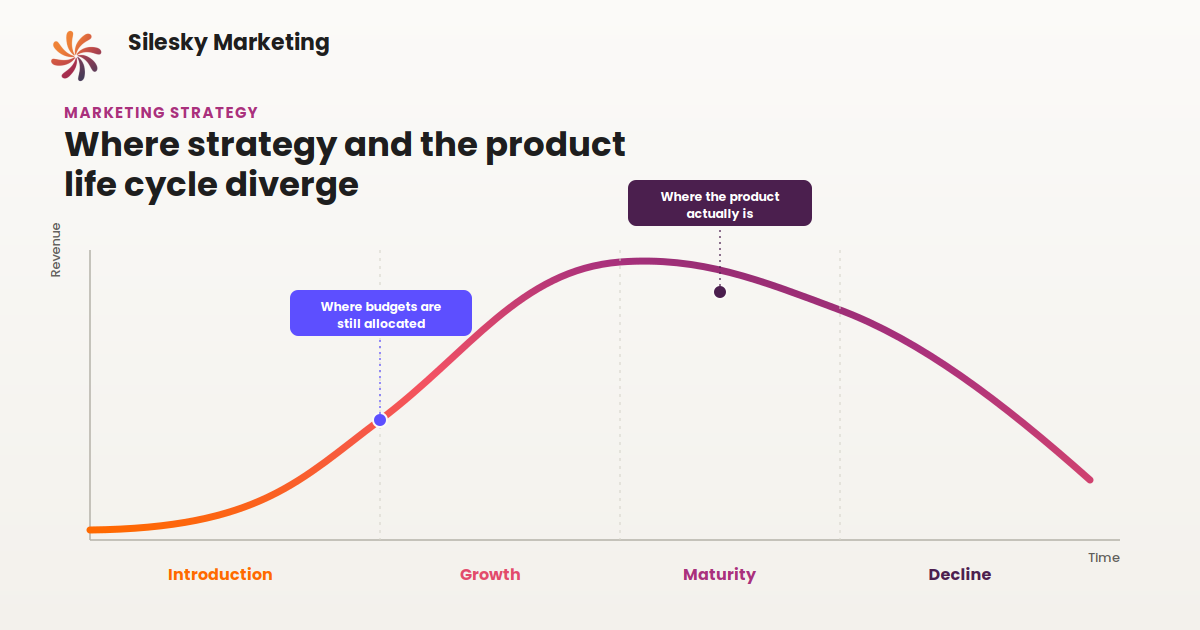

The campaigns are running. Budget is moving. Your team is working late. And the revenue line has not moved in months. This is the moment most business owners make the wrong call. They increase spending, bring on another agency, or launch a new campaign on top of one nobody measured. All of this adds noise, and none adds clarity. The problem was never effort. A marketing audit reveals exactly why growth is stalling, and the answers are almost never where leaders expect to find them.
The real issue sits in the disconnects between strategy and execution, between messaging and buyer expectations, between what the dashboard shows and what the bank account reflects. An audit pulls those disconnects into plain view so decisions rest on evidence instead of instinct.
The Difference Between a Slowdown and a Stall
When Activity Keeps Moving but Results Stay Flat
Growth slows for every business at different stages. Stalling is different. When a team is producing, the budget is burning, and the results have flatlined, the business has moved beyond a rough quarter into something structural. Dashboards still light up with impressions, clicks, and open rates, but none of those numbers connect to booked revenue.
This is where vanity metrics become dangerous. They create the illusion of forward motion while the business sits still. An audit strips away the activity layer and tests whether the work produces three things.
- Pipeline, meaning qualified leads moving toward a purchase
- Conversions, meaning leads turning into paying clients
- Revenue attribution, meaning clear proof of which channels drive the money
If marketing activity cannot tie back to at least one of those three, the effort is contributing to the appearance of growth. And appearance is not the same as progress.
Why Most Teams Misdiagnose the Problem
When results stall, the first instinct is to blame the most visible thing. Ads are not working. The website needs a redesign. Content is stale. These reactions feel productive, but they usually target symptoms while the root cause goes untouched.
A company might fire the ad agency and hire a new one, only to see the same flat results three months later. Messaging, not media spend, was the real problem. No amount of paid traffic converts confused visitors into clients when every channel tells a different story. An audit forces the team to step back and examine the system rather than the parts.
Where Vendor Fragmentation Quietly Drains Results
The Cost of Running Disconnected Partners
One vendor handles SEO. Another runs paid ads. A third manages email, and a fourth built the website two years ago without any involvement since. Each vendor optimizes for their own metrics, reports on their own timeline, and has no visibility into what the others are doing.
The result is a marketing operation pulling in five different directions. An audit maps all vendor activity against shared business goals and exposes where the problems sit.
- Duplicated effort where two vendors cover the same ground without knowing
- Contradicting strategies where one vendor’s work undermines another’s
- Reporting gaps where no single dashboard shows the complete performance story
- Accountability holes where no one owns the overall outcome
Vendor fragmentation is one of the most common audit findings and one of the most expensive. The fix is not always fewer vendors. Sometimes the fix is a single point of strategic ownership connecting every partner to the same set of goals.
When Brand Voice Fractures Across Channels
A prospect visits the website and reads a polished, professional message. Next, they see a social ad with a completely different tone. Later, they received an email sounding like a third company wrote the copy. Each interaction chips away at trust because the brand feels inconsistent.
This happens when multiple vendors write content without a shared voice guide. The audit reviews every customer touchpoint and flags where the voice drifts. Inconsistent messaging shows up in lost conversions nobody explains, in prospects who disengage without giving a reason, and in a brand failing to stick in the buyer’s memory.
Budget Waste Hiding in Plain Sight
Metrics Looking Good Without Driving Revenue
A paid campaign shows 50,000 impressions and a 4% click rate. On paper, the report looks strong. But when the audit traces those clicks to the bottom of the funnel, only two became paying clients. The cost per acquisition is ten times what the target should be, and no one flagged the gap because the surface numbers looked healthy.
Audits earn their value here. They move past surface metrics and force harder questions.
- Which channels produced a paying client in the last 90 days?
- What is the actual cost to acquire each new customer, by channel?
- How much of the current budget goes toward channels with no measurable revenue return?
- Are the leads marketing celebrates the same leads sales manages to close?
Most teams cannot answer these questions with confidence. The audit builds the data trail connecting marketing spend to business outcomes, often showing a significant portion of the budget supporting channels with no client production in months.
Reallocating Spend Toward What Already Works
Every dollar spent on a channel producing no results is a dollar better directed to one already performing. This sounds obvious, but without an audit, most businesses lack the data to make the call. The audit creates a clear map of performance by channel, showing where money works and where money leaks. From there, reallocation becomes a math problem instead of a guessing game. Teams shifting budget based on audit findings often see ROI improve without spending an additional dollar.
Turning Findings Into a Plan Protecting Growth
Prioritizing Fixes by Revenue Impact
An audit produces findings. Some require immediate action. Others are longer-term structural changes. Trying to fix everything at once burns out the team and delays the changes, making the biggest difference. The smarter approach ranks each finding by two factors.
- Revenue impact, meaning how much the issue costs the business if left unfixed
- Speed of implementation, meaning how quickly the fix produces a measurable result
A broken follow-up sequence letting leads go cold for 72 hours is a fast fix with immediate revenue impact. Rebuilding messaging across every channel is a high-impact project taking weeks. Both matter, but the sequencing determines whether the team sees early wins building confidence or gets buried under changes with no momentum.
Building a Review Cadence: Preventing Future Stalls
A single audit solves the current stall. A recurring review cycle prevents the next one. Markets shift. Channels evolve. Buyer behavior changes. Without a system to catch the drift early, the business ends up back in the same position twelve months later.
Two rhythms make the most effective cadence.
- Quarterly check-ins on channel performance, lead quality, and budget allocation. These are fast reviews flagging whether anything has slipped since the last audit.
- Annual deep audits revisit messaging, the full customer journey, vendor coordination, and analytics accuracy. Annual reviews reset the foundation and keep the strategy current.
The businesses growing steadily are not the ones auditing once when things break. They are the ones who build the audit into how they operate.
Growth stalls when the system is misaligned, not when the team stops trying. Effort is there. Budget is there. What is missing is visibility into where the effort meets a wall and where the budget feeds activity instead of outcomes.
An audit provides this visibility, showing where messaging confuses buyers, where vendors work against each other, where spend disappears into channels producing nothing, and where the funnel leaks prospects before they ever reach a sales conversation. If revenue has been flat despite a full calendar and an active marketing budget, the question is not whether to do more. The question is whether what you are doing is connected to what you are trying to achieve.
Related Reading
Too Many Vendors Are Slowing Your Marketing Down
The Core Areas a Marketing Audit Must Cover