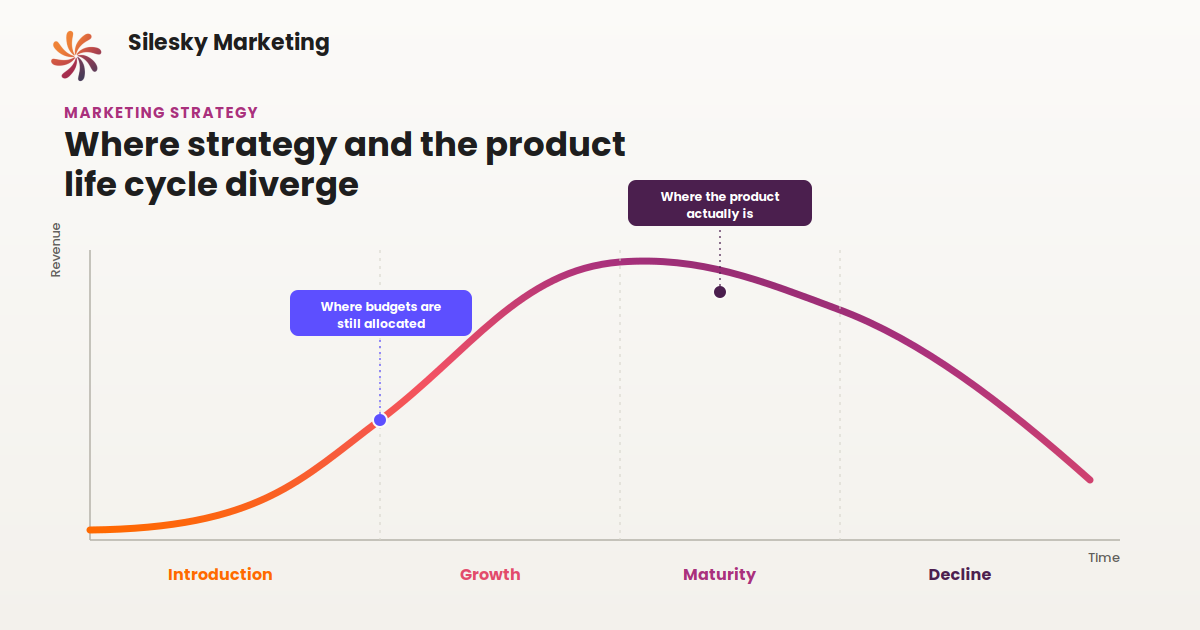

Something happened the last time you invested in marketing. Maybe you ran ads for a quarter, hired someone to write a few blogs, or started posting more consistently on social media. Traffic picked up, and maybe you even got a new client. Yet, there really wasn’t a lot of anything, so you stopped.
When you returned 10 months later, you had to start from scratch, and all the traction you had created 10 months before was gone.
That cycle has a name, and it has nothing to do with whether marketing works for businesses like yours. Most business owners only grasp the importance of a marketing strategy after they’ve lived through the restart. The problem isn’t the execution. It’s what was missing before the execution ever began.
What Is Marketing Without a Strategy?
Marketing without strategy is a schedule of activities with no defined destination. It tells you what to do, but it can’t tell you whether any of it should actually work.
If you’ve planned your social media posts, set an advertising budget, and hired an agency, it can feel like you have a strategy. That’s a common assumption—and one of the biggest reasons marketing efforts stall, fade, and eventually need to be restarted.
Think of it like building a house.
You can hire contractors, order materials, and create a construction timeline. But without a blueprint defining what you’re building, who it’s for, and how everything fits together, the crew is simply assembling parts.
The work is real. The effort isn’t wasted. But there’s no assurance the finished structure will serve its intended purpose.
Marketing works the same way.
A marketing plan tells you what actions to take. A marketing strategy explains why those actions should produce the result you’re after.
What Is a Strategic Marketing Plan?
A strategic marketing plan is what you get when a documented marketing strategy and a documented marketing plan exist together and answer for each other.
A marketing plan answers the operational question of what your business is actually doing. It covers the channels, the content schedule, the ad spend, and the timeline. A marketing strategy answers the foundational question of why any of it should work. It defines who you’re actually trying to reach, why they should choose you over any competitor, what problem you solve that no one else does the same way, and what measurable success looks like before the spending begins.
Marketing Plan → What are we doing? Channels, content schedule, ad spend, and timeline.
Marketing Strategy → Why will any of it work? Target audience, competitive differentiation, and measurable success criteria.
Together → Every tactic has a reason behind it.
When both exist together, every tactic in the plan has a reason behind it. A blog post isn’t content for content’s sake. It’s a specific answer to a question your ideal customer is already searching for. The plan determines what gets done. The strategy determines whether any of it should matter to anyone.
What Do Most Businesses Have Instead of a Strategy?
Most businesses have activity. What that activity actually consists of is usually the same short list:
- A website that launched because every business needs a website
- Social media accounts that post because everyone says you should post
- Ads are running because a vendor recommended them
Each of those decisions made sense in isolation. What’s missing is the logic connecting them. No consistent audience profile guides all of those channels toward the same person. No articulated reason explains why a prospect should choose this business over a competitor, and no measurement framework ties any of it back to revenue. The activity exists, but the strategy that would make it purposeful doesn’t.
Marketing Tactics Are Not a Plan
Take blog content as an example, because it’s the most common place this misunderstanding plays out. A blog post that ranks in search does exactly what it’s designed to do. It drives traffic to the site, and for a moment, your brand is in front of the right person at exactly the right time.
Then what?
If there’s no strategy behind that content, no clear call to action tied to a specific offer, no lead capture designed for where that reader is in their buying process, and no system to follow up and keep your business visible after they leave, that reader disappears. The traffic was real, and the opportunity was real. The infrastructure to capture it wasn’t. CoSchedule’s State of Marketing Strategy report found that marketers with a documented strategy are 674% more likely to report success than those without one. The gap isn’t budget or talent. It’s structure.
Symptoms of a Business Working Without a Plan
If any of the following patterns sound familiar, the issue is most likely structural:
- Marketing results that shift month to month with no clear explanation for the gaps
- Spending budget on channels that show activity but can’t be traced back to actual revenue
- Scattered efforts across social media, ads, and content, with no visible logic connecting them
- Consistently rebuilding from scratch every time a campaign ends or a vendor relationship changes
- Tried more than one agency or platform without seeing a meaningful improvement in outcomes
Each of these symptoms points to the same root cause. The activity was real. The strategy that would have made that activity compound wasn’t.
The Inevitable Reset of a Strategyless Marketing Plan
Strategy-free marketing doesn’t just stall. Without a foundation, every pause sends accumulated brand recognition, content authority, and audience momentum back to zero.
Restart Cycle –
Without a marketing strategy, every pause triggers a full reset. The brand recognition, content authority, and audience trust you’d spent months building don’t carry forward. When you return to marketing, you aren’t resuming. You’re restarting.
Marketing performance compounds when a strategy exists to hold it together. Over time, consistent presence builds brand recognition, published content accumulates domain authority, and the audience relationships you’ve started building deepen with each new touchpoint. When strategy is the foundation, pausing a single tactic doesn’t erase the progress. That progress lives in the framework, not the activity.
Without a strategy, the reverse is true. The progress lives in the activity itself. When the activity stops, everything it was building stops with it. The audience you’d started reaching stops hearing from you. The content sits without a system to make anything of it. When you return to marketing, you’re not picking up where you left off. You’re starting over because there’s no foundation to return to.
Byron Sharp’s research in “How Brands Grow” established that brands need a consistent presence to stay in the consideration set when a buyer is ready to act. Stopping and restarting campaigns doesn’t pause that process. It erases it.
What Does the Restart Cost a Growing Business?
A Nielsen analysis of more than 40,000 marketing activities found that the average business earns just $0.70 for every marketing dollar spent. Strategic, properly targeted marketing returns $2.60 per dollar. That’s nearly a fourfold difference between businesses operating with a strategy and businesses spending without one.
$0.70 vs. $2.60 — Average marketing return per dollar: without strategy vs. with strategic targeting (Nielsen, 40,000+ marketing activities)
87% vs. 13% — Success rate with a documented marketing plan vs. without one (Simple Texting, 2024 survey of 1,400 business owners)
26% — Average share of marketing budget wasted on ineffective channels and strategies (Rakuten)
The 2024 Simple Texting survey of 1,400 business owners made it even clearer. Businesses with a documented marketing plan reported an 87% success rate, while those without one came in at just 13%, despite operating in the same channels and marketplace.
That gap doesn’t account for the compounding cost of the restart itself. A Rakuten survey of 1,000 marketers found the average business wastes 26% of its marketing budget on ineffective channels and strategies. When that budget moves without a strategic framework behind it, each restart doesn’t just cost what was spent. It costs what that spending should have built.
It’s Time to Build a Foundation for Your Future
Marketing built on strategy doesn’t feel like gambling. The budget has direction. Each channel serves a defined purpose within a larger framework. When one effort pauses, the others hold the momentum. When something isn’t performing, there’s a system to diagnose it instead of a reason to abandon everything and begin again.
That’s what a strategic marketing plan actually gives a business. The campaigns get better, but what really changes is the structure underneath them. Every future effort becomes less expensive to run and more likely to build on what came before it.
If these patterns describe your last attempt at marketing, the question isn’t what went wrong. It’s what was missing. Silesky works with businesses in construction, healthcare, B2B professional services, and beyond to build the strategic foundation that makes marketing cumulative. One conversation tells you more than six months of wondering.
Pull up a chair. Let’s talk.