The Hire That Made It Real
The Partnership That Transformed the Agency
When Susi brought on Kim, it wasn’t to fill a rigid graphic design role or a pre-defined job description. Kim joined an agency in the middle of an identity shift. What followed was a creative partnership built in the trenches—solving problems in real-time for a growing roster of Maryland clients.
Rather than dividing labor into silos, they built the agency’s foundation side-by-side. They didn’t just share tasks; they shared the risk of expanding into uncharted territory.
Navigating the Digital Shift: From Print to Web
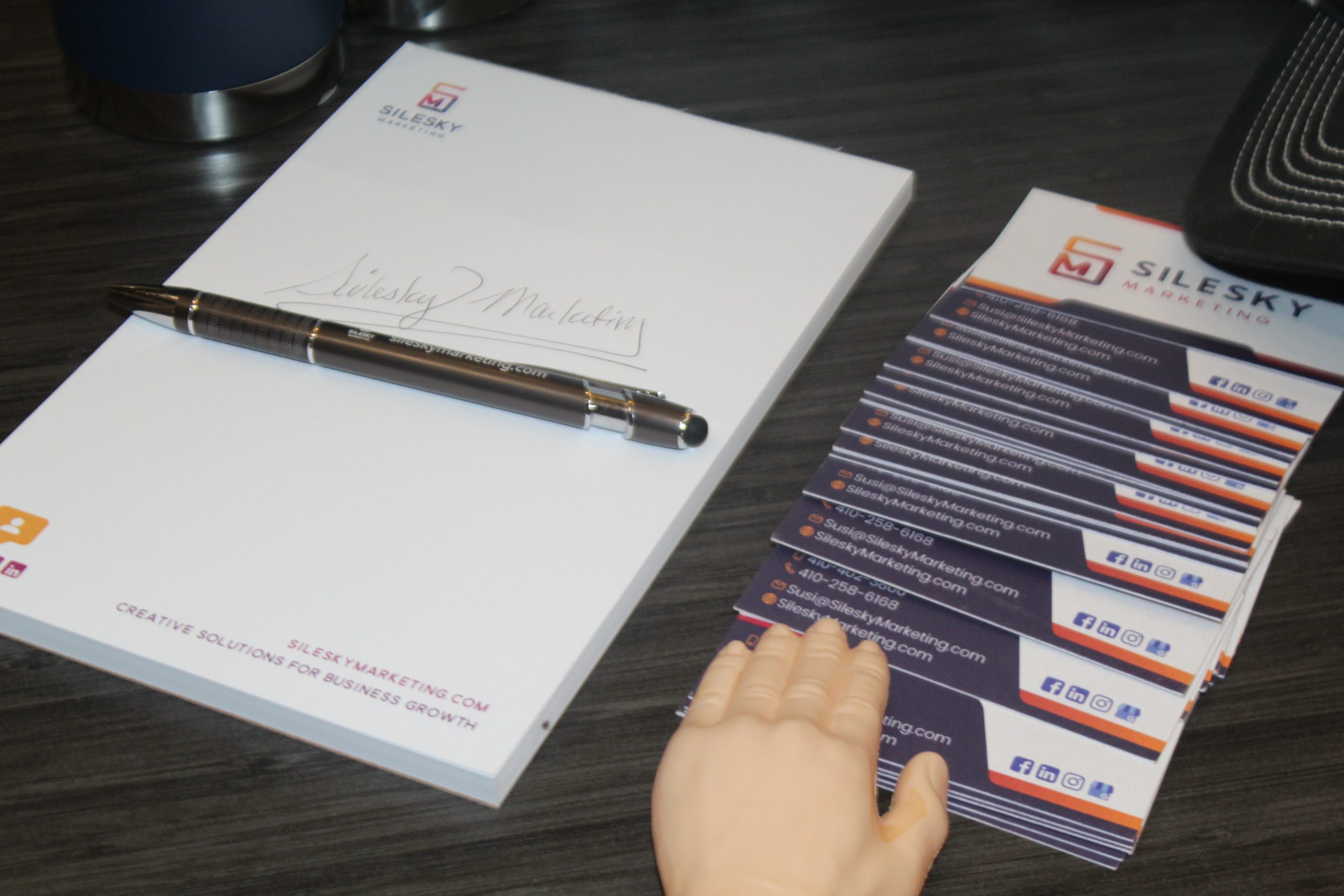
- If a logo does not work in one solid color and fit on the tip of a pen where it reads clearly, it is not a good logo. Simplicity wins. Less is always more! Longevity matters more than trends.
Building a Roster the Hard Way
The Names That Built the Network
The story of Silesky’s early expansion wasn’t written in data points or broad market categories; it was written through the trust of individual advocates. In the beginning, growth didn’t come from a sales team, it came from one mortgage lender who saw the value in professional branding, from community leaders in the non-profit sector who spoke highly and loudly of the work Silesky was doing on their behalf, and from local entrepreneurs who opened doors to their own professional circles.
These early adopters acted as a bridge, allowing the agency to translate its design expertise across vastly different business landscapes. What began as a niche presence soon scaled into a diverse portfolio:
-
Real Estate & Finance: High-stakes branding for mortgage providers and real estate agents established a reputation for professionalism and market authority.
-
Healthcare & Specialized Services: The agency’s ability to humanize brands led to successful partnerships with dental offices and medical private practices.
-
Trade & Construction: By creating high-impact visual identities for construction companies, Silesky proved that “high design” was just as vital for the trades as it was for the boardroom.
-
The Non-Profit Sector: From the first teenage-focused campaign for a Jewish educational center to complex community initiatives, these projects served as a constant proof of concept.
Reputation as a Growth Engine
This era of the agency was defined by a pipeline that lacked automation but excelled in human capital. Referral-based growth operates on a simple, rigorous logic: the work must be clear and effective enough that a client feels comfortable staking their own reputation on a recommendation.
By consistently delivering results for a local dental office or a regional construction firm, the agency proved its versatility. At Silesky, the work didn’t just speak; it echoed—turning individual projects into a multi-decade network of regional influence.
From Nonprofit Work to a Broader Roster
The Work That Defined the Agency’s Identity
Campaigns That Got Noticed
The Bulldog That Became a Brand: A Masterclass in Creative Instinct
Finding the Face of the Brand
Susi’s approach didn’t begin with a standard style guide; it began with her custom 30-point brand questionnaire. Deep into that process, the conversation shifted to Scott’s bulldog, Angus. Long before the GEICO Gecko or the Aflac Duck became marketing staples, Susi saw a different kind of potential in a brand mascot. She could instantly picture Angus’s distinct expression as the anchor of the visual identity.
To capture the soul of the brand, Susi brought in photographer Stuart Zolotorow. The two of them spent an entire morning sitting on the floor of Scott’s house, adjusting angles and waiting for the perfect shot that captured Angus’s quiet confidence and personality.
The Leap of Faith
Transitioning a well-established residential painting brand to a bulldog-centric identity was a bold move. Scott was understandably hesitant at first. It was a radical departure from the “safe,” corporate aesthetic he was used to for so long. However, he leaned into the relationship he had built with Susi and trusted Silesky’s vision. Once the shot was captured, Susi turned to Scott with the line that would define the company for decades: “Get Ready to Be Impressed.”
From Instinct to Icon
What started as a creative “hunch” quickly became one of the most recognizable brands in the region. The impact wasn’t just in the logo itself, but in the total brand immersion:
-
Mobile Billboards: We wrapped the entire fleet of Sheldon and Sons trucks, turning every job site into a high-impact advertisement.
-
Consistent Collateral: From business cards to lawn signs, print ads and direct mail, Angus became the synonymous face of quality.
-
Longevity: Angus has remained the centerpiece of Sheldon and Sons for more than 25 years, proving that a daring creative risk, when backed by strategy, can outlast any trend.
Susi identifies this as one of her favorite projects because it proved that when a client trusts an agency to be different, the results can become legendary. The rest, as they say, is history.
What the Growth Years Actually Built
By the early 2000s, Silesky Marketing had moved beyond the “startup” phase. The agency now possessed a deep client roster, a formidable creative partnership, and a body of work with undeniable staying power. This growth wasn’t manufactured by outspending the competition or chasing fleeting trends; it was the result of a deliberate, three-pillar strategy:
-
Relationship Architecture: Building trust-based networks that converted single projects into lifelong friendships.
-
Design Longevity: Delivering brand identities that remained relevant decades after their initial launch.
-
Adaptive Learning: Mastering new technologies, like the transition from print to digital, in real-time as the market shifted.
The Weight of a Five-Person Agency
By the mid-2000s, the agency reached a milestone that marked a genuine shift in scale: a team of five full-time employees. This was more than just a headcount. For Susi, it represented a profound evolution in her role as a founder. She was no longer a solo practitioner; she was the steward of a team. The stakes had shifted from personal survival to collective responsibility. Susi was now responsible for the livelihoods of four other people. For a business that began as a single name on a sheet of letterhead on a front stoop, this growth was a hard-earned testament to the agency’s value in the Baltimore market.
The Shift No One Saw Coming
Silesky had built a clear identity and a stable foundation. Yet, the question was no longer whether the agency could compete, but how far it could go. However, in the world of small business, external forces can override even the most stable foundations.
Part 3 picks up in 2006, when Silesky Marketing was forced to close its doors. So, with five employees at the height of their craft and a roster of loyal clients,the agency faced a transition it didn’t choose — a sudden, forced finale that would eventually pave the way for an entirely new chapter.