Why Business Owners Resist Social Media and What It Costs Them

I hate social media is a phrase we hear a lot! “It’s a waste of time.” Or, “I’m a business owner, not an Instagram influencer.” This kind of thinking is more common than you’d think, and having this thought process could be leaving thousands (even millions, depending on your industry) in revenue on the table. Before your social-savvy competitors hit Social, gaining access to those dollars is easier than you might think. Seven Benefits of Social Media for Business — for Nay Sayers: More cost-effective than traditional advertising Lays the foundation for a trustworthy brand reputation Helps find new customers and reach a larger audience quicker than other forms of advertising Your business brand becomes human (more on that later!) Enormous benefits from user-generated content and unsolicited shares Gather customer feedback and reviews and engage directly Social media can help you build an engaged community   How do we garner results? Social Media is more cost-effective than traditional advertising. One of the main benefits of using social media for business is that SMM is more cost-effective than traditional media. For a basic comparison, CPM for Broadcast TV is $36.19. For FaceBook and Instagram it averages out to $7.1 per 1000 impressions, and on LinkedIn it’s $6.59 per 1000 impressions. SMM also allows you to boost posts and run ads which helps your business reach a larger audience for minimal resources. For an idea of what Silesky Marketing charges for posting on your behalf, give us a call, or send us an IM on Facebook or Linkedin.. By regularly posting custom curated content, your business will attract new followers and potential clients and build a community of engaged customers. Finding new customers and reaching a larger audiences is easy on Social Media. In fact, in 2021, there were 4.48 billion people actively using social media globally. This is an increase of 13.13% year-on-year from the 3.69 billion in 2020. When your company posts on social media sites, it helps your business rank better on search engines. For example, if you Google “Sephora” or “Home Depot” as two examples and scroll down after their Google ads, you will find the top links to their Twitter, FB, Instagram, Pinterest, and LinkedIn accounts.   Your business brand becomes more human What’s this mean? Customers want to do business with brands they know and trust, and social media is the #1 way to build that trust. 64% of consumers want businesses to connect with them! (You’re more popular than you think). By sharing your company’s brand story, industry news, or product/service information on your social platforms, you are transparent about your values and therefore you can show customers that you’re more than just a faceless business looking for their business.   Benefit from user-generated content and word-of-mouth UGC is any content created by someone other than your company, such as reviews, testimonials, or product photos that they share on their channels by either tagging your business or posting it on your wall. This kind of content is precious for your business because it helps build trust and credibility. When customers see that other people are happy with your product or service, they’re more likely to give you a try. 92% of people value product recommendations from people they know above all else. It also has the potential to generate external links back to your profile and website, which massively benefits your ranking in search engines.   Engage directly with your customers Social media is also a great way to gather customer opinions and engage directly with your audience. By monitoring what people are saying about your brand online, you can quickly address any concerns or issues. It also shows people how you deal with problems, which can be a positive. Additionally, social media gives you the chance to have one-on-one conversations with customers and get their honest feedback about your product or service. By regularly sharing valuable content and interacting with your followers, you can create a group of loyal fans interested in what you have to say. If your fans are customers, you can also benefit from a high net promoter score — the golden goose of word-of-mouth marketing. Additionally, social media allows you to connect with other businesses in your industry and form partnerships or collaborations.   Most platforms also have excellent analytics tools Analytical tools let you understand your audience better. Using these tools, you can learn more about your customer’s needs and wants, demographics, and how to serve them better. Lay the foundation for a trustworthy brand reputation Customers are more likely to trust a brand they’ve seen online than one they’ve never heard of. By building a solid social media presence, you can establish your brand as an industry leader and gain the trust of potential customers. Let’s take Sephora as an example again — in 2019, famous singer SZA complained about being accused of shoplifting in a retail location. The incident sparked negative discussion about racial profiling around the brand. As a result, Sephora took to their social accounts to announce their stores would be closing, temporarily, so employees could undertake diversity training. The public saw this as an active move for improvement. Without a social presence? Crisis management on this scale is either impossible or impossibly expensive — your choice. This applies if you’re a solo services provider as well — by using social media to establish yourself as a thought leader, you can attract potential customers and grow your business.   Avoiding the Pitfalls of Social Media 101 Here’s how your business can avoid making some common mistakes on social media: Keep an eye on the tone of your posts: Be mindful of the language you use on social media and avoid coming across as angry, defensive, or condescending. Don’t post misleading or clickbait content: Clickbait is designed to get people to click on a link without giving context about what they will see. This type of content is annoying, but it can also damage your reputation
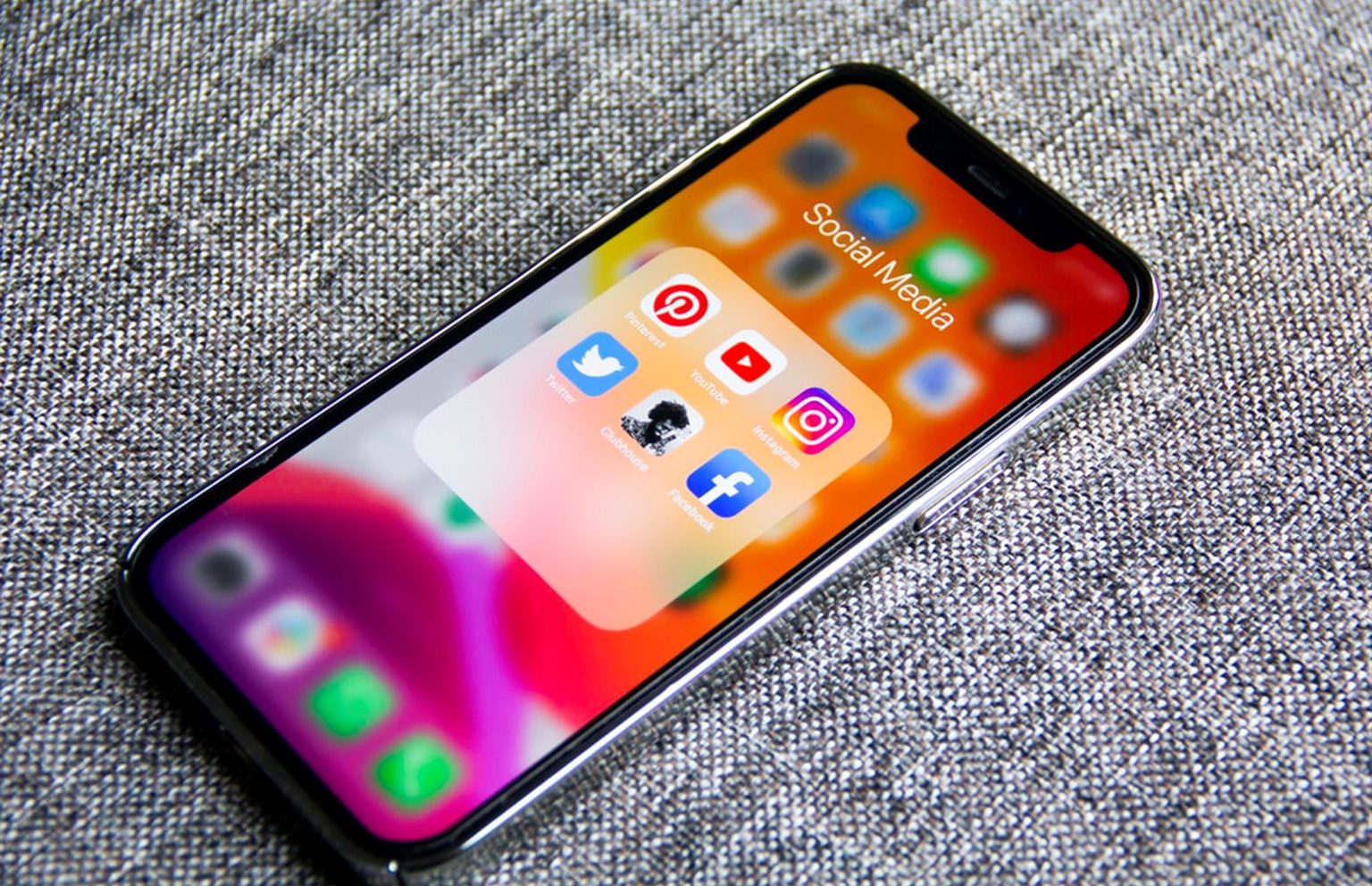
2022 Trends in Social Media

Like it or not, 2022 is here — and with every new year comes new trends in social media to watch for. Your marketing strategies should evolve as technology, culture, and the social media landscape change. If you can’t stay ahead of the curve, your brand will fall behind. That’s why it’s crucial to start preparing for these changes now. IMPORTANT TRENDS TO LOOK FOR Video content will continue to grow in popularity Focus on short-form video content The popularity of augmented reality will increase Micro-influencers will become more popular Social commerce will continue its growth curve LinkedIn will become a popular destination for creators Live audio chat spaces will become a way for your brand to connect with your audience User-generated content will still be a key success factor You can’t avoid paid advertising Video content will continue to grow in popularity Videos are a great way to engage and connect with your audience. Not only that, they also tend to be more memorable than text-based content. Video content will make up 82% of all internet traffic this year. Using video can help grow your revenues by 49%. Staying ahead of the curve, means creating more video content for your brand! YouTube, TikTok, and Instagram, among the top 3 media channels, for posting your video content. Focus on short-form video content While long-form videos will still be popular in 2022, short-form video content will grow even more. This is because short-form videos are easier to consume and don’t require as much of your audience’s time. TikTok was the most downloaded app in both 2021 and 2020. YouTube Shorts receives 15 billion daily views. The popularity of augmented reality will increase AR has been on the rise for a few years now, and it doesn’t look like it’s going to stop anytime soon. This means that brands need to prepare themselves for Augmented reality (AR). This is where designers enhance parts of a users’ physical world with computer-generated input. There will be 1.73 billion mobile AR users by 2024. Interest in the metaverse is at an all-time high. 3/4 Snapchat users engage with Snapchat AR every day. Consult with an AR agency to see how you can incorporate things like Snapchat filters into your marketing campaigns. Micro-influencers will become more popular In 2022, micro-influencers will be one of the most important demographics for brands. They have a high level of trust among their followers and are seen as more authentic than celebrities. According to Influencer Marketing Hub, TikTok: micro-influencers engagement rate (ER) is 18%, mega-influencer ER is around 5%. YouTube: micro-influencer ER is 1.64%, mega-influencer ER is 0.37%. Instagram: micro-influencer ER is 3.86%, mega-influencer ER is 1.21%. If you want to connect with your target audience in 2022, micro-influencer marketing is a high-leverage channel. Many brands offer influencers merchandise instead of payment, so try to differentiate yourself. Social commerce will continue its growth curve In 2025, social commerce will be a $1.2 trillion industry. No doubt accelerated by the past two years, more and more people are choosing to buy products and services through social media platforms. Let’s focus on an Instagram marketing strategy. According to Influencer Marketing Hub, Over 55% of social media users between 18 and 24 made purchases through social channels. 60% of Instagram users find out about new products via the platform. 200 million Instagram users will visit at least one business profile every day. If you want to take advantage of this trend, ensure your social media brand profile takes advantage of every social commerce feature available — or at least converts back to your business with ease. LinkedIn will become a popular destination for creators LinkedIn is expected to become a hotspot for creators in 2022. The platform has grown beyond networking in the work-from-home era because it offers a great way to connect with other professionals and share your work. LinkedIn launched a Creator Accelerator last year. LinkedInCreator Mode is slowly rolling out. About 800 million people are on the site as of 2021. Most social platforms are intensely competitive. But with LinkedIn coming into its own this year, you have a chance to get ahead of the curve. If you’re looking for a place to share your content in 2022, LinkedIn is the platform for you! Live audio chat spaces will become a way for your brand to connect with your audience Social audio spaces, such as Twitch and Discord, will become a popular way for brands to connect with their audience in 2022. As we’ve learned from Clubhouse, they offer a more personal connection than text or video chat platforms. 74% of brands plan on investing in audio-only content this year. Facebook (Meta) launched Live Audio Rooms. If you want to connect with your audience more deeply, consider using live audio chat spaces! A popular format is a thought leader hosting a discussion, but do what feels right for your brand. User-generated content will still be a key success factor UGC is seen as more trustworthy than other forms of advertising and can help connect your brand with new audiences. Consumers find UGC nearly 10x more impactful than content from influencers. Over60% of consumers are more likely to buy a product if they see UGC around it. Many marketers’ social media strategies favor influencer content over UGC despite these numbers. If you’re looking for a way to increase trust among your audience, consider using user-generated content in your marketing campaigns! It’s an effective way to connect with new people and build loyalty among your current followers. You can’t avoid paid advertising Paid advertising will still be a necessary part of any marketing strategy in 2022. The platforms and approach may change, but the need for paid ad spend won’t disappear. An average Facebook post gets an organic reach of just 5%. The average ER was around 25%. Don’t give up on content marketing — but you’ll need to supplement it with paid ad spend to achieve any kind of marketing

Landing Pages vs Websites: What Each One Does and When to Use Both

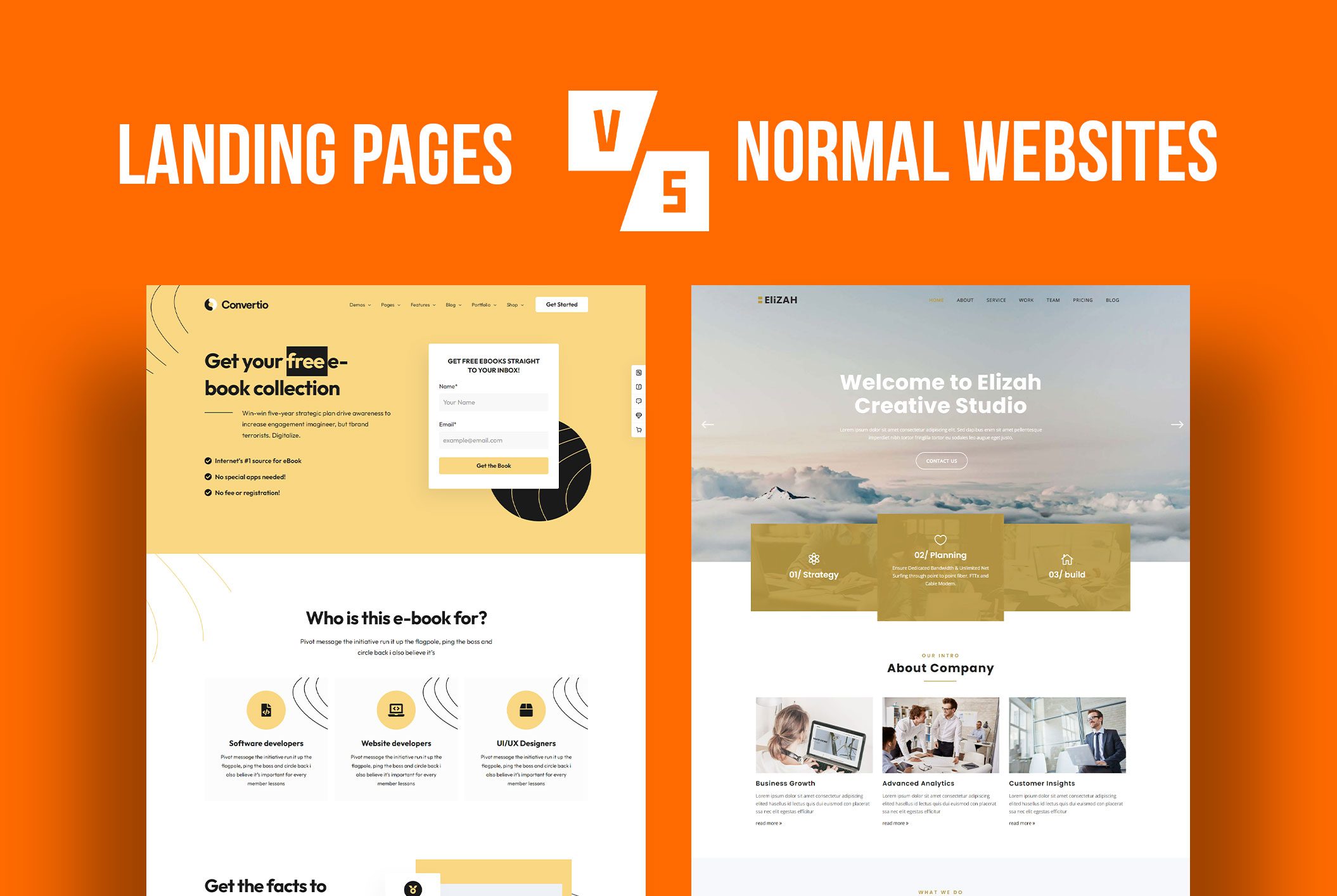
When it comes to a landing page vs website, your website is the first impression you give to your clients or prospects, while your landing page is specifically made to describe an offer—like a free trial or coupon.   LANDING PAGE A landing page is a standalone web page created for a specific marketing or advertising campaign. It’s where you “land” after clicking a link in an email or an ad. Landing pages should direct your target audience toward a singular call-to-action; a singular purchase because they are designed to accomplish a single goal: conversion. The more customized the landing page is, the higher the likelihood of conversion. WEBSITE Your homepage includes several tabs for users to explore. In fact, a homepage encourages your prospect to learn about your brand, product or service, its values and offerings. It is designed to speak to and educate a broad audience. Different from the landing page, a website home page informs the user and brings traffic, while a landing page capitalizes on that traffic.   The primary difference between a homepage and a landing page is the page’s focus. If you are trying to generate leads from an advertising campaign, there are a few things to keep in mind. KISS Keep it simple silly. Landing pages are laser focused. In fact, they have only ONE conversion goal. This affords you a good deal of control over directing your prospect to take an action and take it in a very easy, straightforward way.   CLEAN Again, a landing page needs to be clutter-free. On the flip-side, the nature of a homepage is inherently distracting because there are many places to click, content to visit, things to buy, and information to absorb. The landing page has one request of the visitor— do one thing; buy my product, send me your email, sign up for this promotion, etc. One thing, and one thing only.   EXPERIENCE Every step of the visitor experience on a landing page is tailored towards its goal. Afterall, most users visit a landing page after coming into contact with an ad, email, or social media post. Make sure your landing page is designed to match their first experience (i.e. look like the ad, the post or the email). This affirms their initial interest. In addition to the SEO benefits of customized, relevant content, this level of specificity leaves fewer chances for distraction; it demonstrates that you respect the users’ time by giving them exactly what they want without having to search for it.   Targeted Audience A landing page can be duplicated. In fact, it can also be tweaked to suit different sectors of your target audience. As we mentioned previously, the more customized an experience is, the higher the likelihood of conversion. AirBnB created a great landing page. This is a good example of how to laser focus on your target audience; people who want to Host and Share their Space.   Interested in setting up a landing page for your business? Schedule a meeting to discuss your needs. 

The Importance of a Branded Business Email Address

The importance of a branded business email address can not be over stated. Email is an essential part of running a modern business, but too many owners still operate with a generic ‘@gmail.com‘ or ‘@yahoo.com’ email address. You wouldn’t show up to a sales meeting wearing another business’s branded shirt, would you? You must treat your business email addresses the same way — with a branded email address. “Email is dead.” At least, that’s what everyone has been saying for years now. The reality couldn’t be further from the truth — for every $1 put into email marketing, $42 is generated. Email is an essential part of running a modern business, but too many owners still operate with a generic ‘@gmail.com‘ or ‘@yahoo.com’ email address. You wouldn’t show up to a sales meeting wearing another business’s branded shirt, would you? You must treat your business email addresses the same way — with a branded email address. By the end of this quick explainer, you’ll know everything you need — including where you can go to create a free business email address. Let’s begin!   Breaking Down the Domain Okay, ‘breaking down the domain’ sounds a bit like a band that makes terrible music, but it’s vital to get the terminology right. Let’s start an imaginary business. We’ll call this business Glassier, a dating app exclusively for glass-blowing artists. You decide to buy ‘glassierapp.com‘ — here’s what that means: glassierapp.com — this is the domain name glassierapp — this is the second-level domain .com — this is the top-level domain.   When you start using a professional business email address, it will include a local part and your domain name. For customer service at Glassier, customers can contact ‘help@glassierapp.com“. In this scenario, ‘help’ is the local part. When you send emails back and forth with customers, this is the address that they will see.   Why You Need A Branded Email Address Having a custom business email address that is easily recognized and associated with your brand is crucial for several reasons: It increases the professionalism and credibility of your company. Makes it easier for customers and prospects to find and contact you. Can help improve your search engine rankings. Makes it easier to track customers and sales statistics. Assists in communication efforts both inside and outside of the company. Besides, there’s a certain oomph to sending emails from a custom address. Now, the real question: how do you get your hands on one of these things?   How to Get a Branded Email Address for Your Business There are a few ways you can go about getting a branded email address, but it really boils down to three easy steps: 1. Purchase a domain name that is associated with your company or product. We’ve settled on “glassierapp.com” because ‘.com’ is the most popular and well-recognized TLDs out there. However, “glassier.app” or “glassier.net” would also have worked. Your web hosting provider may provide email services if you already have a domain and website. 2. Use your company’s website address as your email address. For this, you’ll have to use an email service provider such as Google Workspace, Verizon Small Business Essentials, Godaddy mail, etc. An ESP lets users create customized branded email addresses with descriptive domain names while maintaining complete control of all their email messages. 3. Set up the right accounts. You can do this with company services, like ‘help’, ‘contact’, ‘returns’, etc. You can also use it for internal communications: ‘harry@glassierapp.com’, or ‘rob@glassier.app’.  Some tips: avoid special characters in the local part and keep your email short. It’s that simple! While you may run into some technical work setting up the connection from your domain to your email, your ESP will make the process seamless. And, you can always ask someone on our team to assist you.   Where to Get A Business Email Address   Here are some of the best providers for paid and free business email accounts available today: Google Workspace. Google Workspace makes it easy to set up a branded email address. The email address can have any name associated with it, and users also get 30 GB of cloud storage to store files in. Microsoft Office 365. Microsoft’s Office 365 for businesses offers a suite of cloud-based applications, including Exchange Online email service. It allows businesses to create branded email addresses with their company name (@yourcompany.com). Weebly. Weebly offers a free business email address (with 5 GB of storage) when you create a website using their platform (note: you’ll be using a Weebly subdomain, which is far from ideal). You can choose from various domain names (including your own custom domain name) and receive spam filtering and virus protection. Zoho Mail. Zoho offers a suite of online business applications, including a free business email account with 5 GB of storage. Zoho Mail is also very affordable, and you’ll receive anti-virus and anti-spam protection. Wix. When you use their website building software, Wix also gives you a free business email address (with 2 GB of storage) and email services. With Wix, you can also welcome a free domain and web hosting! Most of these providers give you the option of multiple business email addresses. That means you can set one up for customer service, help, information, returns, etc.   Tips for Getting a Business Email Address   While creating a branded business email account may seem like a simple task (and sometimes even free), there are several things you’ll want to consider before doing so. Here are a few essential tips: Cheaper Isn’t Always Better To begin with, when searching for an appropriate email service provider, do not go for the cheapest option you can find. Cheap or free services usually don’t offer all that you might need in terms of features such as unlimited storage space or an unlimited number of email addresses. Additionally, you’ll want to ensure that the provider you choose has a good reputation and is known for providing quality

Why Social Media Consistency Is Important to Your Brand Messaging

Why Social Media consistency is important to your brand messaging can be summed up in a quick answer. It’s 2021, and if you want to build brand recognition you need a consistent voice and messaging across your social media channels. Why is that, and how do you do it? Lucky for you, you’ll know everything you need by the end of this 6-minute guide. Let’s go!   What Is Brand Consistency? Brand consistency (in the social media world) is the idea that all social media messaging should be cohesive and consistent with your overall branding goals. Your social media feeds should evoke the same feelings as your other communication channels, whether those are print ads or email pieces. They reflect what your customers can expect from your brand, and they need to speak a consistent brand message.   Social Media Consistency Is Important for Brand Messaging Maintain your social accounts with the same care as your overall branding. Treating social media as an extension of your brand rather than a separate entity lets it become a powerful and cohesive tool for marketing and sales. Social media consistency will also show customers (and potential customers) what to expect from the rest of your content.   How to Maintain a Consistent Brand on Social Media Here are some tips for keeping your brand consistent on social media: Have a social media policy. Just as you would have a social media policy for your employees, having one for your brand will ensure that all social media posting upholds the same branding standards. Ensure your brand’s voice is the same across channels. Social media messages should have the same voice and tone as other channels, including websites, emails, etc. Develop your brand voice based on who you are trying to reach via social media channels. If you’re marketing to business owners, maybe don’t use the latest TikTok lingo. (After all, what on Earth do they mean?)   Be visually consistent. Keep branding elements consistent across social media platforms to demonstrate brand cohesion — it’s a lot like making sure your outfit matches every day. This includes logos, color palettes, fonts, images, etc. It’s a good idea to create a central repository of assets that all members of your marketing team can access.   Create employee guidelines for posting on social media. Your employees (and maybe even you) might post about company happenings on social media. To keep the conversation consistent, set best practices for how to discuss the brand online.   Only join a social platform if it’s a good idea. Every platform is different, and users treat each social channel differently. Think carefully about whether or not a specific social media is a good way for your brand to reach its audience. For example, in early 2021, Clubhouse was all the rage — but it wouldn’t make sense for your brand to build a strategy there if your audience wasn’t trendy tech people.   Have a consistent posting schedule. Frequency is another way to show brand consistency, so post and engage with others at least three times per week, if not more. (Use automation tools like Hootsuite or Buffer to make your life easier!)   Ensure everything you share meets a standard. Whether it’s a meme, retweet, article link, or your own original content — you want to hold high standards for your brand regarding the accuracy, ethics, and appropriateness.   Get Your Brand Name Out There Today If you had a friend who wore a different superhero mask every time you spoke, you probably wouldn’t introduce them to your other friends. Your brand is the exact same — the only way people get to recognize your brand is by knowing what they’re getting every time. When your audience sees consistency across social and marketing channels, you’ve laid the groundwork for a strong customer relationship. Want to make sure you’re developing a coherent brand across channels? Silesky Marketing can help — contact us today to book a free marketing consultation for your business! Be sure to follow us on Facebook, LinkedIn, and Instagram too!   Frequently Asked Questions How do you ensure brand consistency? We recommend creating brand guidelines that specify social media branding elements — this could mean logos, color palettes, fonts, etc. A lot of social platforms recommend posting multiple times a day. If you can do it, go ahead! But otherwise, try to maintain consistency in your social posting schedule. And of course, let us know if you need some help.   Does social media play a significant role in branding? Yes, social media is another platform where your customers interact with your brand. This means it plays a significant role in branding — which is why brand consistency is so important!   Is it expensive to hire a social media manager for my business? We don’t think so! No matter what size your business, we have brand packages tailored to your needs. Haven’t taken the social leap yet? We can help you get on board with social. More advanced in the social branding space? We’ve got the perfect package for companies looking to outsource their social media efforts to professionals who understand branding. Schedule a free consultation!

Kiki DeVane

Marketing Operations Manager

Kiki started her career wanting to change the world through policy, then discovered that a well-built website could be just as powerful. That pivot led her through event marketing, federal communications, and sponsored content for some of the world’s most recognizable brands. She came out the other side a marketing utility player, skilled across strategy, design, development, and copywriting, allowing her to support client campaigns from the front and behind the scenes.

At Silesky, she’s the connective tissue, keeping projects moving, clients informed, and the team empowered to focus on what they do best. What sets Kiki apart is her ability to move fluidly between the operational and the creative without losing momentum in either direction. Whether she’s architecting a workflow, shaping a campaign, or jumping in on a deliverable, she brings the kind of range that elevates every project and strengthens the team around her.

A systems thinker with a creative soul, Kiki brings order to complexity and a genuine investment in seeing the work land the way it should.

Aizaz UI Hassan

Web Developer & Graphic Designer

Aizaz has been the driving force behind Silesky’s web development for over five years. As both a graphic designer and UI/UX developer, he brings a rare mix of technical precision and creative clarity to every project.

What sets Aizaz apart is his ability to understand and interpret the assignment—no extra hand-holding, just sharp instincts and calm professionalism. When timelines are tight and expectations are high, Aizaz is the teammate you want in your corner.

Creative and detail-oriented, Aizaz builds clean, modern websites that marry style with substance. From intuitive flows to scalable layouts, his work consistently delivers digital experiences that perform as well as they look.

With every project, Aizaz ensures the design feels effortless for users and does the heavy lifting for the brand.

Sue Hilger, MBA

Chief Growth Strategist

As Chief Growth Strategist at Silesky Marketing, Sue plays a key role in expanding the agency’s client base while cultivating long-term partnerships grounded in trust, collaboration, and measurable success. She works closely with organizations to help them meet their business goals—and then go beyond them—through smart, scalable marketing strategies.

With an MBA and deep expertise in both B2B and B2C environments, Sue bridges the gap between strategic planning and hands-on execution. She guides clients through Silesky’s end-to-end process, beginning with in-depth discovery and needs assessments and continuing through branding, messaging, digital advertising, and campaign rollout.

Sue is focused on long-term impact. Many of Silesky’s client relationships span decades, which speaks to her ability to integrate seamlessly, think strategically, and consistently deliver results. For Sue, every engagement is more than a project—it’s a partnership.

Mya Stengel

Content Developer & Video Editor

Mya brings the heart of a storyteller and the precision of a screenwriter to every project. With a background in Hollywood scriptwriting—particularly in the horror genre—she understands how to build intrigue, capture attention, and deliver a message that lands with impact.

A lifelong book lover turned brand storyteller, Mya has a gift for finding each client’s voice and shaping it into something authentic and memorable. Whether she’s writing SEO-driven blog content, editing silent video loops, or cutting together a punchy hero reel, she focuses on what makes a brand distinct and brings it to life with clarity and emotion.

From blog posts to behind-the-scenes edits, plot twists to punchlines, Mya’s work helps brands connect more deeply and tell stories that resonate.

Ashelin Walker

Digital Marketing Strategist

Ashelin is a digital marketing strategist who blends technical know-how with creative insight. At Silesky Marketing, she turns strategy into results—helping clients attract the right leads, connect with their audience, and strengthen their online presence.

She designs high-converting landing pages, launches targeted email campaigns, manages CRM platforms, and creates on-brand video content that performs. From big-picture planning to the freckles of a campaign, Ashelin brings cohesion to the chaos and keeps every piece pulling in the right direction.

What sets Ashelin apart is how seamlessly she connects the tactical to the strategic. She doesn’t just check boxes—she makes sure every effort ladders up to a larger goal. Her work helps clients show up in the right places, with the right message, at the right time.

Susi Silesky

Founder & Brand Architect

As the founder of Silesky Marketing, Susi brings more than 30 years of brand strategy and marketing expertise to the table. Her experience spans ambitious startups, global enterprises, nonprofits, and household-name retailers.

Susi is most energized when she’s helping business owners find their voice, shape their story, and build a brand that reflects their vision and gets the results they deserve.

What sets her apart is her deep understanding of entrepreneurs. She’s built a career not just on strong campaigns, but on building genuine relationships. That blend of empathy and expertise is what makes her work both effective and meaningful.

Susi has led successful marketing initiatives across industries—from healthcare and legal to real estate, B2B tech, and pharma. She’s fluent in French, conversational in Spanish, and skilled at translating complex ideas into clear, compelling brand stories.