Email Marketing Services That Recover Lost Leads

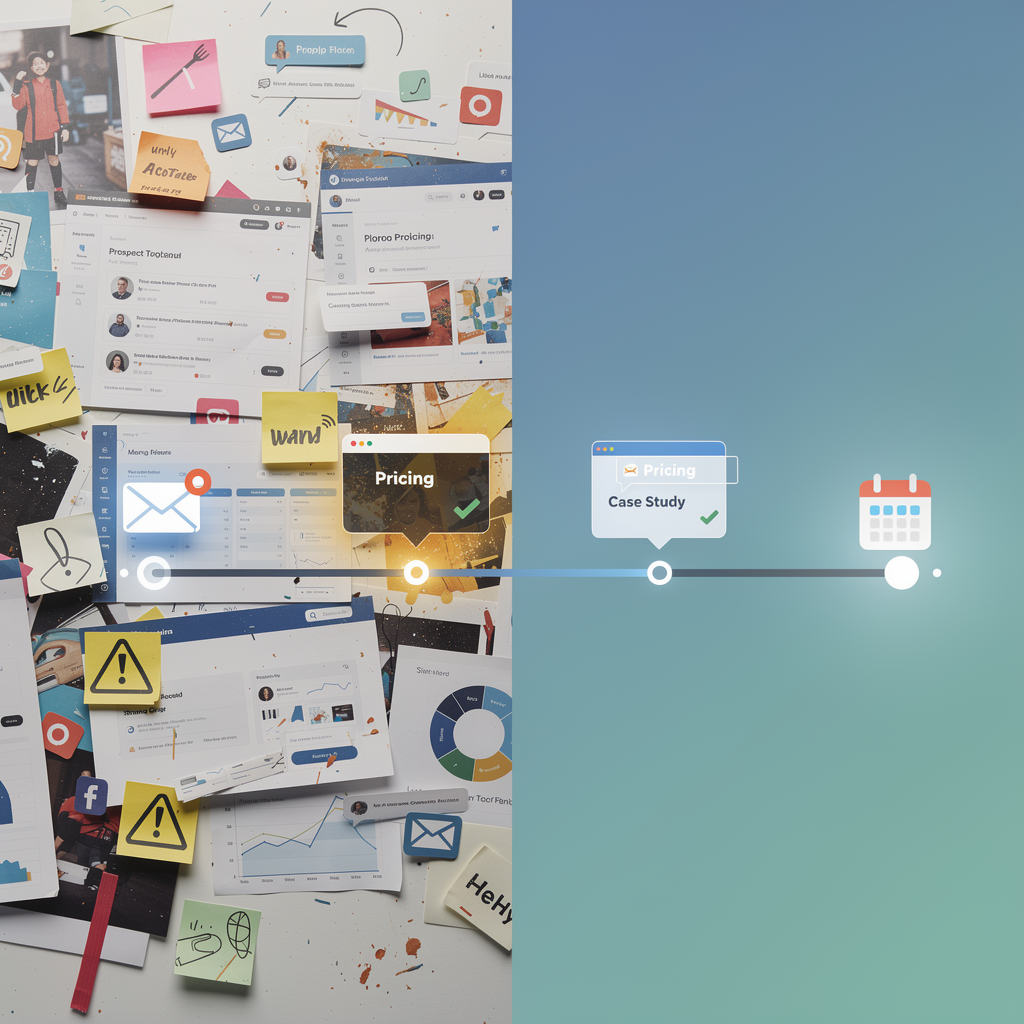
A lead who clicked your email three times, visited your pricing page twice, and never booked is not a cold lead. Most businesses treat the silence as rejection, move on, and spend more money chasing someone new. The gap lives in what happened after the click. Businesses working with focused email marketing services to recover lost leads build their pipeline from contacts they already have, and most are sitting on more opportunities than their current send schedule acknowledges. Why Do Warm Leads Disappear Before They Convert? The short answer is structure. Most email programs are built for outbound volume, not recovery. Messages go out, open rates get reviewed, and contacts who stopped responding get quietly left behind. The problem is architectural, not effort-based, which is why sending more emails to a disengaged list rarely changes the outcome. The Gap Between Sending Emails and Running a Lead Recovery System Sending a newsletter and running a lead recovery system are two different disciplines. A newsletter broadcasts to a full list on a schedule. A recovery system monitors what each contact does, identifies the moment engagement drops, and triggers a response tied to a specific behavior. This difference matters commercially. A newsletter tells everyone the same thing at the same time. A recovery system speaks to where a specific lead stopped, not where the campaign started. One functions as a publishing channel. The other functions as a sales tool. Most businesses have only ever built the first one, and the leads sitting quietly in the list are the visible result. What Happens to Warm Leads When There Is No Follow-Up Sequence Three scenarios repeat across almost every email list. A lead clicked a pricing page twice in January and went quiet in February. A lead read two case studies, started filling out a contact form, and closed the browser before submitting. A lead opened four consecutive emails, then stopped engaging the week after a product announcement. Each contact showed enough interest to act. Without a follow-up sequence tied to those specific behaviors, each one ages out without a second conversation. Follow-up timing ranks among the biggest variables in whether a warm lead converts, and when no sequence exists, the timing decision defaults to never. According to research from Invesp, the probability of selling to an existing engaged contact is substantially higher than converting a new one, and the cost of re-engagement is consistently lower than acquisition. What Do Email Marketing Services Actually Do to Recover Leads? Recovery-focused email work follows three phases. Audit identifies where the existing program broke down. Optimize rebuilds sequences around behavior rather than a calendar. Track measures whether re-engagement is producing pipeline outcomes. Each phase changes what a list produces, and skipping any one of them turns re-engagement from a revenue move into a guessing game. Auditing the List Before Rebuilding the Flow The first step is not writing new emails. A list audit identifies where the existing program broke down before anything new gets built on top of it. A proper audit surfaces these gaps. Which segments went cold and when Which subject lines drove real engagement before the drop-off Where leads stopped responding, and whether send timing played a role Whether the same message types have been repeatedly sent to contacts who stopped engaging with them months earlier Businesses frequently discover they have been re-sending versions of the same email to contacts who stopped responding to the original. Rebuilding without auditing first means the new sequence lands on the same structural fault. Rebuilding Sequences Around Behavior, Not the Calendar Calendar-based programs send the same message to every contact on the same day. A behavior-based recovery sequence treats each contact based on what they did and when they went quiet. Someone who abandoned a contact form receives a different message than someone who visited a service page three times without converting. Research from Campaign Monitor found that behavior-based email segments produce re-engagement rates substantially higher than broadcast sends, because the message arrives in relation to something the contact already did rather than in relation to a fixed date on a marketing schedule. For most lists, this phase is where the largest share of recovery happens. Setting the Metrics That Tell You Recovery Is Working Open rate functions as an early directional signal. When a re-engagement sequence is sent to a cold segment, and the open rate rises, the subject line and timing are reaching the right contacts. The decision metrics sit deeper. Three numbers matter in recovery work. Re-engagement rate measures how many dormant contacts took a meaningful action after receiving the sequence. Reply rate on re-engagement sends shows which contacts in the recovered segment are ready to have a conversation. Conversion rate tracks how many recovered contacts moved from the sequence to a booked call or purchase. Businesses measuring those three outcomes connect email activity to pipeline results rather than inbox behavior, and the difference in how decisions get made is significant. Why Small Fixes in an Existing List Outperform New Campaigns The instinct at the start of Q2 planning is to launch something new. A new campaign, a new offer, a new audience. Before any of those get built, the list from the last 90 days deserves a second look. Businesses entering Q2 with real momentum are generally the ones who fixed what was leaking in Q1, not the ones who added volume to a broken structure. The Math Behind Re-Engaging a Warm List vs. Building a Cold One Acquiring a new lead requires an ad, a landing page, a form submission, and at least one confirmation email before the conversation starts. A dormant contact in an existing list has already completed those steps. Prior awareness shortens the path back to action. The trust-building work already started, even if engagement dropped. The lead is familiar with the brand and the offer being presented. The sales cycle runs shorter because the contact is not starting from zero. Recovery costs less than acquisition in most cases, because

How to Stop Email Marketing From Wasting Your Budget

When your inbox chimes and your marketing dashboard lights up, you might believe all is under control. Yet many dental practices discover too late that their campaign costs outweigh patient gains. The question of how to stop email marketing from wasting your budget becomes urgent when your chairs are empty, the phone is quiet, and you’re asking why the dollars you spent aren’t translating into booked treatments. What’s Really Draining Your Email Spend Treating Email Like a Blast Rather Than a Dialogue Many practices send occasional newsletters or promotional offers without considering the individual patient journey. If an email lands just after a patient’s cleaning, they’ll likely ignore it. If you send the same message to everyone—from first-visit kids to long-time implant clients—you’re guaranteed wasted sends. The result: open rates drop, unsubscribes rise, and your budget vanishes into thin air. Ignoring Measurement and Attribution You wouldn’t accept doing a crown without probing, so why launch an email campaign without metrics? Without tracking opens, clicks, conversions (for example booked appointments), and revenue tied back to each send, you’re flying blind. Dental-specific analytics show that tracking these metrics is not optional—it’s foundational. ➡️ Source: Dental marketing ROI tools When you can’t attribute which email generated which patient, you risk cutting the wrong costs and doubling down on ineffective tactics. Using Generic Content That Doesn’t Resonate Patients don’t respond to “free whitening” if they just brushed two hours ago. High-value treatments like implants or orthodontics require a different tone and message than a hygiene reminder. Practices that segment their lists and craft relevant messages tied to patient stages see far fewer wasted sends and much better conversion. ➡️ Source: Email strategy tips for dental practices If your messaging matches where each patient is in their journey, you minimize waste and maximize return. How to Retool Your Email Program for Patient-Value Return Define Your Patient Value Ladder Start by asking: What is the average value of a new patient? What’s their lifetime value? Tools built for dental marketing show you must understand not just the first visit but future treatments, referrals, and loyalty. ➡️ Source: Marketing ROI insights When a patient is worth $2,500 over three years, you can justify spending more per lead—but only if your conversion data supports it. Segment Your Audience and Message Accordingly Divide your list into groups such as new patients, lapsed patients, treatment leads, and hygiene check-up clients. Then speak to each differently: New patients: welcome message, staff intro, what to expect Lapsed patients: reminder that you care and a return offer Treatment leads: financing info, case studies, success stories Targeted messaging means fewer ignored emails and more booked visits. Track the Right Metrics and Tie to Revenue Standard metrics like opens and clicks are just the start. Track which emails led to booked appointments, which of those converted to treatment, and how many became loyal. Integrate this data with your practice software to see what’s truly working. ➡️ Source: Campaign performance tools When you connect email to revenue, your marketing budget becomes a measurable investment—not a blind gamble. How to Shift From Waste to Strategic Investment Run Small Tests Before You Roll Out Big Spend If you’re planning a “whitening special” email, send it to a small group first. See what works. Adjust subject lines, call-to-action, and send timing before rolling it out to your full list. ➡️ Source: Spending smarter in dental marketing Smart testing protects your budget from big misses. Automate Smartly but Stay Human Automation can help, but don’t let it replace sincerity. Add human touches: a message that sounds like it came from your front desk—not a robot. Instead of “This is your reminder,” try “Dr. Smith asked me to remind you—we’re excited to see you.” That’s the kind of email people open. Retain More, Spend Less Acquiring new patients is expensive. Retaining existing ones costs far less and often yields more. Use emails to encourage regular checkups, promote referral incentives, and keep the relationship active. Retention campaigns often deliver stronger ROI than acquisition-focused ones. ➡️ Source: Retention tips for dental marketers If your email program builds long-term loyalty, you get more return from every dollar. When to Pause or Reallocate Your Email Budget If Conversions Drop Two Campaigns in a Row Stable list size, steady sending, but fewer appointments? Don’t push more volume. Step back. Look for issues with timing, segmentation, or stale messaging. Pausing gives you space to correct without wasting more budget. If You’re Getting Bookings but Too Many No-Shows Your email may be driving clicks, but what happens after? If people cancel or skip appointments, your follow-through needs work. Add reminders, confirmation links, or pre-visit touchpoints. The problem isn’t the email—it’s the experience afterward. If You’re Only Promoting Low-Value Services Cleaning specials help, but don’t neglect your higher-margin services. Focus some campaigns on treatments like implants or clear aligners. If you promote these to the right audience, you get more value from each email. ➡️ Source: Strategic dental service promotion Balancing offers across services increases the earning power of your email marketing. Conclusion Each dollar you spend on email marketing should feel like placing a crown, not pulling it out. When you define value, segment intentionally, measure performance, and adjust with clarity, your email program becomes less guesswork and more of a patient engine. The inbox isn’t just a communication tool—it’s a chair-filling strategy.

Five Ways to Grow Your Email List and Keep Subscribers Engaged

Despite the popularity of social media, HubSpot research tells us that email marketing is a significant source of online leads. In fact, a strong email list is essential to expanding your business and meeting your goals. With 4 billion daily email users and statistics showing that smartphone users prefer receiving information on their phones, it’s important to be in the email-marketing game. Before we get into tips for growing your email list, let’s review what exactly an email list is. An email list is comprised of a group of people who have opted in to receiving your company announcements, information, promotions, staff changes, etc., via their email inbox. There are several benefits of having a robust email list. Research has proven that you are actually forty times more likely to acquire new customers through email than through Facebook or Twitter. Moreover, you don’t have to compete with tricky algorithms to decide how much you want to communicate with your target audience or grapple with whether or not they will see it. Similarly, communication via email feels more private, thus cultivating trust and encouraging recipients to engage with you.   Targeted Lists Refer back to the target audience you mapped out in your marketing plan. Once you review this information, begin segmenting the audience into different subsections. This ensures that your recipients will only receive the messaging most relevant to them, thus saving your efforts and increasing your chances of conversion.   Gated Content Rather than offering your best content for free, restrict it so that it cannot be accessed unless a user enters their name and email address. Offering users exclusive content that is valuable, well-written, and informative in exchange for adding them to your email list can significantly help grow your email list and encourage engagement.   Content Everybody likes to feel special. In fact, personalized emails have 6% higher transaction rate than non-personalized emails. If you can go farther than simply adding the recipient’s name in the subject line, you should.   Easy Opt-In Opt-In forms are crucial for boosting conversion rates via email. Visitors will only spend a few seconds viewing your email. Therefore, the opt-in prompt or pop-up should be extremely prominent, and stand out from the rest of the email.   Incentives It’s always best to offer something to trade. Why should this recipient want to hear from you? Common incentives include limited-time offers, access to exclusive content, and discounts.   Lastly, regularly analyzing your contact list and refining your efforts based on your findings is key to staying on top of your game. Let’s schedule a time to discuss your marketing plans for 2023.

The Importance of a Branded Business Email Address

The importance of a branded business email address can not be over stated. Email is an essential part of running a modern business, but too many owners still operate with a generic ‘@gmail.com‘ or ‘@yahoo.com’ email address. You wouldn’t show up to a sales meeting wearing another business’s branded shirt, would you? You must treat your business email addresses the same way — with a branded email address. “Email is dead.” At least, that’s what everyone has been saying for years now. The reality couldn’t be further from the truth — for every $1 put into email marketing, $42 is generated. Email is an essential part of running a modern business, but too many owners still operate with a generic ‘@gmail.com‘ or ‘@yahoo.com’ email address. You wouldn’t show up to a sales meeting wearing another business’s branded shirt, would you? You must treat your business email addresses the same way — with a branded email address. By the end of this quick explainer, you’ll know everything you need — including where you can go to create a free business email address. Let’s begin!   Breaking Down the Domain Okay, ‘breaking down the domain’ sounds a bit like a band that makes terrible music, but it’s vital to get the terminology right. Let’s start an imaginary business. We’ll call this business Glassier, a dating app exclusively for glass-blowing artists. You decide to buy ‘glassierapp.com‘ — here’s what that means: glassierapp.com — this is the domain name glassierapp — this is the second-level domain .com — this is the top-level domain.   When you start using a professional business email address, it will include a local part and your domain name. For customer service at Glassier, customers can contact ‘help@glassierapp.com“. In this scenario, ‘help’ is the local part. When you send emails back and forth with customers, this is the address that they will see.   Why You Need A Branded Email Address Having a custom business email address that is easily recognized and associated with your brand is crucial for several reasons: It increases the professionalism and credibility of your company. Makes it easier for customers and prospects to find and contact you. Can help improve your search engine rankings. Makes it easier to track customers and sales statistics. Assists in communication efforts both inside and outside of the company. Besides, there’s a certain oomph to sending emails from a custom address. Now, the real question: how do you get your hands on one of these things?   How to Get a Branded Email Address for Your Business There are a few ways you can go about getting a branded email address, but it really boils down to three easy steps: 1. Purchase a domain name that is associated with your company or product. We’ve settled on “glassierapp.com” because ‘.com’ is the most popular and well-recognized TLDs out there. However, “glassier.app” or “glassier.net” would also have worked. Your web hosting provider may provide email services if you already have a domain and website. 2. Use your company’s website address as your email address. For this, you’ll have to use an email service provider such as Google Workspace, Verizon Small Business Essentials, Godaddy mail, etc. An ESP lets users create customized branded email addresses with descriptive domain names while maintaining complete control of all their email messages. 3. Set up the right accounts. You can do this with company services, like ‘help’, ‘contact’, ‘returns’, etc. You can also use it for internal communications: ‘harry@glassierapp.com’, or ‘rob@glassier.app’.  Some tips: avoid special characters in the local part and keep your email short. It’s that simple! While you may run into some technical work setting up the connection from your domain to your email, your ESP will make the process seamless. And, you can always ask someone on our team to assist you.   Where to Get A Business Email Address   Here are some of the best providers for paid and free business email accounts available today: Google Workspace. Google Workspace makes it easy to set up a branded email address. The email address can have any name associated with it, and users also get 30 GB of cloud storage to store files in. Microsoft Office 365. Microsoft’s Office 365 for businesses offers a suite of cloud-based applications, including Exchange Online email service. It allows businesses to create branded email addresses with their company name (@yourcompany.com). Weebly. Weebly offers a free business email address (with 5 GB of storage) when you create a website using their platform (note: you’ll be using a Weebly subdomain, which is far from ideal). You can choose from various domain names (including your own custom domain name) and receive spam filtering and virus protection. Zoho Mail. Zoho offers a suite of online business applications, including a free business email account with 5 GB of storage. Zoho Mail is also very affordable, and you’ll receive anti-virus and anti-spam protection. Wix. When you use their website building software, Wix also gives you a free business email address (with 2 GB of storage) and email services. With Wix, you can also welcome a free domain and web hosting! Most of these providers give you the option of multiple business email addresses. That means you can set one up for customer service, help, information, returns, etc.   Tips for Getting a Business Email Address   While creating a branded business email account may seem like a simple task (and sometimes even free), there are several things you’ll want to consider before doing so. Here are a few essential tips: Cheaper Isn’t Always Better To begin with, when searching for an appropriate email service provider, do not go for the cheapest option you can find. Cheap or free services usually don’t offer all that you might need in terms of features such as unlimited storage space or an unlimited number of email addresses. Additionally, you’ll want to ensure that the provider you choose has a good reputation and is known for providing quality

Kiki DeVane

Marketing Operations Manager

Kiki started her career wanting to change the world through policy, then discovered that a well-built website could be just as powerful. That pivot led her through event marketing, federal communications, and sponsored content for some of the world’s most recognizable brands. She came out the other side a marketing utility player, skilled across strategy, design, development, and copywriting, allowing her to support client campaigns from the front and behind the scenes.

At Silesky, she’s the connective tissue, keeping projects moving, clients informed, and the team empowered to focus on what they do best. What sets Kiki apart is her ability to move fluidly between the operational and the creative without losing momentum in either direction. Whether she’s architecting a workflow, shaping a campaign, or jumping in on a deliverable, she brings the kind of range that elevates every project and strengthens the team around her.

A systems thinker with a creative soul, Kiki brings order to complexity and a genuine investment in seeing the work land the way it should.

Aizaz UI Hassan

Web Developer & Graphic Designer

Aizaz has been the driving force behind Silesky’s web development for over five years. As both a graphic designer and UI/UX developer, he brings a rare mix of technical precision and creative clarity to every project.

What sets Aizaz apart is his ability to understand and interpret the assignment—no extra hand-holding, just sharp instincts and calm professionalism. When timelines are tight and expectations are high, Aizaz is the teammate you want in your corner.

Creative and detail-oriented, Aizaz builds clean, modern websites that marry style with substance. From intuitive flows to scalable layouts, his work consistently delivers digital experiences that perform as well as they look.

With every project, Aizaz ensures the design feels effortless for users and does the heavy lifting for the brand.

Sue Hilger, MBA

Chief Growth Strategist

As Chief Growth Strategist at Silesky Marketing, Sue plays a key role in expanding the agency’s client base while cultivating long-term partnerships grounded in trust, collaboration, and measurable success. She works closely with organizations to help them meet their business goals—and then go beyond them—through smart, scalable marketing strategies.

With an MBA and deep expertise in both B2B and B2C environments, Sue bridges the gap between strategic planning and hands-on execution. She guides clients through Silesky’s end-to-end process, beginning with in-depth discovery and needs assessments and continuing through branding, messaging, digital advertising, and campaign rollout.

Sue is focused on long-term impact. Many of Silesky’s client relationships span decades, which speaks to her ability to integrate seamlessly, think strategically, and consistently deliver results. For Sue, every engagement is more than a project—it’s a partnership.

Mya Stengel

Content Developer & Video Editor

Mya brings the heart of a storyteller and the precision of a screenwriter to every project. With a background in Hollywood scriptwriting—particularly in the horror genre—she understands how to build intrigue, capture attention, and deliver a message that lands with impact.

A lifelong book lover turned brand storyteller, Mya has a gift for finding each client’s voice and shaping it into something authentic and memorable. Whether she’s writing SEO-driven blog content, editing silent video loops, or cutting together a punchy hero reel, she focuses on what makes a brand distinct and brings it to life with clarity and emotion.

From blog posts to behind-the-scenes edits, plot twists to punchlines, Mya’s work helps brands connect more deeply and tell stories that resonate.

Ashelin Walker

Digital Marketing Strategist

Ashelin is a digital marketing strategist who blends technical know-how with creative insight. At Silesky Marketing, she turns strategy into results—helping clients attract the right leads, connect with their audience, and strengthen their online presence.

She designs high-converting landing pages, launches targeted email campaigns, manages CRM platforms, and creates on-brand video content that performs. From big-picture planning to the freckles of a campaign, Ashelin brings cohesion to the chaos and keeps every piece pulling in the right direction.

What sets Ashelin apart is how seamlessly she connects the tactical to the strategic. She doesn’t just check boxes—she makes sure every effort ladders up to a larger goal. Her work helps clients show up in the right places, with the right message, at the right time.

Susi Silesky

Founder & Brand Architect

As the founder of Silesky Marketing, Susi brings more than 30 years of brand strategy and marketing expertise to the table. Her experience spans ambitious startups, global enterprises, nonprofits, and household-name retailers.

Susi is most energized when she’s helping business owners find their voice, shape their story, and build a brand that reflects their vision and gets the results they deserve.

What sets her apart is her deep understanding of entrepreneurs. She’s built a career not just on strong campaigns, but on building genuine relationships. That blend of empathy and expertise is what makes her work both effective and meaningful.

Susi has led successful marketing initiatives across industries—from healthcare and legal to real estate, B2B tech, and pharma. She’s fluent in French, conversational in Spanish, and skilled at translating complex ideas into clear, compelling brand stories.