
Why Business Owners Resist Social Media and What It Costs Them

I hate social media is a phrase we hear a lot! “It’s a waste of time.” Or, “I’m a business owner, not an Instagram influencer.” This kind of thinking is more common than you’d think, and having this thought process could be leaving thousands (even millions, depending on your industry) in revenue on the table. Before your social-savvy competitors hit Social, gaining access to those dollars is easier than you might think. Seven Benefits of Social Media for Business — for Nay Sayers: More cost-effective than traditional advertising Lays the foundation for a trustworthy brand reputation Helps find new customers and reach a larger audience quicker than other forms of advertising Your business brand becomes human (more on that later!) Enormous benefits from user-generated content and unsolicited shares Gather customer feedback and reviews and engage directly Social media can help you build an engaged community   How do we garner results? Social Media is more cost-effective than traditional advertising. One of the main benefits of using social media for business is that SMM is more cost-effective than traditional media. For a basic comparison, CPM for Broadcast TV is $36.19. For FaceBook and Instagram it averages out to $7.1 per 1000 impressions, and on LinkedIn it’s $6.59 per 1000 impressions. SMM also allows you to boost posts and run ads which helps your business reach a larger audience for minimal resources. For an idea of what Silesky Marketing charges for posting on your behalf, give us a call, or send us an IM on Facebook or Linkedin.. By regularly posting custom curated content, your business will attract new followers and potential clients and build a community of engaged customers. Finding new customers and reaching a larger audiences is easy on Social Media. In fact, in 2021, there were 4.48 billion people actively using social media globally. This is an increase of 13.13% year-on-year from the 3.69 billion in 2020. When your company posts on social media sites, it helps your business rank better on search engines. For example, if you Google “Sephora” or “Home Depot” as two examples and scroll down after their Google ads, you will find the top links to their Twitter, FB, Instagram, Pinterest, and LinkedIn accounts.   Your business brand becomes more human What’s this mean? Customers want to do business with brands they know and trust, and social media is the #1 way to build that trust. 64% of consumers want businesses to connect with them! (You’re more popular than you think). By sharing your company’s brand story, industry news, or product/service information on your social platforms, you are transparent about your values and therefore you can show customers that you’re more than just a faceless business looking for their business.   Benefit from user-generated content and word-of-mouth UGC is any content created by someone other than your company, such as reviews, testimonials, or product photos that they share on their channels by either tagging your business or posting it on your wall. This kind of content is precious for your business because it helps build trust and credibility. When customers see that other people are happy with your product or service, they’re more likely to give you a try. 92% of people value product recommendations from people they know above all else. It also has the potential to generate external links back to your profile and website, which massively benefits your ranking in search engines.   Engage directly with your customers Social media is also a great way to gather customer opinions and engage directly with your audience. By monitoring what people are saying about your brand online, you can quickly address any concerns or issues. It also shows people how you deal with problems, which can be a positive. Additionally, social media gives you the chance to have one-on-one conversations with customers and get their honest feedback about your product or service. By regularly sharing valuable content and interacting with your followers, you can create a group of loyal fans interested in what you have to say. If your fans are customers, you can also benefit from a high net promoter score — the golden goose of word-of-mouth marketing. Additionally, social media allows you to connect with other businesses in your industry and form partnerships or collaborations.   Most platforms also have excellent analytics tools Analytical tools let you understand your audience better. Using these tools, you can learn more about your customer’s needs and wants, demographics, and how to serve them better. Lay the foundation for a trustworthy brand reputation Customers are more likely to trust a brand they’ve seen online than one they’ve never heard of. By building a solid social media presence, you can establish your brand as an industry leader and gain the trust of potential customers. Let’s take Sephora as an example again — in 2019, famous singer SZA complained about being accused of shoplifting in a retail location. The incident sparked negative discussion about racial profiling around the brand. As a result, Sephora took to their social accounts to announce their stores would be closing, temporarily, so employees could undertake diversity training. The public saw this as an active move for improvement. Without a social presence? Crisis management on this scale is either impossible or impossibly expensive — your choice. This applies if you’re a solo services provider as well — by using social media to establish yourself as a thought leader, you can attract potential customers and grow your business.   Avoiding the Pitfalls of Social Media 101 Here’s how your business can avoid making some common mistakes on social media: Keep an eye on the tone of your posts: Be mindful of the language you use on social media and avoid coming across as angry, defensive, or condescending. Don’t post misleading or clickbait content: Clickbait is designed to get people to click on a link without giving context about what they will see. This type of content is annoying, but it can also damage your reputation
Landing Pages vs Websites: What Each One Does and When to Use Both

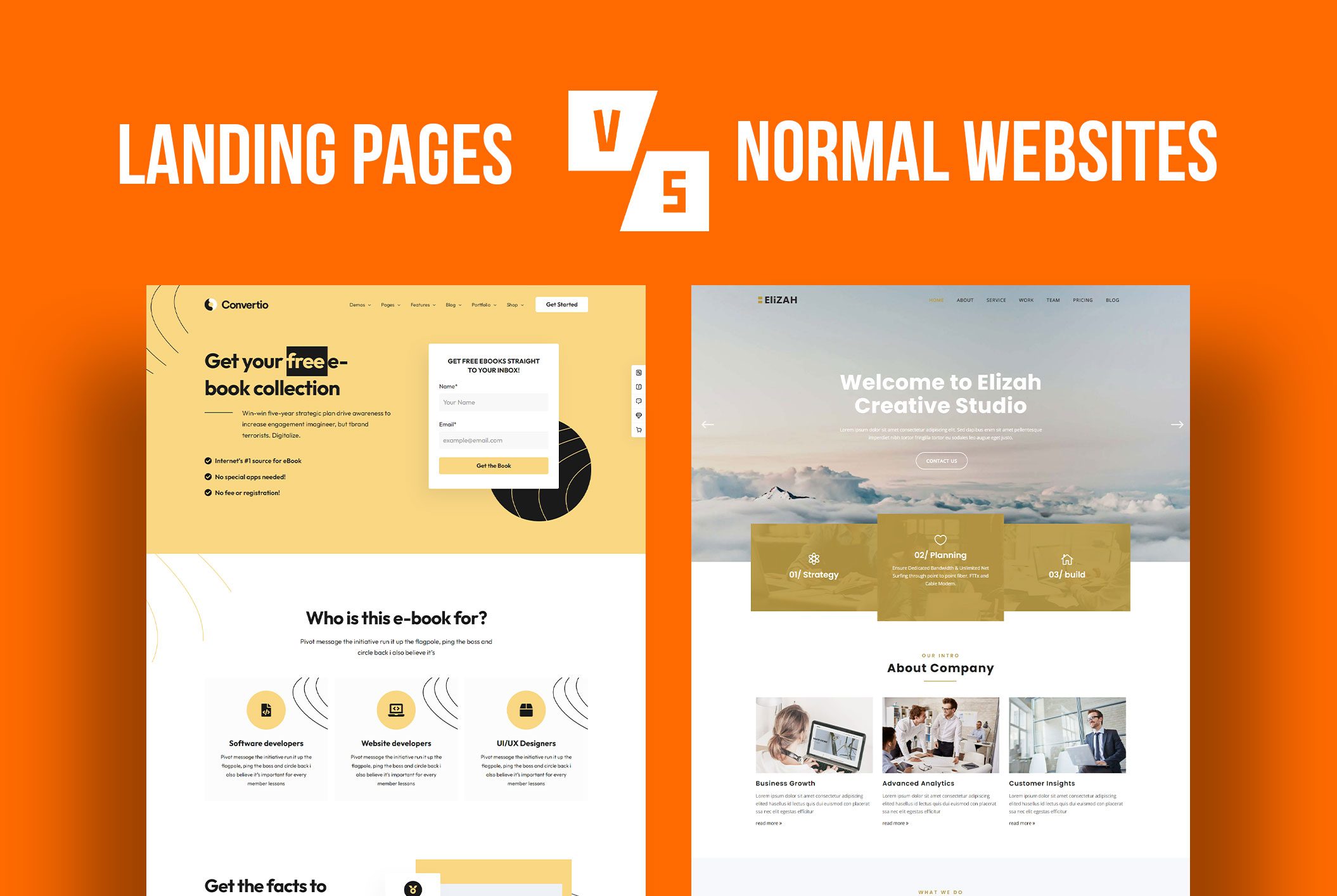
When it comes to a landing page vs website, your website is the first impression you give to your clients or prospects, while your landing page is specifically made to describe an offer—like a free trial or coupon.   LANDING PAGE A landing page is a standalone web page created for a specific marketing or advertising campaign. It’s where you “land” after clicking a link in an email or an ad. Landing pages should direct your target audience toward a singular call-to-action; a singular purchase because they are designed to accomplish a single goal: conversion. The more customized the landing page is, the higher the likelihood of conversion. WEBSITE Your homepage includes several tabs for users to explore. In fact, a homepage encourages your prospect to learn about your brand, product or service, its values and offerings. It is designed to speak to and educate a broad audience. Different from the landing page, a website home page informs the user and brings traffic, while a landing page capitalizes on that traffic.   The primary difference between a homepage and a landing page is the page’s focus. If you are trying to generate leads from an advertising campaign, there are a few things to keep in mind. KISS Keep it simple silly. Landing pages are laser focused. In fact, they have only ONE conversion goal. This affords you a good deal of control over directing your prospect to take an action and take it in a very easy, straightforward way.   CLEAN Again, a landing page needs to be clutter-free. On the flip-side, the nature of a homepage is inherently distracting because there are many places to click, content to visit, things to buy, and information to absorb. The landing page has one request of the visitor— do one thing; buy my product, send me your email, sign up for this promotion, etc. One thing, and one thing only.   EXPERIENCE Every step of the visitor experience on a landing page is tailored towards its goal. Afterall, most users visit a landing page after coming into contact with an ad, email, or social media post. Make sure your landing page is designed to match their first experience (i.e. look like the ad, the post or the email). This affirms their initial interest. In addition to the SEO benefits of customized, relevant content, this level of specificity leaves fewer chances for distraction; it demonstrates that you respect the users’ time by giving them exactly what they want without having to search for it.   Targeted Audience A landing page can be duplicated. In fact, it can also be tweaked to suit different sectors of your target audience. As we mentioned previously, the more customized an experience is, the higher the likelihood of conversion. AirBnB created a great landing page. This is a good example of how to laser focus on your target audience; people who want to Host and Share their Space.   Interested in setting up a landing page for your business? Schedule a meeting to discuss your needs. 

Kiki DeVane

Marketing Operations Manager

Kiki started her career wanting to change the world through policy, then discovered that a well-built website could be just as powerful. That pivot led her through event marketing, federal communications, and sponsored content for some of the world’s most recognizable brands. She came out the other side a marketing utility player, skilled across strategy, design, development, and copywriting, allowing her to support client campaigns from the front and behind the scenes.

At Silesky, she’s the connective tissue, keeping projects moving, clients informed, and the team empowered to focus on what they do best. What sets Kiki apart is her ability to move fluidly between the operational and the creative without losing momentum in either direction. Whether she’s architecting a workflow, shaping a campaign, or jumping in on a deliverable, she brings the kind of range that elevates every project and strengthens the team around her.

A systems thinker with a creative soul, Kiki brings order to complexity and a genuine investment in seeing the work land the way it should.

Aizaz UI Hassan

Web Developer & Graphic Designer

Aizaz has been the driving force behind Silesky’s web development for over five years. As both a graphic designer and UI/UX developer, he brings a rare mix of technical precision and creative clarity to every project.

What sets Aizaz apart is his ability to understand and interpret the assignment—no extra hand-holding, just sharp instincts and calm professionalism. When timelines are tight and expectations are high, Aizaz is the teammate you want in your corner.

Creative and detail-oriented, Aizaz builds clean, modern websites that marry style with substance. From intuitive flows to scalable layouts, his work consistently delivers digital experiences that perform as well as they look.

With every project, Aizaz ensures the design feels effortless for users and does the heavy lifting for the brand.

Sue Hilger, MBA

Chief Growth Strategist

As Chief Growth Strategist at Silesky Marketing, Sue plays a key role in expanding the agency’s client base while cultivating long-term partnerships grounded in trust, collaboration, and measurable success. She works closely with organizations to help them meet their business goals—and then go beyond them—through smart, scalable marketing strategies.

With an MBA and deep expertise in both B2B and B2C environments, Sue bridges the gap between strategic planning and hands-on execution. She guides clients through Silesky’s end-to-end process, beginning with in-depth discovery and needs assessments and continuing through branding, messaging, digital advertising, and campaign rollout.

Sue is focused on long-term impact. Many of Silesky’s client relationships span decades, which speaks to her ability to integrate seamlessly, think strategically, and consistently deliver results. For Sue, every engagement is more than a project—it’s a partnership.

Mya Stengel

Content Developer & Video Editor

Mya brings the heart of a storyteller and the precision of a screenwriter to every project. With a background in Hollywood scriptwriting—particularly in the horror genre—she understands how to build intrigue, capture attention, and deliver a message that lands with impact.

A lifelong book lover turned brand storyteller, Mya has a gift for finding each client’s voice and shaping it into something authentic and memorable. Whether she’s writing SEO-driven blog content, editing silent video loops, or cutting together a punchy hero reel, she focuses on what makes a brand distinct and brings it to life with clarity and emotion.

From blog posts to behind-the-scenes edits, plot twists to punchlines, Mya’s work helps brands connect more deeply and tell stories that resonate.

Ashelin Walker

Digital Marketing Strategist

Ashelin is a digital marketing strategist who blends technical know-how with creative insight. At Silesky Marketing, she turns strategy into results—helping clients attract the right leads, connect with their audience, and strengthen their online presence.

She designs high-converting landing pages, launches targeted email campaigns, manages CRM platforms, and creates on-brand video content that performs. From big-picture planning to the freckles of a campaign, Ashelin brings cohesion to the chaos and keeps every piece pulling in the right direction.

What sets Ashelin apart is how seamlessly she connects the tactical to the strategic. She doesn’t just check boxes—she makes sure every effort ladders up to a larger goal. Her work helps clients show up in the right places, with the right message, at the right time.

Susi Silesky

Founder & Brand Architect

As the founder of Silesky Marketing, Susi brings more than 30 years of brand strategy and marketing expertise to the table. Her experience spans ambitious startups, global enterprises, nonprofits, and household-name retailers.

Susi is most energized when she’s helping business owners find their voice, shape their story, and build a brand that reflects their vision and gets the results they deserve.

What sets her apart is her deep understanding of entrepreneurs. She’s built a career not just on strong campaigns, but on building genuine relationships. That blend of empathy and expertise is what makes her work both effective and meaningful.

Susi has led successful marketing initiatives across industries—from healthcare and legal to real estate, B2B tech, and pharma. She’s fluent in French, conversational in Spanish, and skilled at translating complex ideas into clear, compelling brand stories.