
IN-HOUSE VS AGENCY

So, you want to market your business. The first step is to decide whether you want to create an in-house marketing team vs working with an agency. Each of these solutions has pros and cons; what works best for one company might not for another.   Marketing Agency PROS vs CONS Expertise – You are now working with experts who have a wide berth of knowledge and are not limited one-dimensionally. Some agencies may specialize in specific industries. However, all agencies understand how to make the best use of your budget, build your brand voice and message, and track analytics. Agencies can also show you a return on your investment. Capabilities, software, and tools – As marketing professionals, agencies have all the right tools and software to build your brand effectively. There is no need to purchase your own software or invest in a bank of information.  Agencies have more training and experience, and can focus on helping you reach your goals and objectives. Specialties – Agencies are composed of people with different degrees of specialization who work together to create multiple cross-channel campaigns, whereas an in-house team might be limited in this area. Scalability – At busy times of the year, some in-house agencies may not have the bandwidth to sustain or increase your marketing presence. Multiple clients – While agencies are committed to each brand they work with, some clients could feel put off by the notion that the agency is working just as hard with other clients. However, this is often not the case. Your account managers are a part of your team and want to see you succeed. Control – Sometimes it is hard for businesses to relinquish any control over their marketing efforts, but agencies function best with some wiggle room. They value your input, and will not move forward with any big strategy decisions unless you grant your permission first. The ability to trust your agency to pursue your best interest doesn’t always happen overnight.   In-House Marketing Team PROS vs CONS Brand familiarity: – The people who work within your company know the brand — presumably inside and out. They have a thorough understanding of what you do, why you do it, and what goes into it on a daily basis. While agencies are committed to getting to know the ins and outs of your brand, in-house teams have a different stake in the game. Accessibility – Everyone works for the same company. Focus – Your in-house team does nothing but marketing for you and cash their paycheck. Recruiting Talent – Putting together a solid in-house team that works well together is a massive time and financial investment. Expenses – A successful marketing team uses SEO tools. In fact, this is another reason why an agency is a better idea. SEO training requires consistent CEU clases to keep up with industry trends. In-house marketing departments typically freelancers if your employees aren’t trained in everything you need to accomplish your goals. You can usually count on an agency to have the necessary tools already at their disposal, so you don’t have to fund them independently. Capability and Scalability – When putting together your team, you are limited to the skills found within your applicant pool and the resources you have to work with. Assembling your dream marketing team can be a long and costly process. In-house teams often have less access to specialized skill sets. Similarly, any employee turnover can offset the balance of your team and lead to setbacks. This puts pressure on the remaining staff, which could lead to lagging performance. Compare this to an agency, where there is no risk of your strategy being put on hold.   At Silesky, we pride ourselves on being an outside agency with an in-house attitude. Want to learn more about what that means? Give us a call.

Find Your Voice

Suppose you’re sitting at a dinner table with a group of friends, and the lights go out, and the room is pitch black, and you cannot see anyone. What are the chances you can recognize who is speaking simply by hearing their voice? Odds are pretty good you know each person by voice. Even without a visual element, you can recognize their distinct cadence, inflection, and tone. When you create a brand voice, the goal is exactly the same: a distinct voice that is unmistakably yours. Your customers should be able to identify your brand simply by hearing or reading your branded materials. What’s a good example of a strong brand voice? How about Coca Cola? It’s brand voice focuses on positivity and friendliness. All of their marketing is full of examples of happy lives made better with a drink of Coke. This consistent brand voice helps them to build a strong connection between their product and good times. Choosing a voice is rooted not only in the brand persona you’re trying to present, but also in what would be best received by your target audience. Start by asking yourself a few questions: Who is your target? What kind of voice will they hear? What do you want them to remember? Once you’ve thoroughly analyzed your target audience, you can begin determining your brand voice. A brand voice can be humorous or serious, casual or professional, instructional or emotional. What would your brand’s personality be if it were personified? How would this personality change from one platform to the next while remaining cohesive? Think about which brand elements of your business you want to be immediately understood by your audience and how you can accomplish that with your messaging. What is your brand promise? Your brand promise is the commitment to your customers that really matters to them and differentiates you from your competition. The following are a few brand promises you will recognize: GEICO – “15 Minutes Or Less Can Save You 15% Or More On Car Insurance.” FedEx – “Peace of mind.” Apple – “Think differently.” BMW: “The Ultimate Driving Machine.” Walmart: “Save money. Live better.” The best brand promises go big, challenge the status quo, and connect with consumers on a deep emotional level. They also stay the course for years at a time. Facts tell the analytical side of our brain what the company does, but the brand voice tells the creative side of our brain what the company feels like to engage with. Consumers un-follow brands on social for many reasons. Irrelevant content is one of the top reasons, as well as too many posts (or ads),     Knowing your voice and being true to it is important because, over time, your brand voice becomes what you’re known for. What is the best advice we can give you? Find your voice and stick with it! Need some help? Give us a ring. We are branding professionals.

Dispelling Social Media Myths

Like many modern forms of marketing, social media is surrounded by myths and misunderstandings. Its rapid growth and evolution can make it difficult to follow and use strategically. Nevertheless, social media is an essential and powerful marketing tool in today’s world.  in today’s world. Let’s debunk some SMM (Social Media Marketing) myths.   Myth 1: My customers are not on social media Pew Research Center reports that 72% of American adults who are online use social networking sites. (note: 85% of American adults are online). Even among Americans 65 years old and better, 43% use social media.  So even if your customers aren’t yet using social media to conduct business, they are more likely to engage with social media in some capacity.   Myth 2: SMM is for creating new customers Rather than viewing social media as a vehicle to acquire new customers, it is better viewed as a loyalty retention program. Research shows that most people who “like” a page are current or former customers. However, if these followers share your content frequently, it can translate into new exposure. Frequent exposure creates brand authority and brand authority creates higher ranking on search engines.   Myth 3: Social media effectiveness is not measurable Like many forms of marketing, it is always easy to look at social media and question whether the investment is making you any money. However, social media metrics available on the platforms and various management software like Hubspot or Hootsuite allow you to view factors such as: how much traffic SMM drives to your website, how many customers are engaging in the conversation on your page, where your customers are coming from and also which other platforms they participate on social.   There is a method for effective SMM and it does not mean posting three times a day or sharing other people’s articles non-stop. Effective social media happens when you follow your brand voice and become the authority in your field. The ins and outs of social media can feel daunting at times. Of course, this is especially true when there are so many other elements of your business to manage. Need assistance? Schedule a free audit of your social media marketing with our SM Manager. Or, call 410-205-6168 to speak with one of our sales associates.

How to Vary Your Posts on Social Media

Varying your posts on social media helps drive sales. When it comes to your business’s social media page, varying the type of content that you post is almost as important as the content itself. Nobody likes to hear the same things over and over. While stating your mission, advertising your product, and promoting your business are essential, there is a thin line between staying front of mind and being annoying. If your followers feel like the content on your page is predictable, repetitive, overdone, etc., you risk losing their attention or, worse, having them develop a negative association with your brand. By varying your content, you can focus on your goals while fostering a more holistic and personable social media presence. People are more likely to engage with your content if they can relate to it. Keep the characteristics of your target audience in mind when determining what types of material to post. Below are some examples of different kinds of posts you can include on your social media: Advice: Share tips, tricks, and hacks relevant to your industry. Advice is especially valued when it comes from someone they might consider an expert on the matter. Questions: Pose a question and prompt people to answer in the comments. Doing so is especially significant if there is something you genuinely want feedback on. Always be sure to respond to any comments left on your posts. Inspiration – Relatable and motivational quotes, lyrics, or images can connect with the user’s emotions. Product highlight: Focus on and highlight a specific way your product or service can help the audience. What unique features do you have to offer? How can you make a difference in their lives? Outside article – Get into the habit of sharing relevant articles, studies, or stories that you find interesting, helpful, or motivating. It may even encourage other people to share your content, too. Personal posts: It is always important to be friendly and personable. People want to see the person behind the page and feel like there is a real human being running it. Blog – Besides being great for SEO, regularly posting blogs gives people something to look forward to reading. Not sure you want to handle all this “social” stuff on your own? We’re here to help. We offer three different social media packages and would be happy to send them to you to review. Fill out our online form to receive a free one-hour social media audit of what you are currently doing for your business.

Which color manifests your brand identity?

When you think of Nickelodeon, orange comes to mind; when you think of Coca-Cola, you imagine red; when you think of Facebook, you think dark blue. In the eyes of the target market, color repetition is part of the brand; it communicates the company’s values and visually differentiates it from competitors.   Different colors carry different meanings and trigger different emotions, such as the ones in the chart below. Before deciding your own brand’s colors, spend some time reviewing your competitors’ brand identities to ensure that yours stands out, and that the colors reflect your business’ personality and tone of voice.   A brand’s palate should include three colors: a base an accent, and a neutral color. Your base color is the foundation of your color palate; it should reflect your brand’s most dominant personality trait. Your accent will be used almost as often as your base color. It should not only match the base color, but also be in line with your brand’s characteristics. Lastly, a neutral color that can be used as a background. Most often this color is not overpowering or attention-grabbing.   Keeping the above in mind, there are several options when it comes to creating a color scheme:   Monochromatic: A monochromatic color scheme consists of different shades of the same color. For brands with one trait that dominates over all the others, monochromatic schemes offer a great solution. Analogous: Analogous colors are next to each other on the color wheel (e.g. red and orange), and usually have similar emotional connotations, but not as strongly as a monochromatic palate. Analogous color schemes are safe, but do not stand out as much. Complementary: Colors that are directly opposite each other on the color wheel are known as complementary colors. These colors, when paired, bring out the best in each other (e.g. yellow and purple). The stimulating and dynamic nature of complementary color palettes makes them very popular, so be mindful that your color scheme does not match another brand too closely. Triadic: Triadic colors are evenly spaced out on the color wheel (e.g. orange, purple, and green). These pallets are safe, stable, and offer variety, but need to accurately reflect your brand identity.   Research demonstrates that consumers perceive the same characteristics in brands as they do in people; consumers rely on emotional associates and instinct to choose your brand over others. An effective, consistent visual identity will foster loyalty, beyond just a one-time decision. These colors should be present across all consumer touch-points: your website, your logo, social media, product packaging, etc.   Putting together a visual brand can be intimidating. We’d love to help.

Know Your Ideal Customer

Too often, businesses operate their companies for months or years without a genuine concept of their ideal audience and wonder why they don’t see results. Knowing your ideal customer will change how your business grows. You might have a brand, product, or service, and enough money to generate eye-popping marketing. But, without targeting the right audience, your efforts will likely be wasted. Plus, creating a generic offer to try and resonate with everyone is ineffective. The more customized your approach to promoting your products and services, the greater the odds of delighting your customers and being more successful at finding new clients.   Narrow your Scope Focusing on attracting an audience that values what you offer helps your business grow. Everyone wants to feel seen. When you show a potential customer that you “get” them, holding their attention and plugging your product becomes more manageable. The better you know your ideal customer, the better you will become at creating content that effectively appeals to them and then seeing the results.   An essential first step is to create an example profile of your average customer by asking questions regarding their identity, age range, location, family size, income, etc. Next, think about a typical day in the life of your fictional customer. Are they resilient, curious, or sensitive? Consider where they spend time and money. Additionally, take some time to review and evaluate the qualities of your current and present clients and look for patterns amongst them. Habits What does your ideal client Google daily? What do they read? Do they spend more time on Facebook or LinkedIn? Knowing where your clients spend their time – and why – helps you understand how to reach them best. Goals What are they trying to achieve? What is their aspiration? Then, think about how you can help them achieve their goals. Problems Desires, and Needs – Purchases are often made for two reasons: to solve a problem or to fulfill a desire. What problem are they trying to solve? What are they seeking to achieve? Figuring out how to market your offerings to answer these two questions will put you in high demand. Challenge yourself to develop a list of why people in your target market need what you offer. How can it change their life or daily routine? Answering these questions requires a thorough understanding of your ideal target. Buying Decisions Do people within your target market make impulsive purchases, or do they take time to research and consider alternatives? Understanding their purchasing habits helps you be in the right place at the right time. For example, suppose members of your target audience value researching and reading reviews before purchasing. In that case, it is essential to include reviews and ratings on the site (and elsewhere). Compatibility It’s much easier to show a potential customer that you “get” them if you do! Potential customers can usually tell whether or not you are excited to work with them, and it makes all the difference.   Finally, it is essential to note that as the world changes, so will your customer base. Regularly reviewing, analyzing, and updating your fictional client profile will help you keep up and stay relevant. Need some help identifying and marketing to your target audience? Let’s get started! 

Five Ways to Grow your Email List

Despite the popularity of social media, HubSpot research tells us that email marketing is a significant source of online leads. In fact, a strong email list is essential to expanding your business and meeting your goals. With 4 billion daily email users and statistics showing that smartphone users prefer receiving information on their phones, it’s important to be in the email-marketing game. Before we get into tips for growing your email list, let’s review what exactly an email list is. An email list is comprised of a group of people who have opted in to receiving your company announcements, information, promotions, staff changes, etc., via their email inbox. There are several benefits of having a robust email list. Research has proven that you are actually forty times more likely to acquire new customers through email than through Facebook or Twitter. Moreover, you don’t have to compete with tricky algorithms to decide how much you want to communicate with your target audience or grapple with whether or not they will see it. Similarly, communication via email feels more private, thus cultivating trust and encouraging recipients to engage with you.   Targeted Lists Refer back to the target audience you mapped out in your marketing plan. Once you review this information, begin segmenting the audience into different subsections. This ensures that your recipients will only receive the messaging most relevant to them, thus saving your efforts and increasing your chances of conversion.   Gated Content Rather than offering your best content for free, restrict it so that it cannot be accessed unless a user enters their name and email address. Offering users exclusive content that is valuable, well-written, and informative in exchange for adding them to your email list can significantly help grow your email list and encourage engagement.   Content Everybody likes to feel special. In fact, personalized emails have 6% higher transaction rate than non-personalized emails. If you can go farther than simply adding the recipient’s name in the subject line, you should.   Easy Opt-In Opt-In forms are crucial for boosting conversion rates via email. Visitors will only spend a few seconds viewing your email. Therefore, the opt-in prompt or pop-up should be extremely prominent, and stand out from the rest of the email.   Incentives It’s always best to offer something to trade. Why should this recipient want to hear from you? Common incentives include limited-time offers, access to exclusive content, and discounts.   Lastly, regularly analyzing your contact list and refining your efforts based on your findings is key to staying on top of your game. Let’s schedule a time to discuss your marketing plans for 2023.

When you Fail to Plan, you Plan to Fail.

Good marketing doesn’t happen overnight. As the saying goes, when you fail to plan, you plan to fail. Good marketing is a process that follows a well-thought-out plan to achieve specific marketing goals. Backed by research, a marketing plan can help you increase revenue and profits, rise above competitors, gain greater visibility, and more. While this does sound a bit daunting, it’s always best to start by analyzing your current situation.   Where Are You? Start by asking yourself and your team members a few basic questions. For example: what does our company exist to do? Reflect on the company’s mission statement as well as past successes, past failures, situations you have learned from, etc. Then, dive into your realistic goals and next steps by conducting a SWOT analysis to review the company’s current strengths, weaknesses, opportunities, and threats. Competition Once you’ve answered these questions, it’s time to compare the results with your competitors’. How have other companies in your same market navigated similar issues? How have they modified their approaches when faced with threats? Moreover, think about why and how customers use your product or service. What problems does your product or service solve? If it doesn’t stand out, it’s time to assess the things you can do to differentiate yourself from your competition. Burger King and McDonald’s both sell burgers. Nike and Adidas both sell sneakers. Avis and Hertz both rent cars. What’s the difference in their brand? What makes you choose one over the other. Thinking about what makes your business different is essential to its longterm success.   Target Audience As a business, understanding your target audience is vital. Start by designing your customer personas. Typically, every business has more than one target audience. To hone in on your top tier target audience think about a typical day in the life of your best customer. Do they live close by? Is distance even relevant? What is their purchase intention? Do they typically need your product or service right away, or during a specific time of year? What is the common thread; are they the CEO who makes the decision to purchase, or in a support role? Do they fall inside a specific age group? Ethnic Group? Religious Group? Google Analytics offers extensive data about who is visiting your website. You can find age, gender, location, income, education level, profession, marital status and more to help set your ideal target audience. Set Measurable Goals Regardless of what you want to achieve, it is essential to set goals to assess your progress. Developing a “SMART” plan encourages you to create goals that are specific, measurable, attainable, relevant, and  time-bound. This approach helps you stay on track, identify and correct shortcomings, visualize your goals, and allocate time and resources wisely. Budget If you know you will have a limited budget, sometimes it is best to determine the budget through the previous four steps. It’s important to remember that your strategic marketing plan is an investment in both the short and long term success of your business. So, spend wisely but maintain an annual marketing budget so you can track what has worked year in and year out. Strategy Mix The strategy mix consists of the Four P’s of Marketing: product, price, promotion, and place. Each P has its own tool. For example, Price can be discounts, payment period, credit terms. Place can mean where your clients can buy from you; your physical locations versus online, or in other stores. An effective marketing strategy combines the 4 Ps in order to  establish the product or services’ position within the market.   Don’t rush through this process. It’s a big deal and when done correctly, it reaps great rewards! What are you doing to ensure that your marketing efforts are delivering the results you’re looking for? Let us know at creative@sileskymarketing.com.

Why your Business Needs Social Media

Social media is no longer a novel concept. This blog will explain why you why your business needs a robust social media campaign. Afterall, social media it is the norm and an inextricable part of our daily lives. From the moment we wake up until the moment we close our eyes, we are surrounded by it. Can you imagine the time before social media? How Social Media Influences Social media dramatically influences our actions, goals, and virtually everything we do on a daily basis. In fact, social media is crucial to driving sales and crucial to maintaining a coherent brand across all marketing channels. It can make or break your sales targets, and determine your ability to achieve results based on customer engagement and product adaptation; it is not a tool that should be taken for granted.   Don’t believe us? These five statistics demonstrate why your business should be on social media. 45% Global Penetration Rate 88% of businesses use social media 67% of Americans get their news on social media 81% of the US population has at least one social media profile The average person will spend 5+ days of their lifetime on social media (proplogix.com)   Effectively using social media can have a massive impact on your brand. In addition to boosting traffic, you can supercharge sales by enhancing customer knowledge and engagement of your brand and its product/service. As customers are aware of the product’s existence and its benefits to their lives, adaptation follows soon after that. According to a study by Forbes, consistent branding across all channels increases revenue by 23%!   Some social media statistics and tips: COLOR is vital for brand recognition. A signature color can increase your brand recognition by 80% (Reboot, 2018)! There will be 5-7 brand interactions before a consumer remembers a brand, so keep at it ( Venngage )! 74% of online marketers said they used VISUALS in their content more than 70% of the time (Venngage). Include a CALL TO ACTION in your post, such as “call us”, “visit our website,” “click the link,” etc. New social media pages may take a while to build traction, so give it time before seeing tremendous results. Create a social media calendar to maintain an effective frequency to ensure that you stay active without spamming your followers.

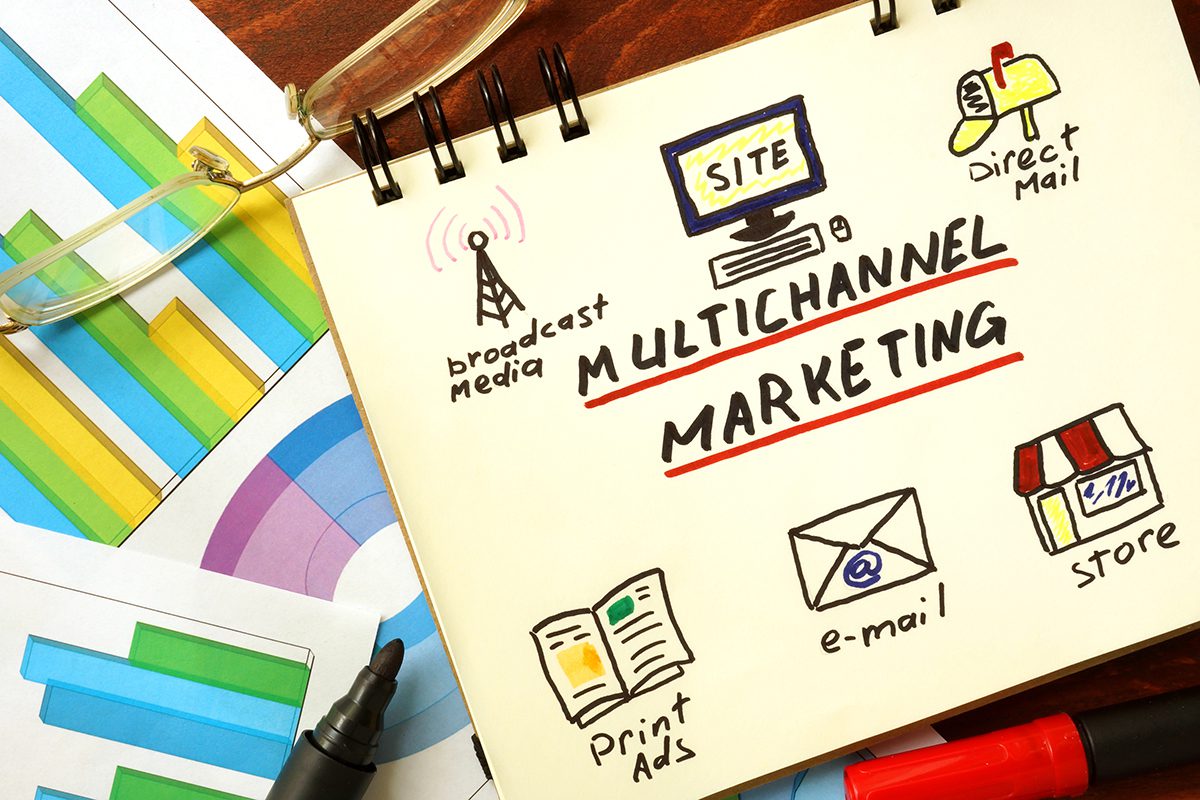
Keys to Cross Channel Branding

Keys to cross channel branding include consistent and recognizable branding so viewers remember your business. So, how do we accomplish that? Let’s review a few steps to maintain brand consistency across marketing channels: KNOW YOUR AUDIENCE Before you begin piecing together your brand strategy, you must understand whom you are trying to reach. Creating buyer personas is a great way to stitch together an idea of who you are selling to, what problem they are looking to solve, what they like and dislike, how they spend time online, etc. In addition, factors like tone, style, and frequency can affect how potential customers respond to your brand. CHOOSE YOUR VOICE Once you’ve thoroughly analyzed your target audience and what they respond best to, you can determine the brand voice. A brand voice can be humorous or serious, casual or professional, instructional or emotional. What would your brand’s personality be if it were personified? Think about which key elements of your business you would want to be immediately understood by your audience. CREATE A BRAND GUIDE Members of your target audience should be able to identify your marketing within only a few seconds of seeing it. Ideally, your audience should be able to tell it’s your brand without the logo. To accomplish this, you need to have a brand guide, which is a mapped-out set of rules and standards for visual and written material. A proper brand guide includes a specific color palate, tone and voice, font, copy, images, and more. It is also vital that these features stand out from the competition. Keeping brand uniformity increases brand recognition in any marketing channel, even if they require different approaches.   BALANCE FREQUENCY Striking the balance between under- and over-communicating is tricky; it’s essential to stay relevant in the minds of potential customers without overwhelming them. Creating a marketing calendar allows the brand to remain active without spamming followers. Maintaining frequency and consistency helps your audience know what to expect from you and want to hear more about your offer.   BE HUMAN Marketing is all about personality. Your audience should never feel like they are interacting with a faceless bot, but rather a human who cares about and can relate to their needs. People who feel seen and heard are more likely to trust the brand. Moreover, providing a personal response to any question or customer service issue is a great way to reinforce your brand and its dedication to its customers. Brand consistency throughout all marketing channels is vital to the brand’s success. At the end of the day, a poorly managed brand is sometimes worse than no brand at all. At Silesky Marketing, we would love the opportunity to help create a brand and strategy conducive to this approach. Schedule a meeting with our team to learn more about our background and how we can help your brand grow.

I hate social media.

I hate social media is a phrase we hear a lot! “It’s a waste of time.” Or, “I’m a business owner, not an Instagram influencer.” This kind of thinking is more common than you’d think, and having this thought process could be leaving thousands (even millions, depending on your industry) in revenue on the table. Before your social-savvy competitors hit Social, gaining access to those dollars is easier than you might think. Seven Benefits of Social Media for Business — for Nay Sayers: More cost-effective than traditional advertising Lays the foundation for a trustworthy brand reputation Helps find new customers and reach a larger audience quicker than other forms of advertising Your business brand becomes human (more on that later!) Enormous benefits from user-generated content and unsolicited shares Gather customer feedback and reviews and engage directly Social media can help you build an engaged community   How do we garner results? Social Media is more cost-effective than traditional advertising. One of the main benefits of using social media for business is that SMM is more cost-effective than traditional media. For a basic comparison, CPM for Broadcast TV is $36.19. For FaceBook and Instagram it averages out to $7.1 per 1000 impressions, and on LinkedIn it’s $6.59 per 1000 impressions. SMM also allows you to boost posts and run ads which helps your business reach a larger audience for minimal resources. For an idea of what Silesky Marketing charges for posting on your behalf, give us a call, or send us an IM on Facebook or Linkedin.. By regularly posting custom curated content, your business will attract new followers and potential clients and build a community of engaged customers. Finding new customers and reaching a larger audiences is easy on Social Media. In fact, in 2021, there were 4.48 billion people actively using social media globally. This is an increase of 13.13% year-on-year from the 3.69 billion in 2020. When your company posts on social media sites, it helps your business rank better on search engines. For example, if you Google “Sephora” or “Home Depot” as two examples and scroll down after their Google ads, you will find the top links to their Twitter, FB, Instagram, Pinterest, and LinkedIn accounts.   Your business brand becomes more human What’s this mean? Customers want to do business with brands they know and trust, and social media is the #1 way to build that trust. 64% of consumers want businesses to connect with them! (You’re more popular than you think). By sharing your company’s brand story, industry news, or product/service information on your social platforms, you are transparent about your values and therefore you can show customers that you’re more than just a faceless business looking for their business.   Benefit from user-generated content and word-of-mouth UGC is any content created by someone other than your company, such as reviews, testimonials, or product photos that they share on their channels by either tagging your business or posting it on your wall. This kind of content is precious for your business because it helps build trust and credibility. When customers see that other people are happy with your product or service, they’re more likely to give you a try. 92% of people value product recommendations from people they know above all else. It also has the potential to generate external links back to your profile and website, which massively benefits your ranking in search engines.   Engage directly with your customers Social media is also a great way to gather customer opinions and engage directly with your audience. By monitoring what people are saying about your brand online, you can quickly address any concerns or issues. It also shows people how you deal with problems, which can be a positive. Additionally, social media gives you the chance to have one-on-one conversations with customers and get their honest feedback about your product or service. By regularly sharing valuable content and interacting with your followers, you can create a group of loyal fans interested in what you have to say. If your fans are customers, you can also benefit from a high net promoter score — the golden goose of word-of-mouth marketing. Additionally, social media allows you to connect with other businesses in your industry and form partnerships or collaborations.   Most platforms also have excellent analytics tools Analytical tools let you understand your audience better. Using these tools, you can learn more about your customer’s needs and wants, demographics, and how to serve them better. Lay the foundation for a trustworthy brand reputation Customers are more likely to trust a brand they’ve seen online than one they’ve never heard of. By building a solid social media presence, you can establish your brand as an industry leader and gain the trust of potential customers. Let’s take Sephora as an example again — in 2019, famous singer SZA complained about being accused of shoplifting in a retail location. The incident sparked negative discussion about racial profiling around the brand. As a result, Sephora took to their social accounts to announce their stores would be closing, temporarily, so employees could undertake diversity training. The public saw this as an active move for improvement. Without a social presence? Crisis management on this scale is either impossible or impossibly expensive — your choice. This applies if you’re a solo services provider as well — by using social media to establish yourself as a thought leader, you can attract potential customers and grow your business.   Avoiding the Pitfalls of Social Media 101 Here’s how your business can avoid making some common mistakes on social media: Keep an eye on the tone of your posts: Be mindful of the language you use on social media and avoid coming across as angry, defensive, or condescending. Don’t post misleading or clickbait content: Clickbait is designed to get people to click on a link without giving context about what they will see. This type of content is annoying, but it can also damage your reputation

2022 Trends in Social Media

Like it or not, 2022 is here — and with every new year comes new trends in social media to watch for. Your marketing strategies should evolve as technology, culture, and the social media landscape change. If you can’t stay ahead of the curve, your brand will fall behind. That’s why it’s crucial to start preparing for these changes now. IMPORTANT TRENDS TO LOOK FOR Video content will continue to grow in popularity Focus on short-form video content The popularity of augmented reality will increase Micro-influencers will become more popular Social commerce will continue its growth curve LinkedIn will become a popular destination for creators Live audio chat spaces will become a way for your brand to connect with your audience User-generated content will still be a key success factor You can’t avoid paid advertising Video content will continue to grow in popularity Videos are a great way to engage and connect with your audience. Not only that, they also tend to be more memorable than text-based content. Video content will make up 82% of all internet traffic this year. Using video can help grow your revenues by 49%. Staying ahead of the curve, means creating more video content for your brand! YouTube, TikTok, and Instagram, among the top 3 media channels, for posting your video content. Focus on short-form video content While long-form videos will still be popular in 2022, short-form video content will grow even more. This is because short-form videos are easier to consume and don’t require as much of your audience’s time. TikTok was the most downloaded app in both 2021 and 2020. YouTube Shorts receives 15 billion daily views. The popularity of augmented reality will increase AR has been on the rise for a few years now, and it doesn’t look like it’s going to stop anytime soon. This means that brands need to prepare themselves for Augmented reality (AR). This is where designers enhance parts of a users’ physical world with computer-generated input. There will be 1.73 billion mobile AR users by 2024. Interest in the metaverse is at an all-time high. 3/4 Snapchat users engage with Snapchat AR every day. Consult with an AR agency to see how you can incorporate things like Snapchat filters into your marketing campaigns. Micro-influencers will become more popular In 2022, micro-influencers will be one of the most important demographics for brands. They have a high level of trust among their followers and are seen as more authentic than celebrities. According to Influencer Marketing Hub, TikTok: micro-influencers engagement rate (ER) is 18%, mega-influencer ER is around 5%. YouTube: micro-influencer ER is 1.64%, mega-influencer ER is 0.37%. Instagram: micro-influencer ER is 3.86%, mega-influencer ER is 1.21%. If you want to connect with your target audience in 2022, micro-influencer marketing is a high-leverage channel. Many brands offer influencers merchandise instead of payment, so try to differentiate yourself. Social commerce will continue its growth curve In 2025, social commerce will be a $1.2 trillion industry. No doubt accelerated by the past two years, more and more people are choosing to buy products and services through social media platforms. Let’s focus on an Instagram marketing strategy. According to Influencer Marketing Hub, Over 55% of social media users between 18 and 24 made purchases through social channels. 60% of Instagram users find out about new products via the platform. 200 million Instagram users will visit at least one business profile every day. If you want to take advantage of this trend, ensure your social media brand profile takes advantage of every social commerce feature available — or at least converts back to your business with ease. LinkedIn will become a popular destination for creators LinkedIn is expected to become a hotspot for creators in 2022. The platform has grown beyond networking in the work-from-home era because it offers a great way to connect with other professionals and share your work. LinkedIn launched a Creator Accelerator last year. LinkedInCreator Mode is slowly rolling out. About 800 million people are on the site as of 2021. Most social platforms are intensely competitive. But with LinkedIn coming into its own this year, you have a chance to get ahead of the curve. If you’re looking for a place to share your content in 2022, LinkedIn is the platform for you! Live audio chat spaces will become a way for your brand to connect with your audience Social audio spaces, such as Twitch and Discord, will become a popular way for brands to connect with their audience in 2022. As we’ve learned from Clubhouse, they offer a more personal connection than text or video chat platforms. 74% of brands plan on investing in audio-only content this year. Facebook (Meta) launched Live Audio Rooms. If you want to connect with your audience more deeply, consider using live audio chat spaces! A popular format is a thought leader hosting a discussion, but do what feels right for your brand. User-generated content will still be a key success factor UGC is seen as more trustworthy than other forms of advertising and can help connect your brand with new audiences. Consumers find UGC nearly 10x more impactful than content from influencers. Over60% of consumers are more likely to buy a product if they see UGC around it. Many marketers’ social media strategies favor influencer content over UGC despite these numbers. If you’re looking for a way to increase trust among your audience, consider using user-generated content in your marketing campaigns! It’s an effective way to connect with new people and build loyalty among your current followers. You can’t avoid paid advertising Paid advertising will still be a necessary part of any marketing strategy in 2022. The platforms and approach may change, but the need for paid ad spend won’t disappear. An average Facebook post gets an organic reach of just 5%. The average ER was around 25%. Don’t give up on content marketing — but you’ll need to supplement it with paid ad spend to achieve any kind of marketing

Landing Pages vs Websites

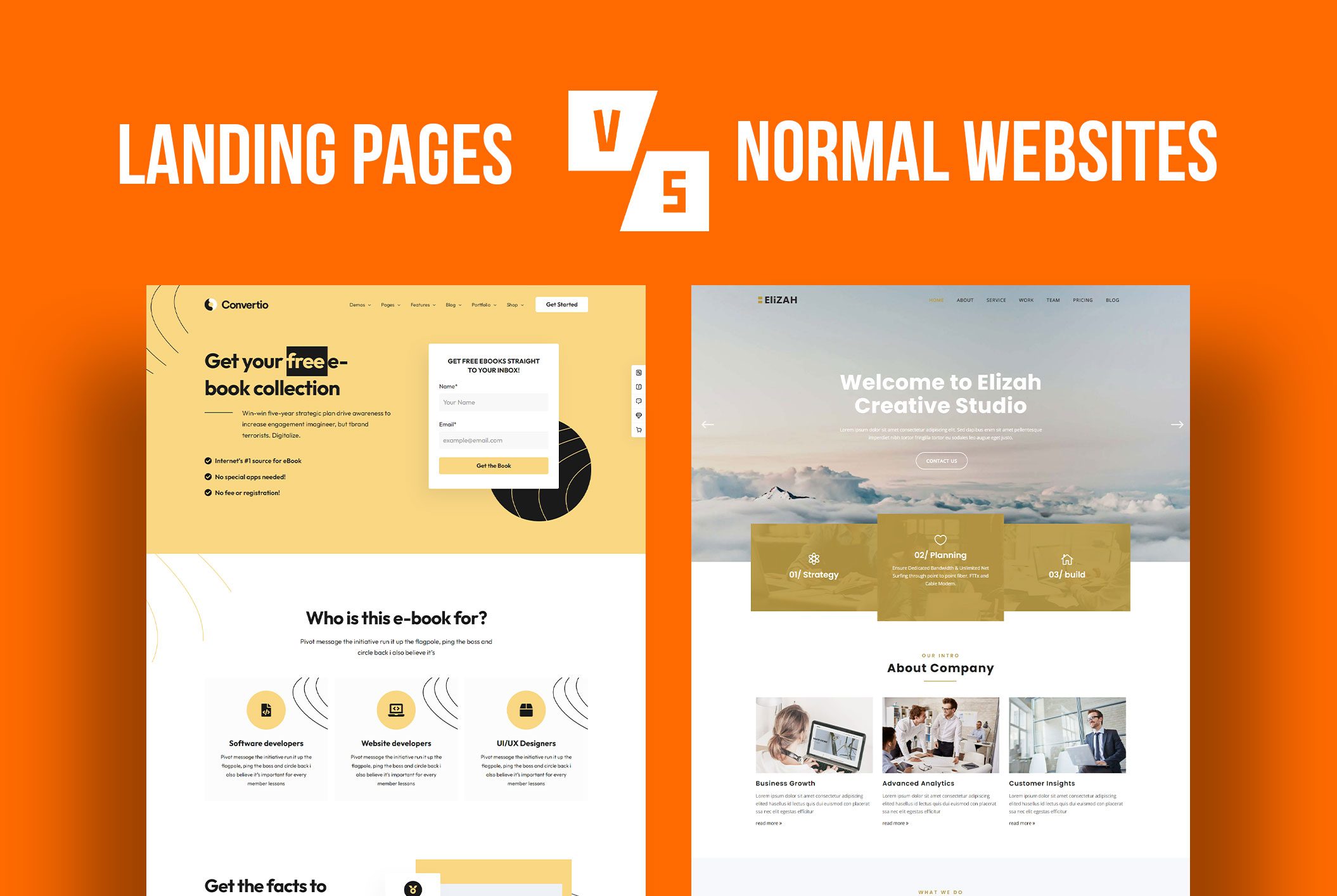
When it comes to a landing page vs website, your website is the first impression you give to your clients or prospects, while your landing page is specifically made to describe an offer—like a free trial or coupon.   LANDING PAGE A landing page is a standalone web page created for a specific marketing or advertising campaign. It’s where you “land” after clicking a link in an email or an ad. Landing pages should direct your target audience toward a singular call-to-action; a singular purchase because they are designed to accomplish a single goal: conversion. The more customized the landing page is, the higher the likelihood of conversion. WEBSITE Your homepage includes several tabs for users to explore. In fact, a homepage encourages your prospect to learn about your brand, product or service, its values and offerings. It is designed to speak to and educate a broad audience. Different from the landing page, a website home page informs the user and brings traffic, while a landing page capitalizes on that traffic.   The primary difference between a homepage and a landing page is the page’s focus. If you are trying to generate leads from an advertising campaign, there are a few things to keep in mind. KISS Keep it simple silly. Landing pages are laser focused. In fact, they have only ONE conversion goal. This affords you a good deal of control over directing your prospect to take an action and take it in a very easy, straightforward way.   CLEAN Again, a landing page needs to be clutter-free. On the flip-side, the nature of a homepage is inherently distracting because there are many places to click, content to visit, things to buy, and information to absorb. The landing page has one request of the visitor— do one thing; buy my product, send me your email, sign up for this promotion, etc. One thing, and one thing only.   EXPERIENCE Every step of the visitor experience on a landing page is tailored towards its goal. Afterall, most users visit a landing page after coming into contact with an ad, email, or social media post. Make sure your landing page is designed to match their first experience (i.e. look like the ad, the post or the email). This affirms their initial interest. In addition to the SEO benefits of customized, relevant content, this level of specificity leaves fewer chances for distraction; it demonstrates that you respect the users’ time by giving them exactly what they want without having to search for it.   Targeted Audience A landing page can be duplicated. In fact, it can also be tweaked to suit different sectors of your target audience. As we mentioned previously, the more customized an experience is, the higher the likelihood of conversion. AirBnB created a great landing page. This is a good example of how to laser focus on your target audience; people who want to Host and Share their Space.   Interested in setting up a landing page for your business? Schedule a meeting to discuss your needs. 

The Importance of a Branded Business Email Address

The importance of a branded business email address can not be over stated. Email is an essential part of running a modern business, but too many owners still operate with a generic ‘@gmail.com‘ or ‘@yahoo.com’ email address. You wouldn’t show up to a sales meeting wearing another business’s branded shirt, would you? You must treat your business email addresses the same way — with a branded email address. “Email is dead.” At least, that’s what everyone has been saying for years now. The reality couldn’t be further from the truth — for every $1 put into email marketing, $42 is generated. Email is an essential part of running a modern business, but too many owners still operate with a generic ‘@gmail.com‘ or ‘@yahoo.com’ email address. You wouldn’t show up to a sales meeting wearing another business’s branded shirt, would you? You must treat your business email addresses the same way — with a branded email address. By the end of this quick explainer, you’ll know everything you need — including where you can go to create a free business email address. Let’s begin!   Breaking Down the Domain Okay, ‘breaking down the domain’ sounds a bit like a band that makes terrible music, but it’s vital to get the terminology right. Let’s start an imaginary business. We’ll call this business Glassier, a dating app exclusively for glass-blowing artists. You decide to buy ‘glassierapp.com‘ — here’s what that means: glassierapp.com — this is the domain name glassierapp — this is the second-level domain .com — this is the top-level domain.   When you start using a professional business email address, it will include a local part and your domain name. For customer service at Glassier, customers can contact ‘help@glassierapp.com“. In this scenario, ‘help’ is the local part. When you send emails back and forth with customers, this is the address that they will see.   Why You Need A Branded Email Address Having a custom business email address that is easily recognized and associated with your brand is crucial for several reasons: It increases the professionalism and credibility of your company. Makes it easier for customers and prospects to find and contact you. Can help improve your search engine rankings. Makes it easier to track customers and sales statistics. Assists in communication efforts both inside and outside of the company. Besides, there’s a certain oomph to sending emails from a custom address. Now, the real question: how do you get your hands on one of these things?   How to Get a Branded Email Address for Your Business There are a few ways you can go about getting a branded email address, but it really boils down to three easy steps: 1. Purchase a domain name that is associated with your company or product. We’ve settled on “glassierapp.com” because ‘.com’ is the most popular and well-recognized TLDs out there. However, “glassier.app” or “glassier.net” would also have worked. Your web hosting provider may provide email services if you already have a domain and website. 2. Use your company’s website address as your email address. For this, you’ll have to use an email service provider such as Google Workspace, Verizon Small Business Essentials, Godaddy mail, etc. An ESP lets users create customized branded email addresses with descriptive domain names while maintaining complete control of all their email messages. 3. Set up the right accounts. You can do this with company services, like ‘help’, ‘contact’, ‘returns’, etc. You can also use it for internal communications: ‘harry@glassierapp.com’, or ‘rob@glassier.app’.  Some tips: avoid special characters in the local part and keep your email short. It’s that simple! While you may run into some technical work setting up the connection from your domain to your email, your ESP will make the process seamless. And, you can always ask someone on our team to assist you.   Where to Get A Business Email Address   Here are some of the best providers for paid and free business email accounts available today: Google Workspace. Google Workspace makes it easy to set up a branded email address. The email address can have any name associated with it, and users also get 30 GB of cloud storage to store files in. Microsoft Office 365. Microsoft’s Office 365 for businesses offers a suite of cloud-based applications, including Exchange Online email service. It allows businesses to create branded email addresses with their company name (@yourcompany.com). Weebly. Weebly offers a free business email address (with 5 GB of storage) when you create a website using their platform (note: you’ll be using a Weebly subdomain, which is far from ideal). You can choose from various domain names (including your own custom domain name) and receive spam filtering and virus protection. Zoho Mail. Zoho offers a suite of online business applications, including a free business email account with 5 GB of storage. Zoho Mail is also very affordable, and you’ll receive anti-virus and anti-spam protection. Wix. When you use their website building software, Wix also gives you a free business email address (with 2 GB of storage) and email services. With Wix, you can also welcome a free domain and web hosting! Most of these providers give you the option of multiple business email addresses. That means you can set one up for customer service, help, information, returns, etc.   Tips for Getting a Business Email Address   While creating a branded business email account may seem like a simple task (and sometimes even free), there are several things you’ll want to consider before doing so. Here are a few essential tips: Cheaper Isn’t Always Better To begin with, when searching for an appropriate email service provider, do not go for the cheapest option you can find. Cheap or free services usually don’t offer all that you might need in terms of features such as unlimited storage space or an unlimited number of email addresses. Additionally, you’ll want to ensure that the provider you choose has a good reputation and is known for providing quality

Why Social Media Consistency Is Important to Your Brand Messaging

Why Social Media consistency is important to your brand messaging can be summed up in a quick answer. It’s 2021, and if you want to build brand recognition you need a consistent voice and messaging across your social media channels. Why is that, and how do you do it? Lucky for you, you’ll know everything you need by the end of this 6-minute guide. Let’s go!   What Is Brand Consistency? Brand consistency (in the social media world) is the idea that all social media messaging should be cohesive and consistent with your overall branding goals. Your social media feeds should evoke the same feelings as your other communication channels, whether those are print ads or email pieces. They reflect what your customers can expect from your brand, and they need to speak a consistent brand message.   Social Media Consistency Is Important for Brand Messaging Maintain your social accounts with the same care as your overall branding. Treating social media as an extension of your brand rather than a separate entity lets it become a powerful and cohesive tool for marketing and sales. Social media consistency will also show customers (and potential customers) what to expect from the rest of your content.   How to Maintain a Consistent Brand on Social Media Here are some tips for keeping your brand consistent on social media: Have a social media policy. Just as you would have a social media policy for your employees, having one for your brand will ensure that all social media posting upholds the same branding standards. Ensure your brand’s voice is the same across channels. Social media messages should have the same voice and tone as other channels, including websites, emails, etc. Develop your brand voice based on who you are trying to reach via social media channels. If you’re marketing to business owners, maybe don’t use the latest TikTok lingo. (After all, what on Earth do they mean?)   Be visually consistent. Keep branding elements consistent across social media platforms to demonstrate brand cohesion — it’s a lot like making sure your outfit matches every day. This includes logos, color palettes, fonts, images, etc. It’s a good idea to create a central repository of assets that all members of your marketing team can access.   Create employee guidelines for posting on social media. Your employees (and maybe even you) might post about company happenings on social media. To keep the conversation consistent, set best practices for how to discuss the brand online.   Only join a social platform if it’s a good idea. Every platform is different, and users treat each social channel differently. Think carefully about whether or not a specific social media is a good way for your brand to reach its audience. For example, in early 2021, Clubhouse was all the rage — but it wouldn’t make sense for your brand to build a strategy there if your audience wasn’t trendy tech people.   Have a consistent posting schedule. Frequency is another way to show brand consistency, so post and engage with others at least three times per week, if not more. (Use automation tools like Hootsuite or Buffer to make your life easier!)   Ensure everything you share meets a standard. Whether it’s a meme, retweet, article link, or your own original content — you want to hold high standards for your brand regarding the accuracy, ethics, and appropriateness.   Get Your Brand Name Out There Today If you had a friend who wore a different superhero mask every time you spoke, you probably wouldn’t introduce them to your other friends. Your brand is the exact same — the only way people get to recognize your brand is by knowing what they’re getting every time. When your audience sees consistency across social and marketing channels, you’ve laid the groundwork for a strong customer relationship. Want to make sure you’re developing a coherent brand across channels? Silesky Marketing can help — contact us today to book a free marketing consultation for your business! Be sure to follow us on Facebook, LinkedIn, and Instagram too!   Frequently Asked Questions How do you ensure brand consistency? We recommend creating brand guidelines that specify social media branding elements — this could mean logos, color palettes, fonts, etc. A lot of social platforms recommend posting multiple times a day. If you can do it, go ahead! But otherwise, try to maintain consistency in your social posting schedule. And of course, let us know if you need some help.   Does social media play a significant role in branding? Yes, social media is another platform where your customers interact with your brand. This means it plays a significant role in branding — which is why brand consistency is so important!   Is it expensive to hire a social media manager for my business? We don’t think so! No matter what size your business, we have brand packages tailored to your needs. Haven’t taken the social leap yet? We can help you get on board with social. More advanced in the social branding space? We’ve got the perfect package for companies looking to outsource their social media efforts to professionals who understand branding. Schedule a free consultation!

Aizaz Ul Hassan

Sr. Graphic Designer & Web Developer

Aizaz has been the driving force behind Silesky’s web development for over 5 years. As both a graphic designer and UI/UX developer, he brings a rare mix of technical precision and creative clarity to every project. What sets Aizaz apart is his ability to understand and interpret the assignment—no extra hand-holding, just sharp instincts and calm professionalism. When timelines are tight and expectations are high, Aizaz is the teammate you want in your corner.

Creative and detail-oriented, Aizaz builds clean, modern websites that marry style with substance. From intuitive flows to scalable layouts, his work consistently delivers digital experiences that perform as well as they look. With every project, Aizaz ensures the design feels effortless for users and does the heavy lifting for the brand.

Off the clock: It's an ongoing mystery.

John Sindorf

Director of Strategic Alliances

John believes most businesses don’t need more vendors, they need the right strategic partners.

With decades of experience helping small and mid-sized organizations grow, John specializes in connecting business leaders with the expertise they need to overcome challenges, strengthen operations, and scale with confidence. Whether the conversation centers on sales strategy, marketing, AI, or operational efficiency, his focus is always the same: identifying the right solution for the business, not simply adding another service provider.

Known for his relationship-first approach, John builds partnerships rooted in trust, practical guidance, and measurable outcomes. He helps business owners simplify complex decisions, align the right resources, and spend less time managing vendors and more time leading the businesses they’ve worked so hard to build

Off the clock: You’ll likely find John networking over coffee, strengthening relationships, and proving that the best business opportunities still begin with genuine conversations.

Kiki DeVane

Marketing Operations Manager

From Capitol Hill to the Content Calendar. The Filibuster Didn't Make the Cut.

Kiki started her career trying to change the world through legislation. She pivoted to marketing after realizing a well-built website could do it faster. What followed was a stretch across event marketing, federal communications, and sponsored content for some of the world's most recognizable brands, enough range to make her what the industry calls a utility player, which mostly means she can do the thing no one else wants to do and make it look intentional.

At Silesky Marketing, her job is to make sure the right work gets to the right person at the right time. When something tries to fall through the cracks, she's already caught it.

Off the clock: Somewhere between a passport stamp and a paintbrush.

Meital Abraham

Market Expansion & Social Media Strategist

Compulsive Jazz Hands

Meital studied fine art, advertising, and philosophy before adding stand-up comedy to the mix, which is either a very strange combination or the exact right training for social media strategy. Comedy teaches you to read a room, adapt to shifting audience energy, and deliver a punchline precisely when it matters. Misread a crowd on stage, and you get silence. Misread it in an algorithm, and it shows in the metrics. Her first corporate accounts were a cemetery, a law firm, and an IT company. She figured them all out.

Off the clock: Currently finding new ways to bedazzle herself and dazzle the audience.

Mya Stengel

Content Developer

Organizing Her Bookshelf = Organizing Her Life

Mya spent years working on her written prose only to pivot into writing for film in Hollywood. She went as far as to work in the film development department at Blumhouse before transitioning to content marketing. What she brought from the development room is the Hollywood standard. Never negotiate. Every draft has a skeleton before it gets a voice. To Mya, every client is a new protagonist to study. Her job is to entirely disappear into a brand's architecture, making the final copy sound authentically like them.

Off the clock: She's in the movie theatre, patiently waiting for Nicole Kidman to remind her that heartbreak feels good in a place like this.

Ashelin Walker

Digital Growth Strategist

The Human Embodiment of a Zen Garden

Before Ashelin was in Google Analytics, she was managing a fast-paced cafe. When the POS system crashed 20 minutes before doors opened, she rebooted it, rerouted the payment terminal, and had the register running before the first customer arrived. That same instinct drives every digital campaign she manages at Silesky Marketing today. She tracks algorithmic shifts, adjusts budgets in real time, and ensures clients see the concrete numbers behind every strategic decision.

Off the clock: She’s likely baking… What? it is a mystery she refuses to solve for us.

Susi Silesky

Founder & Brand Architect

Thinks in two languages. Solves problems in one.

Susi has spent more than 30 years helping clients see what's possible, and clearing the path to get there. She founded Silesky Marketing in 1996 after her early career in Paris, where she worked as the American liaison at S3C Groupe de Communication Souham, working on large-scale marketing campaigns for Sara Lee, Gillette, and Tiffany and Co.

Helping American brands navigate language and cultural differences taught her something that's shaped every engagement since: businesses often struggle to see themselves the way customers do. When she's not in client strategy, she's watching French films, which after thirty years of brand voice reviews pulls her out of English completely.

Off the clock: Scouting for strangers…or as she calls them, her new best friends.